
How BMW and CATL Co-Develop Next-Generation EV Batteries: A Deep Dive
Understanding the structural logic behind one of the auto industry's most consequential supply chain partnerships
What Is This Partnership, and Why Does It Matter?
When BMW launched its "Neue Klasse" (New Generation) electric vehicle platform, it did not simply place a battery order. It deepened a co-development relationship with Contemporary Amperex Technology Co. Limited (CATL) that had been building for 15 years — one that now defines how the world's most demanding automakers work with battery suppliers.
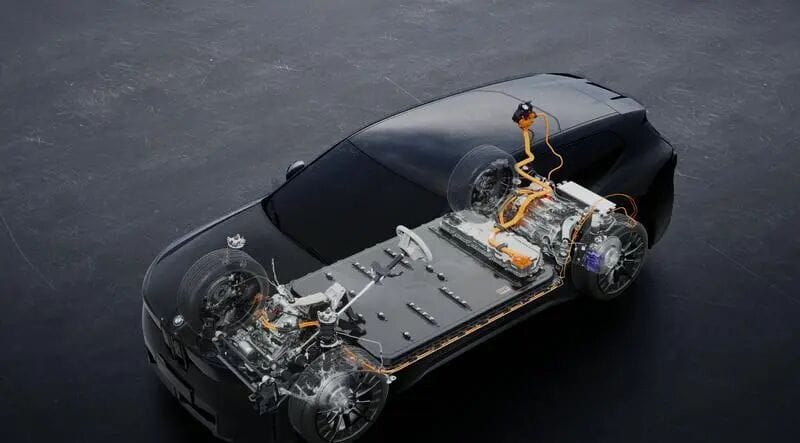
The partnership covers two battery chemistries for China-made Neue Klasse models — the BMW iX3 and BMW i3: a large-format cylindrical cell designed for high energy density and fast charging, and a lithium iron phosphate (LFP) battery pack aimed at balancing cost, safety, and vehicle integration. Together, they represent what the industry calls a "Gen 6" battery system.
This is not a conventional buyer-supplier story. It illustrates a broader structural shift in how premium automakers source, validate, and scale advanced battery technology — and what it takes to meet those standards at gigawatt-hour volumes.
How Did This Relationship Start?
BMW became CATL's first automotive customer in 2011, when CATL was still an early-stage company. That initial engagement was formative in both directions.
For CATL, the BMW relationship provided access to international engineering standards, quality management frameworks, and design benchmarks that it subsequently internalized and applied across its entire business. For BMW, it established an early foothold with a Chinese battery supplier that would go on to become the world's largest.
Over the following 14 years, the two companies worked on dozens of projects together. By the time the Neue Klasse platform entered joint development, they had accumulated enough shared institutional knowledge to attempt something more ambitious: a five-year co-development program covering the full battery system, from cell chemistry to pack integration to manufacturing ramp.
What Does "Co-Development" Actually Mean in This Context?
The term is used loosely in the industry. In this case, it involves four distinct layers of collaboration:
1. Joint specification-setting BMW does not hand CATL a finished specification sheet and ask for a price. Instead, the two teams negotiate and co-author technical standards — often pushing well beyond regulatory minimums. For example, BMW required that the steel casing of a large cylindrical cell must show zero physical damage under thermal runaway conditions. CATL's engineers initially argued that minor casing deformation did not create a safety risk at the vehicle level. After multiple rounds of testing and debate, CATL accepted BMW's standard. The resolution took over three months and required senior leadership intervention from both sides.
2. Joint validation More than 3,000 sample test groups were conducted during development of the Neue Klasse battery systems. Each round of data was reviewed jointly by CATL and BMW engineering and quality teams before the next iteration began. This closed-loop validation process is slower than conventional supplier qualification but significantly reduces late-stage failures.
3. Joint industrialization BMW participates directly in production line planning and ramp-up. When the second CATL production line serving Neue Klasse accelerated its ramp-up schedule by three months ahead of the standard timeline, it was partly due to coordinated planning with BMW's own production ramp in Europe.
4. Full lifecycle quality tracking Every cell produced for BMW carries a unique identifier linked to over 360 photographs taken during production. The manufacturing record is fully traceable from electrode sheet to finished pack. The production lines use 100% AI inspection combined with X-ray scanning across the entire process.
What Are the Technical Standards Involved — and Why Are They Unusually Stringent?
Several of the stated specifications are worth examining individually, because they illustrate the gap between regulatory compliance and what a premium OEM actually demands.
Cell failure rate: PPB, not PPM The industry standard for cell-level safety failures is typically measured in parts per million (PPM) — roughly one failure per million units. BMW's requirement pushes this to parts per billion (PPB) — one failure per billion units. Maintaining this level at gigawatt-hour production volumes is a significant manufacturing challenge.
Side-impact testing Industry standard side-impact testing for battery packs is typically conducted at 12–13 km/h. The BMW-CATL standard substantially exceeds this threshold, though the precise figure has not been disclosed publicly.
Bottom-impact energy China's national standard requires battery packs to withstand a 120-joule impact from below. BMW's requirement is significantly higher.
Sealing standard The sealing specification for Neue Klasse battery packs is one grade above BMW's other supplier requirements.
Weight After dozens of rounds of full-vehicle simulation and iterative component thickness optimization, the finished Neue Klasse LFP battery pack came in well below the approximately 600 kg industry average for comparable systems.
Range The LFP configuration, adapted to BMW's 800V architecture, enables a stated range of over 700 km for the iX3 — a figure that challenges the common assumption that LFP chemistry is incompatible with long-range performance.
Manufacturing control points The BMW-specific production program at CATL operates more than 7,000 manufacturing control checkpoints — a number that reflects the density of in-process monitoring rather than end-of-line inspection.
Why Does BMW Use Both Cylindrical and LFP Cells?
This is a question that matters for understanding battery strategy more broadly.
The two chemistries serve different optimization targets. Large cylindrical cells (the format popularized by Tesla and now being adopted more widely) offer higher energy density and faster charge acceptance. LFP chemistry offers better thermal stability, longer cycle life, lower cost, and superior safety characteristics — at the cost of lower energy density per kilogram.
BMW's Neue Klasse platform uses a 30L/40L/50L pack size architecture where the physical housing is shared across variants. The choice of cell chemistry is then made based on the vehicle's performance positioning, target market, and cost structure.
Importantly, BMW has indicated it does not intend to standardize on a single cell format. Both prismatic and cylindrical configurations will continue in parallel. This multi-chemistry strategy reflects the absence of a single dominant solution across the full range of EV use cases — and hedges against supply chain concentration in any one cell type.
What Does Global Localization Look Like in Practice?
Supply chain resilience for the Neue Klasse depends on CATL's ability to produce batteries on multiple continents to BMW's specifications.
China: Three to four dedicated production lines serve the BMW Neue Klasse platform domestically. The Hubei facility runs CATL's second-generation high-volume cylindrical production line.
Germany: CATL's Erfurt plant in Thuringia began production in 2022, with its first products serving BMW's European projects.
Hungary: The Debrecen facility — the largest single investment in Hungarian history and one of the largest single-building structures in Europe — houses the first large cylindrical cell production line on the European continent and the world's first line running at 300 parts per minute (ppm) for cylindrical cells. The first cell from this line came off in October 2024.
Raw materials: CATL achieved local raw material sourcing in Europe by June 2025, reducing exposure to intercontinental supply chain disruptions for European production.
Aftersales: CATL operates 1,394 service stations across 85 countries, with 24/7 response capability — a logistics infrastructure that most battery suppliers have not built.
How Does Sustainability Fit Into This Supply Chain?
The carbon accounting dimension of this partnership is increasingly structural rather than aspirational.
The European Union's Battery Regulation requires a "battery passport" — a digital record of a battery's full lifecycle data, from raw material origin through manufacturing, use, and end-of-life — for all traction batteries entering the EU market from February 2027. This creates a compliance requirement that is as technically demanding as performance certification.
CATL joined the Global Battery Alliance's battery passport pilot program in 2023, participating in the development of 19 ESG indicators. In February 2026, BMW and CATL signed a memorandum of understanding specifically covering cross-border battery passport data pilots and coordinated carbon footprint reduction across the shared supply chain.
The scale of the decarbonization task is significant. Supply chain emissions account for approximately 85% of a battery's total lifecycle carbon footprint — roughly five times the emissions from battery manufacturing itself. This means that cell chemistry optimization, however important, is a secondary lever compared to upstream material sourcing, energy inputs at mining and refining stages, and closed-loop recycling.
By end of 2025, CATL states that all 20 of its major operating battery factories have achieved carbon neutrality in core operations, with zero-carbon electricity accounting for 74% of group-wide power consumption.
What Are the Structural Constraints on This Model?
Cost premium is real and acknowledged Both CATL and BMW have stated openly that the Neue Klasse LFP and large cylindrical systems cost more than comparable projects with other clients. The stated rationale is that technical differentiation justifies a price premium — but this assumption depends on consumer willingness to pay, which varies across markets.
Timeline risk is significant The five-year co-development cycle for the Neue Klasse battery systems means that decisions made in 2020 and 2021 are only now reaching production. If chemistry preferences, competitive dynamics, or cost structures shift materially during that window, neither party can easily redirect.
Concentration risk For the Gen 6 program, CATL is the sole supplier of all battery-related components — cells, modules, and pack subassemblies. This simplifies coordination but creates single-source exposure that most procurement organizations would flag as a vulnerability.
Regulatory complexity is growing The battery passport requirement, EU carbon border adjustment mechanisms, and evolving critical minerals regulations in multiple jurisdictions mean that compliance capability is becoming a competitive differentiator — and a barrier to entry for suppliers that have not built the necessary data infrastructure.
What Does This Partnership Indicate About Broader Industry Trends?
Several structural patterns visible in the BMW-CATL relationship are likely to become more common across the industry:
The specification gap between regulatory minimums and OEM requirements will widen. Premium automakers have strong incentives to push beyond national standards as a source of product differentiation. Suppliers that can only meet regulatory floors will increasingly be limited to cost-competitive volume segments.
Co-development timelines favor incumbents. A five-year joint development cycle creates very high switching costs. Once a supplier and OEM have invested this deeply in shared validation infrastructure and institutional knowledge, the bar for switching is not just technical — it is organizational.
Localization is a supply chain requirement, not a government relations strategy. The combination of EU content requirements, logistics risk management, and battery passport compliance is making multi-continent production capability a functional necessity for suppliers serving global OEM programs.
Carbon data infrastructure is becoming a market access requirement. The battery passport is the most visible example, but the underlying dynamic — that sustainability claims must be backed by traceable, auditable data — will extend to other parts of the supply chain over time.
Related Coverage:
CATL’s Record Q3 Revenue Overshadowed by Margin Squeeze and Tax Headwinds