
China's Battery Giants Dominate Europe's Storage Supply Chain—But the Asset Gap Widens
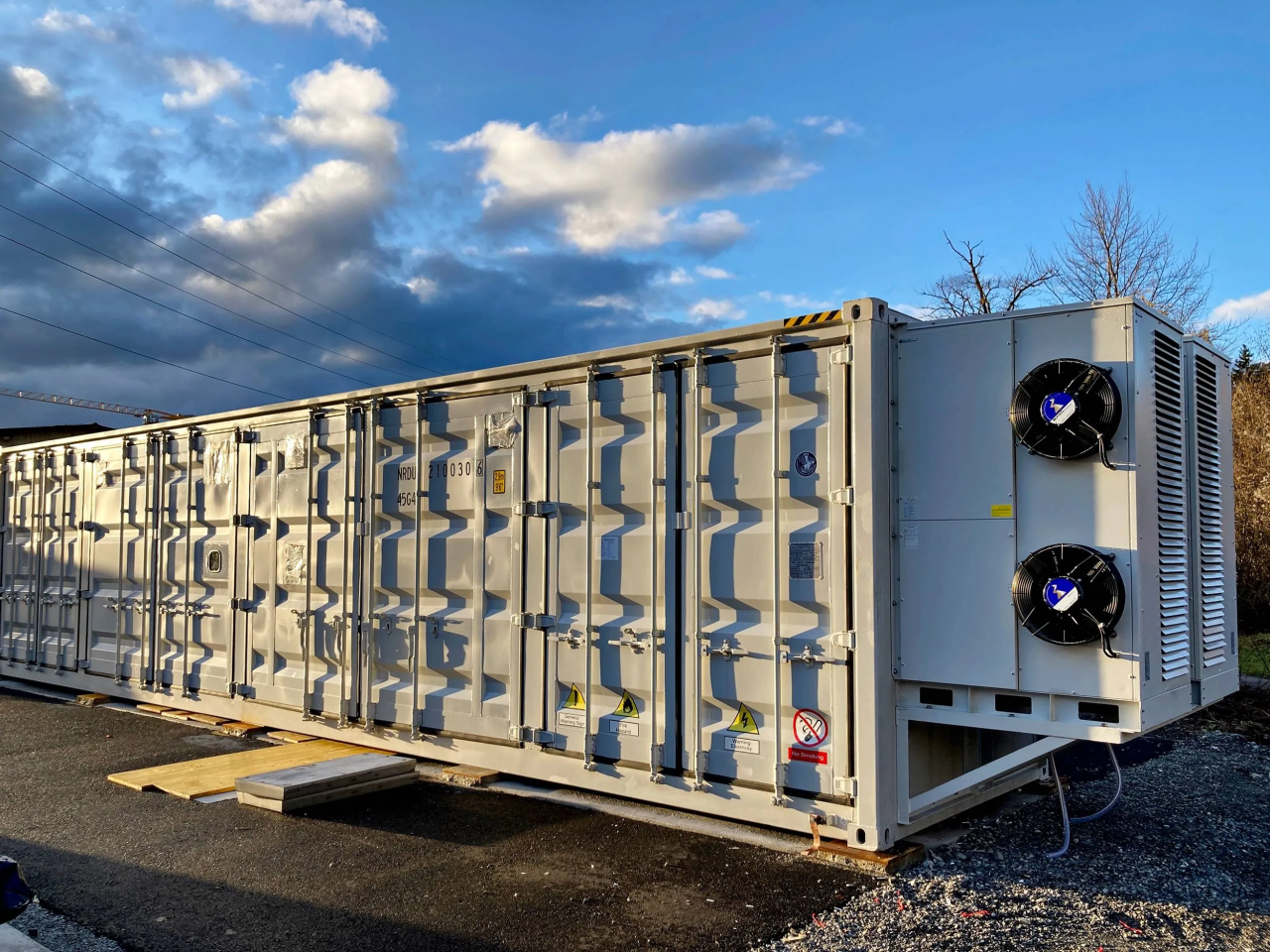
Chinese manufacturers control 76% of global storage integration and supply 65% of Europe's battery cells, yet ownership of the continent's energy assets remains firmly in European hands—a divide that Spain's 1.78GW pipeline is testing in real time.
Spain's Official State Gazette published 27 new battery storage permits in late October 2026, covering a combined 1.78 gigawatts of capacity—the largest single allocation coming from JinkoSolar Power, which paired 150.8 megawatts of batteries with a photovoltaic plant in Huelva province. The announcement crystallized a structural tension that has defined China's second major push into European energy infrastructure: unrivaled manufacturing depth on one side, and an almost complete absence of asset ownership on the other.
Market observers note the permits arrive as Europe's storage buildout enters its steepest acceleration yet. The continent added 26.4 gigawatt-hours of battery storage in 2025 and surpassed 18 GWh in the first half of 2026 alone, putting full-year installations on track to breach 40 GWh—equivalent to 40 million kilowatt-hours of dispatchable capacity. Against the European Commission's 2030 target of 220GW and 400 GWh, Europe has completed less than half the required deployment.
Chinese Integrators Capture 76% of Global Share—Leaving Margins Razor-Thin
Wood Mackenzie's 2025 shipment rankings show eight of the world's top ten storage integrators are headquartered in China, commanding a combined market share of 76%. Contemporary Amperex Technology, BYD, and EVE Energy together account for approximately 65% of European cell supply, a concentration that reflects industrial geography as much as commercial strategy.
The logic is logistics: cells, modules, and containerized systems are manufactured along the same industrial corridors, compressing lead times from order to delivery to roughly four months. European integrators building identical systems routinely wait six months for cell allocation—a gap wide enough for electricity price windows to open and close entirely.
BloombergNEF's latest battery price survey places the global average all-in cost of a turnkey storage system at $117 per kilowatt-hour in 2025, down 31% year-on-year. For a four-hour project, the levelized cost of storage has fallen to $78 per megawatt-hour, the lowest since BNEF began tracking the metric in 2009. Equipment margins, in other words, are compressing faster than deployment is growing.
Spain's Grid Arithmetic Exposes a Structural Undersupply
Spain's National Energy and Climate Plan mandates 22.5 gigawatts of storage capacity by 2030. As of August 2026, the country had connected 260 megawatts of battery storage and 3.33 gigawatts of pumped hydro to the grid—together less than one-sixth of the target. A further 15.1 GW of storage projects remained in permitting queues as of January 2026, against 24.3 GW that had already secured licenses.
The bottleneck is structural rather than financial. Grid operator Red Eléctrica de España (REE) data compiled by industry association Aelec shows 88% of Spain's grid connection nodes have fewer than 1,000 kilowatts of available headroom. Royal Decree 7/2026, which took effect in March, introduced "flexible access" rules allowing projects to apply for capacity based on actual output rather than peak nameplate rating—a change designed to accelerate approvals but one that may concentrate project timelines and compress equipment delivery schedules further.
The electricity price environment adds urgency. Spain's day-ahead market recorded 397 hours of negative prices in the first quarter of 2026, following 555 negative-price hours across full-year 2025. Solar plants' average realized price dropped to €33.95 per megawatt-hour, a 19.7% year-on-year decline. In June 2026, curtailed solar generation hit a record 1.2 terawatt-hours in a single month—electricity generated but unable to reach consumers. Battery retrofits offer a partial answer, shifting midday generation into evening peak hours, but their economic case hinges on whether price spreads are wide enough to cover depreciation.
Retrofit Projects Signal a New Deployment Template—But Economics Remain Unresolved
Several projects in the October 2026 gazette illustrate a hybrid retrofit model gaining traction across Spain. FRV's Gaetana project in Badajoz adds 108 megawatts of battery storage to 166 megawatts of existing solar, forming a 180MW combined facility. Aurea Energy's configuration runs similarly: 118MW of batteries alongside 171MW of solar. In both cases, battery capacity is roughly two-thirds of solar nameplate—sized to clip afternoon peak generation rather than shift the entire daily output.
The economic rationale for these retrofits extends beyond energy arbitrage. Repurposing an existing grid connection avoids the queue entirely; a new storage project seeking its own permit faces the same 15.1GW backlog. The avoided-curtailment value—capturing generation that would otherwise be spilled—supplements the spread between midday and evening power prices.
The critical variable for all 27 projects is Spain's capacity mechanism. The European Commission approved Spain's capacity remuneration scheme on May 29, 2026, allocating approximately €900 million annually over ten years, capped at €9 billion total. REE will organize the first capacity auction—open to generation, storage, and interruptible loads simultaneously—before the end of 2026 or in early 2027. If capacity payments cover retrofit costs, the pipeline of permits converts into contracted assets. If they fall short, projects continue rotating between developers and infrastructure funds without reaching financial close.
JinkoSolar Power Tests the Developer Model—Competing on Approvals, Not Watts
JinkoSolar Power's Spanish footprint illustrates what it takes to move up the value chain. The company's La Puebla complex in Spain comprises four plants totaling 389 megawatts; total operating assets exceed 500MW and its development pipeline spans approximately 2.4 gigawatts across Spain, Italy, Poland, and Romania. A 175MW plant in Málaga has been pre-sold to China Datang Corporation upon completion—a build-to-sell structure that recycles capital faster than long-term asset holding while still requiring the company to navigate local permitting, grid interconnection negotiations, and project finance approvals.
The distinction matters commercially. Equipment is priced by specification and volume; development rights are priced by permit quality and grid access. The latter rewards local regulatory knowledge and lender relationships that cannot be shipped in a container. JinkoSolar Power's pipeline represents the furthest downstream that any Chinese firm has yet traveled in European renewable infrastructure—and even there, the asset at stabilization typically transfers to a European or international fund.
The pattern echoes the solar module cycle of the previous decade, when Chinese manufacturers captured dominant global market share in components while European and American developers retained ownership of the generating assets. The energy storage chapter is following the same script, one layer deeper into the value chain.
The 2026 Capacity Auction Sets the First Clearing Price for China's Asset Ambitions
The divide across the value chain is quantifiable. Chinese firms hold approximately 65% of European cell supply, dominate the top three positions in system integration, and appear in the developer tier only as exceptions—JinkoSolar Power being the most visible. Each step toward project ownership requires capabilities that manufacturing scale does not provide: local legal entities, domestic operating staff, and balance sheets that European project finance banks will underwrite.
European regulators are formalizing these requirements. Multiple jurisdictions are tightening localization rules for grid-connected assets, mandating local project companies, local operations and maintenance staff, and local financing structures. For pure equipment exporters, the requirements are irrelevant. For companies seeking asset income, they represent a fixed entry cost denominated in time and local relationships rather than capital expenditure.
The October 2026 gazette entries—designated as preliminary permits, construction approvals, or environmental impact applications—remain several regulatory steps from construction starts. Spanish permitting records note that listed developers may have already transferred projects to other parties. How many of the 1.78GW translate into cranes and battery containers will become visible at the capacity auction expected before year-end. That first clearing price will determine whether storage retrofits in Spain are a replicable project finance structure or a queue of stranded permits.
For Chinese manufacturers, 76% integration market share is simultaneously an achievement and a ceiling. Equipment prices compress annually; the asset column on the European ledger remains nearly empty. Converting supply-chain dominance into infrastructure ownership is the central question of this outbound cycle—and Spain's permit list is the first exam paper.
Related Coverage:
From Battery King to One of Many: How China’s EV Makers Are Reducing Their Dependence on CATL
From Battery King to One of Many: How China’s EV Makers Are Reducing Their Dependence on CATL