
Huawei Cuts Prices Across Mate 80 Series as Competition Intensifies
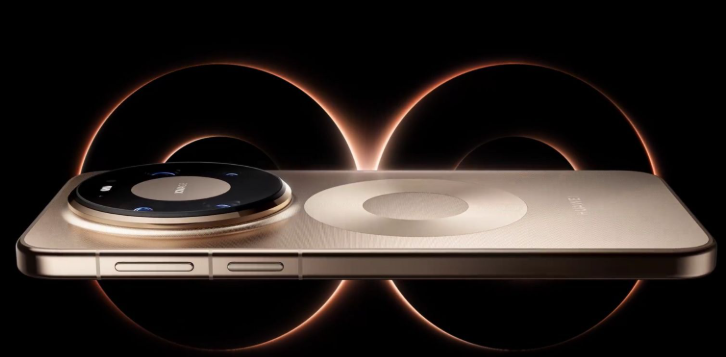
Huawei has launched its flagship Mate 80 smartphone series with price reductions of up to 800 yuan ($111) across the lineup, breaking with the industry trend of price increases driven by rising memory costs. The move signals the company's strategic shift to regain market share from Apple Inc. while managing the transition challenges of its HarmonyOS operating system.
The pricing strategy marks a departure from the broader market, where competitors including Vivo, Honor, and Redmi have raised prices by 100 to 300 yuan this year due to surging DRAM costs. The standard Mate 80 model starts at 4,699 yuan ($653), down 800 yuan from its predecessor, while Pro and Pro Max versions are priced 500 yuan lower than their previous generations.
The price cuts reflect lessons learned from the underwhelming performance of Huawei's Pura 80 series, launched in June, which sold just 40% of its predecessor's volume in the first 120 days. Industry observers note the company is also responding to iPhone's strong comeback in China, where Apple's market share climbed to 25% in October.
The Mate series represents Huawei's most critical product line in its rivalry with Apple, making the Mate 80's market performance crucial for the company's smartphone business trajectory.
Targeted Price Reductions Amid Cost Pressures
While component costs squeeze the broader smartphone industry, Huawei has implemented selective price reductions across the Mate 80 lineup. The standard version sees the steepest cut at 800 yuan, while Pro and Pro Max models are reduced by 500 yuan each.
Morgan Stanley data shows DRAM spot prices have surged over 260% in just two months, pressuring original equipment manufacturers. Lu Weibing, president of Xiaomi, previously stated that "upstream cost pressure has genuinely impacted our new product pricing."
However, Huawei employed precise positioning for its Pro variant. The 16GB+512GB and 16GB+1TB Pro models maintain the same price points as their predecessors while upgrading RAM from 12GB to 16GB, effectively offering better value without nominal price cuts on its strongest-selling configuration.
Distribution strategy remains consistent with previous launches. Multiple Huawei dealers told Chinese media that Pro versions account for less than 10% of allocations, while Pro Max models represent 10-15%, with standard versions comprising the bulk of inventory. This supply management helps maintain demand for premium variants.
iPhone Competition Drives Strategic Response
Apple's resurgence in China's smartphone market has intensified competitive pressure on Huawei. iPhone 17 series sales in China nearly doubled compared to the iPhone 16 launch, with total sales exceeding 10 million units within two months of release, according to Counterpoint data.
Apple achieved this turnaround through aggressive value positioning rather than innovation. The iPhone 17 maintained its 5,999 yuan starting price while doubling base storage to 256GB, effectively delivering a 1,000 yuan price reduction on equivalent configurations.
Industry analysts suggest Apple has captured market share partly at Huawei's expense. The Mate series historically serves as Huawei's primary competitor to iPhone. The Mate 60, launched in 2023, achieved sales exceeding 14 million units, while Mate 70 recorded over 8.85 million activations.
Dealers indicated Huawei has not pushed excess inventory onto distribution channels but maintains requirements for minimum display units per store. This approach contrasts with the Pura 80 experience, where the device saw price cuts of 700-800 yuan within one month of launch—an unusual move for a premium product that damaged consumer confidence.
HarmonyOS Transition Presents Adoption Challenges
The shift to pure HarmonyOS is influencing consumer purchasing decisions and return rates. The Pura 80 became Huawei's first flagship device running pure HarmonyOS without Android compatibility rollback options, contributing to its sales underperformance.
Multiple dealers reported that Pura 80 experienced higher return rates than typical products due to initial software adaptation issues. Users on e-commerce platforms and social media cited application compatibility problems, including missing features in mainstream apps like WeChat and limited coverage of long-tail applications requiring "ZhaoYiTong" for Android app compatibility.
System-level experience concerns have made some users hesitant about new Huawei devices, particularly heavy office or gaming users who experience more pronounced adaptation challenges. However, dealers indicated the Mate 80 series supports system rollback to Android-compatible versions, though this option is not officially promoted and requires visiting authorized Huawei service centers.
The ecosystem transition shows signs of improvement. HarmonyOS update frequency has accelerated, with version 6.0 receiving substantial monthly updates. Developers reported frequent security updates, while WeChat releases 1-2 version updates monthly on the platform. User feedback highlights HarmonyOS's smooth performance and security features, including effective blocking of unwanted software.
One dealer noted that while the initial upgrade wave faced significant impact, broader user acceptance is expected following Huawei's HarmonyOS conference. Building a comprehensive application ecosystem remains the most challenging aspect of operating system development, requiring extensive third-party developer engagement beyond Huawei's own efforts.