
Huawei Escalates EV Price War with Sub-$33,000 LiDAR-Equipped SUVs; Standardizes ADS 4.1
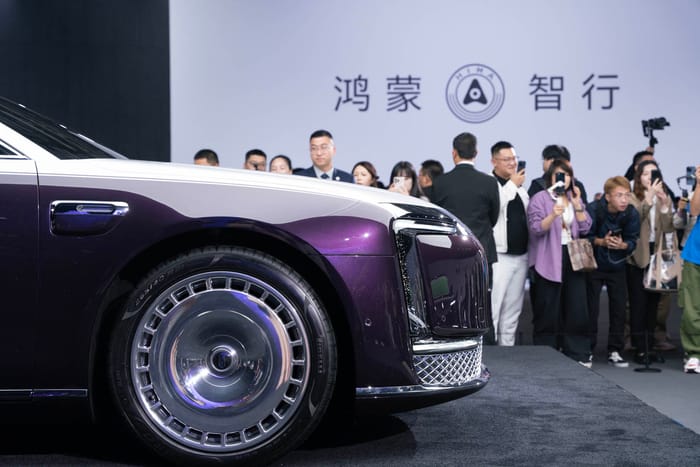
Huawei Technologies has launched its most aggressive offensive on the automotive mass market to date, unveiling a 2026 lineup for its Harmony Intelligent Mobility Alliance (HIMA) that standardizes high-end autonomous driving hardware at mid-tier price points. The strategic pivot signals a move from premium niche targeting to a volume-driven assault on incumbents like Tesla and BYD.
In a launch event that underscored the tech giant’s deepened supply chain control, Huawei revealed that its newest mid-size SUVs would feature 896-line LiDAR sensors—a significant leap in resolution from previous generations—as standard equipment even on base models. This democratization of advanced sensing technology puts immense pressure on competitors who still reserve such hardware for flagship trims.
Market Disruption: The "Shangjie" and AITO Expansion
The centerpiece of the announcement was the debut of the Shangjie Z7, a coupe SUV priced to undercut the segment leaders. With a pre-sale starting price of RMB 229,800 (US$33,300), the Z7 represents a drastic shift in pricing strategy for Huawei-backed vehicles.
Despite the accessible entry price, the Z7’s specifications challenge premium conventions. The vehicle operates on a "Whale" 800V high-voltage platform capable of adding 215 kilometers of range in five minutes. Crucially, it ships with Huawei’s latest ADS 4.1 autonomous driving system and the new 896-line LiDAR, a configuration previously seen only in vehicles costing upwards of RMB 400,000.
Simultaneously, the AITO (Wenjie) brand expanded its portfolio with the AITO M6, a mid-to-large SUV positioned between the best-selling M7 and the flagship M9. Priced from RMB 269,800 (US$39,100) for the extended-range version, the M6 targets the lucrative family hauler segment currently dominated by the Tesla Model Y and Li Auto.
The M6 technical specifications indicate a focus on versatility and range:
- Powertrain: Available in Extended Range (EREV) and pure EV. The EREV variant boasts a CLTC comprehensive range exceeding 1,400 km.
- Aerodynamics: A drag coefficient of 0.239Cd, remarkably low for a mid-large SUV.
- Infrastructure: 800V architecture for the EV version, supporting 15-minute fast charging to 80%.
Tech Upgrades: HIMA Fleet Standardization
Beyond new model launches, Huawei announced significant refreshes across its existing auto partners, signaling a unified tech stack update for 2026:
- Stelato (Xiangjie) S9/S9T: The luxury sedan receives the 896-line LiDAR upgrade and new aesthetic packages. Prices range from RMB 319,800 to 359,800 (US$46,300–$52,100).
- Luxeed (Zhijie) R7/S7: Updated with "ALPS Health Cabins" featuring MOFs antibacterial filters, targeting health-conscious urban commuters.
- AITO M7/M8: Both models receive the LiDAR upgrade and chassis retuning for improved driving dynamics.
Wearables: Bifurcated Strategy for Mass and Elite Markets
While the automotive news dominated headlines, Huawei’s consumer electronics division reinforced its dominance in the wearables sector with a bifurcated product strategy.
At the entry level, the Huawei Band 11 launched at RMB 269 (US$39). Despite the low cost, the device includes professional-grade health metrics such as pulse wave arrhythmia analysis and sleep apnea screening, maintaining Huawei's strategy of using health data as a lock-in mechanism for its ecosystem.
Conversely, the Huawei WATCH Ultimate 2 targets the high-net-worth demographic. Priced at RMB 7,999 (US$1,160) for the new "Wilderness Green" edition, the watch utilizes amorphous zirconium alloy and supports 150-meter diving capabilities. The 2026 update introduces advanced golf course analytics, including swing detection and green contour mapping, directly competing with specialized Garmin products.
Display and Productivity
The event also showcased the MatePad Pro 12.2, featuring a double-layer OLED "Paper-like" display with 2,000 nits peak brightness, aimed at creative professionals. On the desktop front, the MateView GT monitor (starting at RMB 1,099/US$159) introduces a new anti-glare coating that claims to reduce ambient light interference by 99%, further aggressively pricing high-spec display technology for the consumer market.
Related Coverage:
Huawei's Main EV Partner Seres Launches HK$13.2 Billion IPO Test
Huawei Deepens EV Price War With Its Most Affordable Model Yet