
Xpeng Launches Robotaxi Unit for 2026 Commercial Rollout
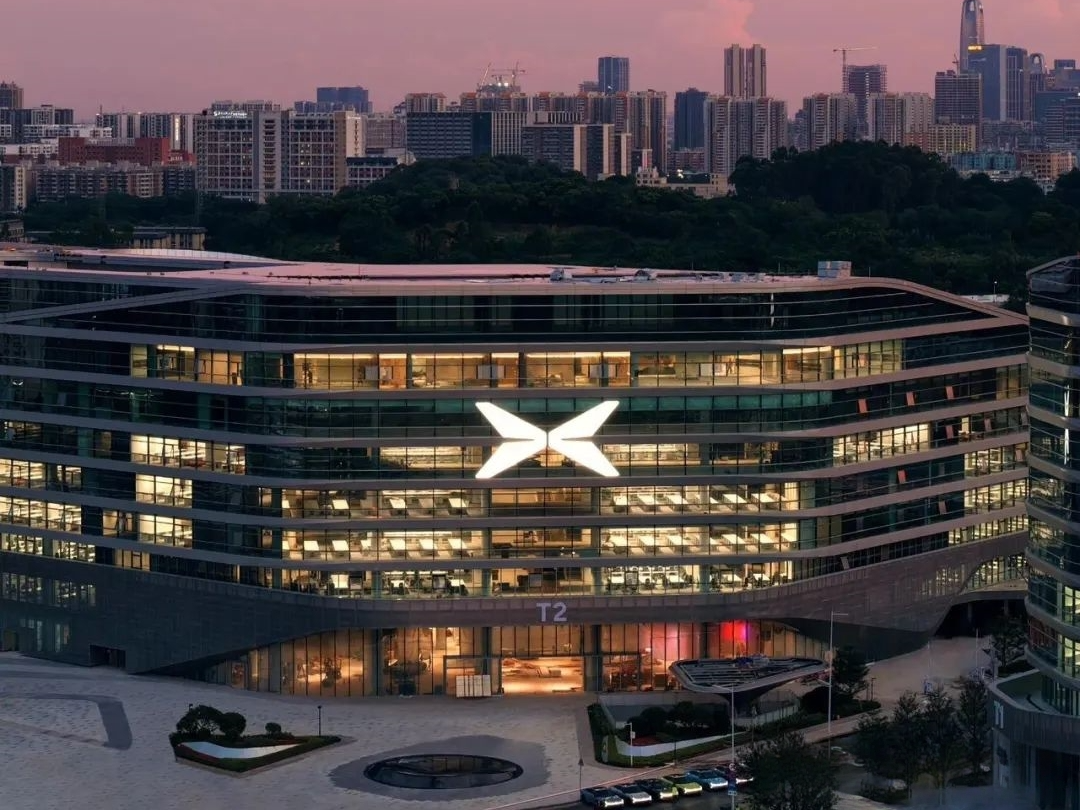
Xpeng on March 23, 2026 unveiled a standalone Robotaxi business division led by Yuan Tingting, set to launch passenger pilot operations in H2 2026 and marking the Chinese EV maker’s pivot from autonomous driving R&D to commercialization. The move places Xpeng in China’s 2026 Robotaxi race—a year widely seen as the sector’s commercial inflection point—against pure-play tech firms and global automakers, with Amap as its first core ecosystem partner to address operational gaps.
Investors frame the restructuring as a strategic monetization push for Xpeng’s autonomous driving tech, a critical diversification step for Chinese EV makers amid core market headwinds. The division’s product and project integration teams will leverage the firm’s mass-production EV platform, a cost-cutting core that aligns with industry front-loading production trends.
Cuts Costs With Mass-Production Autonomous Tech
Xpeng’s Robotaxi push relies on a cost-competitive technical stack built on its mass-produced vehicle lineup, ditching pricey custom retrofits for early autonomous prototypes. It deploys a second-generation Vision-Language-Action (VLA) model, four Turing chips delivering 3,000 TOPS of computing power, and a camera-only system that eliminates lidar and high-precision maps—key cost drivers for rivals.
This vertical integration mirrors the front-loading strategy of WeRide and Pony.ai , slashing unit costs via Xpeng’s existing EV supply chain and enabling real-time tech iteration between passenger EVs and Robotaxi fleets to speed up algorithm optimization.
Taps Amap to Fix Ride-Hailing Operational Gaps
Xpeng partners with Amap, Alibaba Group Holding’s mobility and mapping arm, as its first Robotaxi ecosystem ally, filling the critical operational void in its autonomous ride-hailing setup. Amap’s mature ride-hailing platform, with millions of daily active users and real-time traffic data capabilities, will supply Xpeng with passenger demand and route planning—vital for scaling services.
The tie-up echoes rival alliances: WeRide collaborates with Geely Farizon for 2,000 Robotaxi deliveries in 2026, while Pony.ai teams with Toyota Motor Corp. and GAC Toyota for a thousand-unit 2026 deployment. For Xpeng, the Amap partnership aims to convert technical capability into sustainable ride-hailing order volume, the biggest hurdle for automakers entering the space.
Joins 2026 Robotaxi Duel of Two Market Camps
Xpeng’s entry amplifies competition in China’s Robotaxi market, which has split into two camps for the 2026 commercial inflection point. Pure-play autonomous firms like WeRide and Pony.ai bring years of operational experience and deep manufacturing partnerships; automakers including Xpeng and Tesla Inc. extend passenger car autonomous tech to commercial ride-hailing, with Tesla’s CyberCab rolling off the line in February 2026.
The race now hinges on cost control and operational efficiency, not just technical superiority. WeRide targets a 15% unit cost cut and 10x production efficiency jump in 2026, while Pony.ai aims for a 3,000-vehicle fleet by year-end. Xpeng’s standalone division is designed for lightweight operations and resource reuse, to lower costs and accelerate H2 2026 pilot validation.
Faces Steep Commercial Validation Hurdles
Despite a solid strategic and technical foundation, Xpeng faces tough commercial testing in H2 2026. China’s Robotaxi market still grapples with order density bottlenecks and unstandardized regulations, keeping even leading players unprofitable. Its camera-only system will face rigorous real-world testing in China’s complex urban roads, where lidar-equipped rival models have logged millions of autonomous miles.
The Amap partnership must also drive sufficient order volume to hit economies of scale—industry data pegs the break-even point for Robotaxis at RMB 680 (US$94.44) in single-vehicle daily revenue, a metric Xpeng will need to meet to validate its commercial model.
Related Coverage:
XPeng Bets Big on Physical AI as Q1 Sales Slump Exposes Execution Gaps
XPeng Unveils Second-Generation VLA System, Targets L4 Autonomy in One to Three Years