
XPeng Unveils Second-Generation VLA System, Targets L4 Autonomy in One to Three Years
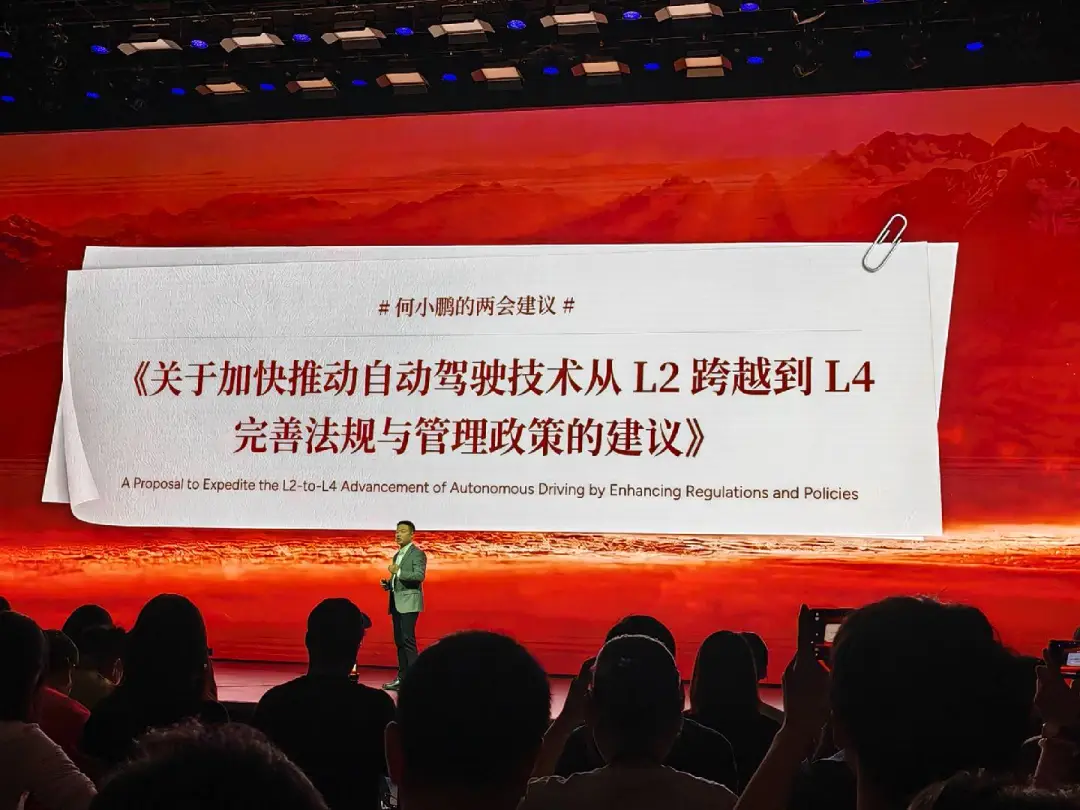
XPeng has launched its second-generation Vision-Language-Action autonomous driving system, marking what the Chinese electric vehicle maker describes as its first decisive step toward full Level 4 self-driving capability — a technological leap that could reshape its revenue model, accelerate overseas expansion, and position the company as a supplier of intelligence to rival automakers.
Chairman and Chief Executive He Xiaopeng declared the new system is "nearly five times ahead of the industry's best players," based on internal benchmarking. The claim, made at an event at XPeng's headquarters in Guangzhou on March 2, 2026, underscores a broader strategic ambition: to move beyond competing on hardware and price in China's crowded EV market and instead monetize AI-driven autonomy at scale.
The announcement carried immediate commercial implications. Volkswagen AG has already signed on as the system's first external customer, and He confirmed that several additional automakers are in active negotiations to license the technology — opening a new revenue stream that could reduce XPeng's dependence on vehicle sales alone.
A Paradigm Shift: From Rules to Models
The core of XPeng's technological argument rests on a fundamental architectural change. The second-generation VLA system abandons the rule-based engineering approach that has defined most Level 2 advanced driver-assistance systems, in which engineers manually code responses to specific road scenarios. He described that method as "carving flowers inside a snail's shell" — inherently limited, costly to maintain, and incapable of addressing the infinite variability of real-world driving.
In its place, XPeng has built a native multimodal foundation model that ingests raw sensor data and directly outputs driving decisions, without intermediate rule layers. Liu Xianming, head of XPeng's General Intelligence Center, framed the approach in deliberately broad terms: "We are building AI, not a dedicated autonomous driving system. We follow how AI models are built and add as little else as possible."
The practical significance of this design choice is generalization. Because the model learns physical-world dynamics — driving trajectories, three-dimensional spatial structures, and motion patterns — rather than memorizing rules for predefined scenarios, it can adapt to unfamiliar environments without being retrained on local data. Liu disclosed that the system already demonstrates "strong capability" in overseas road conditions despite having received no training on foreign data, a property that directly addresses one of the most persistent bottlenecks facing Chinese EV exports.
The L3 Question and a Regulatory Proposal
He Xiaopeng used the occasion to reiterate a policy recommendation he has submitted to China's national legislative session: that China skip Level 3 autonomy entirely and move directly from L2 to L4. His reasoning is both technical and legal.
"L3 is a capability close to L2, because the responsibility still rests with the driver," He said. "L4 is where a new responsible party begins. Adding a dedicated L3 in between creates challenges for hardware, software, and regulation alike." The liability ambiguity surrounding L3 — where the system can request human intervention but the driver remains legally responsible — has long been seen as a structural impediment to commercial deployment of that category globally.
By advocating for a direct L2-to-L4 transition, XPeng is effectively arguing that the regulatory and liability framework should be redesigned around a binary distinction: human-driven versus autonomously driven. He expressed confidence that XPeng would achieve genuine L4 capability within one to three years, with vehicles evolving into what he called "super intelligent agents" within three to five years.
To illustrate current system performance, He cited a demonstration in which a professional driver with decades of experience navigating Guangzhou's roads acknowledged that the second-generation VLA system's knowledge of the city matched his own. Showcased scenarios included the system autonomously yielding to an ambulance with full stop-and-go execution, and proactively identifying and avoiding a deep pothole on an unlit rural road at night — without triggering safety-driven speed reductions or requesting driver takeover.
Since its initial unveiling at XPeng's Technology Day on November 9, 2025, the system has undergone 468 iterative updates over 120 days, a pace that XPeng argues reflects the compounding efficiency advantages of model-driven over rule-driven development.
New Revenue Architecture: Licensing and Subscription
The second-generation VLA system represents more than a product upgrade — it is the foundation of a restructured business model. XPeng is pursuing two distinct monetization paths that have not previously been available to it at meaningful scale.
The first is technology licensing. The Volkswagen deal establishes a precedent for XPeng to function as an AI supplier to legacy automakers that lack comparable in-house capability. He indicated that multiple additional manufacturers are in discussions, suggesting the licensing pipeline could become a recurring, high-margin revenue stream that complements vehicle sales.
The second is a potential shift in consumer pricing for autonomy. He said that as markets outside China upgrade toward L4 and beyond, subscription-based pricing for autonomous driving features is "very likely" to replace one-time payment models. "Not everyone — not 100% of people — needs autonomous driving assistance," He noted, framing tiered subscription access as a natural commercial evolution.
For the domestic Chinese market, however, He acknowledged that the competitive dynamics make near-term monetization of autonomy features unlikely. Free over-the-air software updates remain the industry norm in China, and any move toward paid subscriptions would face significant consumer and competitive resistance. The subscription model is therefore positioned primarily as a medium-to-long-term international opportunity, contingent on L4 deployment timelines materializing as projected.
Overseas Ambitions Anchored in AI Portability
The overseas dimension of the second-generation VLA announcement may carry the most strategic weight. Chinese EV manufacturers have repeatedly encountered a specific barrier in international markets: intelligent features that function seamlessly in China are effectively disabled abroad, because localizing rule-based systems to foreign traffic laws, road layouts, and driving conventions requires substantial time and investment.
The generalization capability of XPeng's model-based architecture is designed to dissolve that barrier. If the system can operate competently in unfamiliar environments without local data retraining, XPeng's vehicles could launch internationally with their full suite of intelligent features intact — a meaningful competitive differentiator against both legacy automakers and other Chinese EV brands.
Outside XPeng's headquarters, a lightly camouflaged prototype of the GX — a six-seat SUV measuring over 5.2 meters in length — was parked bearing the label "XPeng GX L4 Test Vehicle 002." The vehicle's presence was deliberate: a physical signal that the company's L4 ambitions are already in active road validation, not merely on a product roadmap. Whether the technology delivers on its stated promise is a question the market will begin answering in the months ahead.