
XPeng Bets Big on Physical AI as Q1 Sales Slump Exposes Execution Gaps
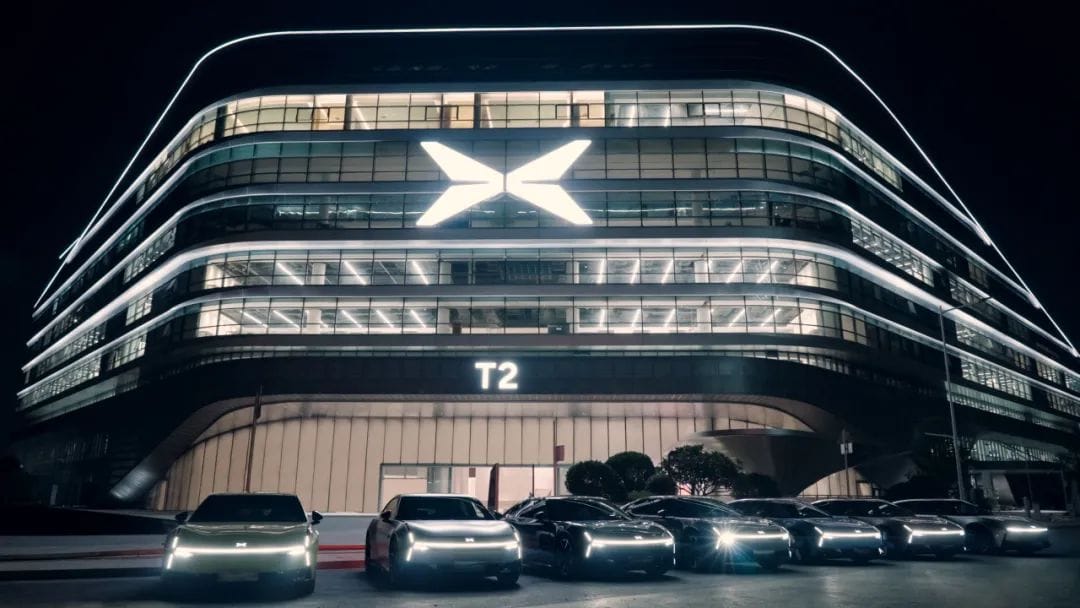
XPENG capped a breakthrough 2025 with its first-ever profitable quarter, but a sharp first-quarter 2026 sales miss is testing whether the company's ambitious pivot toward physical AI can survive self-inflicted wounds in product strategy and brand architecture.
The electric vehicle maker reported full-year 2025 vehicle revenue of RMB 68.38 billion (US$9.5 billion), up 90.8% year-on-year, marking the company’s first quarterly profit. Yet Q1 2026 deliveries are projected at just 61,000–66,000 units—a sharp drop from 94,008 units in Q1 2025 and 116,249 in Q4 2025—raising questions about whether XPeng can meet its full-year 2026 target of 550,000–600,000 units.
The divergence between XPENG's technology momentum and near-term commercial execution is the central tension defining the company's 2026 outlook. Chairman and CEO He Xiaopeng is accelerating a RMB 7 billion physical AI investment program — up from RMB 4.5 billion in 2025 — targeting autonomous ride-hailing and humanoid robotics as the next growth frontiers. Whether the company's operational fundamentals can keep pace with that ambition is now the key investor question.
2025 Milestones Reframe XPENG's Competitive Standing
XPENG's 2025 results delivered on nearly every financial metric. Full-year deliveries reached 429,445 units, surging 126% year-on-year and comfortably exceeding the original 380,000-unit target. Vehicle margin improved to 12.8% from 8.3% in 2024, while services and other margin climbed to 68.2% from 57.2%. Free cash flow approached RMB 5 billion, and year-end cash holdings stood at RMB 47.7 billion (US$6.6 billion) — a substantial war chest for R&D and global expansion.
The MONA M03 and P7+ claimed the top sales positions in their respective price bands—the RMB 100,000–150,000 (US$13,900–20,800) and RMB 150,000–200,000 (US$20,800–27,800) pure-electric sedan segments—demonstrating that XPeng’s product competitiveness in the mass-market EV tier has materially strengthened. Overseas sales approached 45,000 units for the year, with international revenue exceeding 15% of total revenue, validating its early-stage globalization efforts.
Turing Chip and VLA 2.0 Drive a Vertically Integrated AI Stack
XPENG's most strategically significant 2025 achievement may be the construction of a full-stack, in-house AI architecture spanning chip design, large models, data infrastructure and system integration. The two headline outputs — the Turing chip and the second-generation Vision-Language-Action (VLA 2.0) model — are already generating measurable commercial traction.
Since entering mass production in Q3 2025, cumulative Turing chip shipments have exceeded 200,000 units. Beginning Q2 2026, XPENG will transition its entire vehicle lineup to the proprietary chip. More significantly, Turing has entered the supply chain of international OEMs: the jointly developed Volkswagen-XPENG model Yu Kong 08 will carry two Turing chips paired with the VLA solution, providing an early third-party validation of the chip's commercial viability. XPENG's full-year 2026 Turing shipment target is one million units, with He Xiaopeng stating the company aims to become China's leading high-compute edge AI chip supplier by volume.
VLA 2.0 passed an autonomous driving "Physical Turing Test" in early March 2026, and a nationwide rollout began March 19 across 732 dealerships. Daily test-drive volume has doubled month-on-month since deployment, and the share of high-specification trims (Ultra and Ultra SE) in the sales mix has doubled accordingly. He Xiaopeng projected that VLA 2.0 will "significantly improve XPENG's test-drive conversion rate over the next three to six months" while lifting average selling prices through enhanced technology premium. By year-end, the onboard model parameter count will scale from several billion to 20 billion, with the stated target of achieving average takeover intervals 25 times longer and supervised mileage 50 times greater than the industry baseline.
Robotaxi and Humanoid Robotics Extend the Physical AI Platform
XPENG is positioning its physical AI capabilities as the foundation for two adjacent markets that He Xiaopeng characterizes as trillion-to-ten-trillion RMB opportunities over the next five to ten years.
On autonomous mobility, vehicles equipped with VLA 2.0 have received road-testing permits for intelligent connected vehicles in Guangzhou and are conducting Level 4 tests on a regular basis. XPENG plans to launch supervised commercial passenger operations in H2 2026, transitioning to driverless operations by early 2027, with plans to open the technology platform to global partners thereafter.
On humanoid robotics, XPENG's robot integrates three Turing chips and has successfully adopted the VLA 2.0 architecture. A production base in Guangzhou is scheduled for completion by end-2026 with a target monthly capacity exceeding 1,000 units. The commercial rollout sequence prioritizes commercial, industrial and then household scenarios — with initial deployments at XPENG dealerships and campuses in 2026 for navigation and sales-assistance functions.
Four New SUVs and a Doubling of Overseas Stores Anchor 2026 Product Plans
XPENG will launch four new SUV models in 2026: the XPENG GX, XPENG G02, MONA D02 and MONA D03. The GX, due in Q2, is XPENG's first large six-seat SUV and notably the first model with L4-grade hardware and software capability — directly derived from the Robotaxi platform. Its positioning, estimated in the RMB 450,000–500,000 (US$62,500–69,400) range, will test the brand's ability to command a genuine luxury premium.
Globally, XPENG targets overseas deliveries to double year-on-year, with international revenue rising to over 20% of the total. The company plans to expand its overseas dealership network from roughly 340 stores to 680, roll out its 5C ultra-fast charging network across 10 international markets, initiate overseas road-testing of VLA 2.0 by end-2026, and explore standalone software subscription pricing for advanced driver assistance systems abroad. The Kunpeng extended-range platform is also scheduled to enter overseas markets in H2 2026, targeting regions with underdeveloped charging infrastructure.
Product Naming Chaos and Experience Fragmentation Cloud the Sales Outlook
The Q1 2026 delivery shortfall is not solely a function of industry-wide demand softness. An analysis of XPENG's product portfolio reveals structural self-inflicted constraints that are directly eroding sales conversion.
The most acute problem is a collapsed model naming architecture. In China's EV market, the numeral "9" has coalesced as a cross-brand signal for a marque's flagship tier — as seen in Li Auto L9, IM Motors LS9, NIO ES9 and Zeekr 9X. XPENG's G9, however, occupies a mid-range competitive position equivalent to rivals' "6" and "7" series. The consequent downstream distortion is significant: the genuinely higher-positioned GX and G02 cannot inherit the "9" apex designation, forcing an entirely new numbering logic that inverts the expected hierarchy — G9 (value), G02 (premium), GX (true flagship). The resulting decision cost for consumers, and the explanatory burden on sales staff, is measurable and directly suppresses conversion.
The problem extends to intelligent driving tier labeling. The introduction of "Ultra SE" between the existing "Max" and "Ultra" designations has fractured the value gradient. Across models including the P7 and G6, "Ultra SE" and "Ultra" appear simultaneously as optional packages; on the X9, the same suffixes become standalone variant names. The X9 alone spans eight SKUs across pure-electric and extended-range configurations. The practical consequence is that "Ultra" no longer functions as a reliable premium signal, undermining the pricing power that XPENG's technology investments are designed to create.
Compounding the commercial drag, VLA 2.0 is currently accessible only to Ultra and Ultra SE trim owners. Max-grade owners — both existing and newly purchased — face a wait until at least H2 2026. This bifurcation splits XPENG's active user base into two distinct experience cohorts, dilutes the formation of a unified, scalable smart-driving reputation, and directly limits the viral word-of-mouth effect that drives mass-market conversion. For a company whose sales strategy is increasingly anchored to autonomous-driving differentiation, an experience gap of this magnitude within its own installed base is a material risk to full-year volume targets.
Related Coverage:
XPeng to Roll Out Second-Generation AI Driving System in March, Targeting L4 Capabilities
XPeng Unveils Second-Generation VLA System, Targets L4 Autonomy in One to Three Years