
Huawei-GAC EV Venture Qijing Auto Raises Over RMB 1 Billion From CATL and Bosch
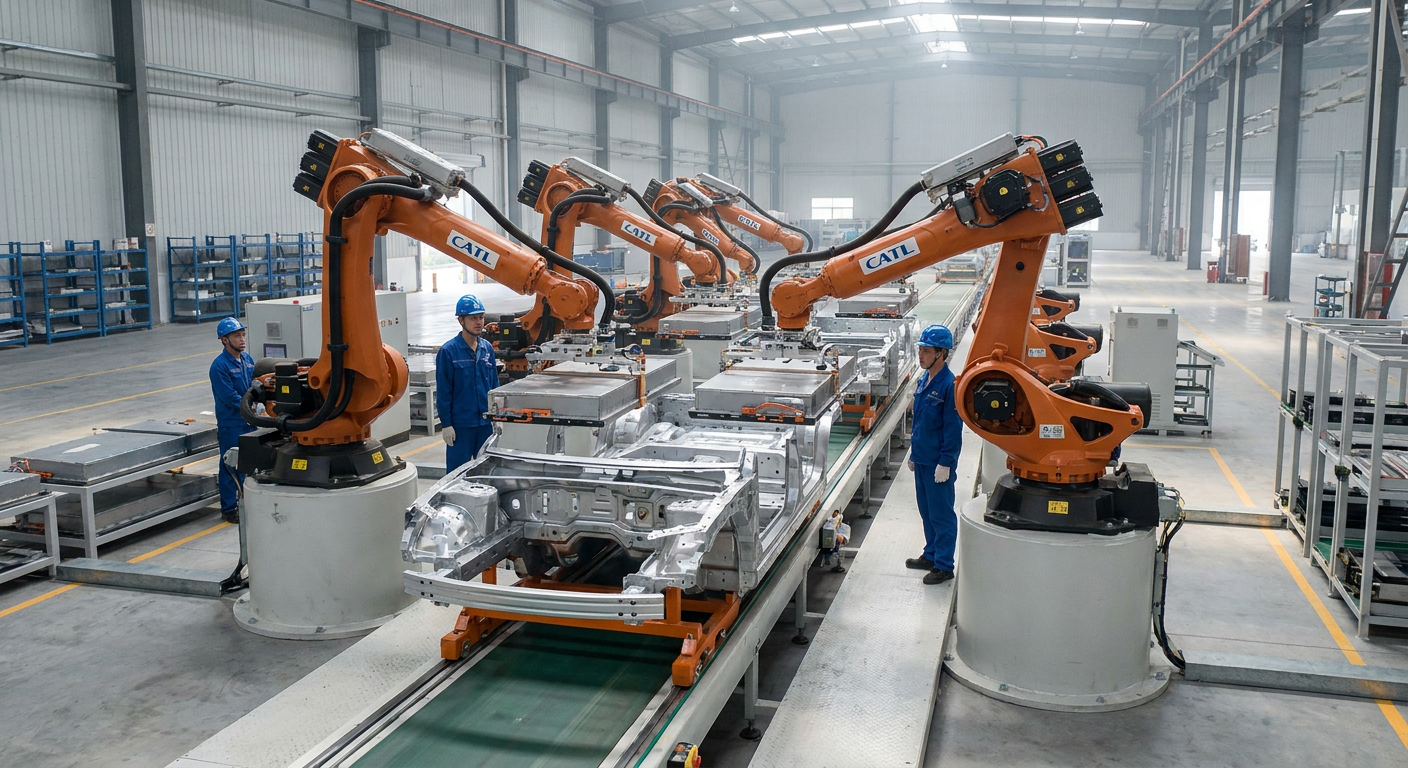
Qijing Auto, the premium electric vehicle brand co-developed by GAC Group and Huawei Technologies, secured a capital injection exceeding RMB 1 billion (US$144.9 million) from a consortium including battery giant CATL and global auto parts supplier Robert Bosch GmbH, signaling a strategic shift toward equity-backed supply chain integration in China's hyper-competitive auto sector.
The mid-May funding round, which also drew capital from state-backed entities including the Guangzhou Development District Investment Group, marks a critical turning point for Huawei’s automotive ambitions. By converting Tier-1 suppliers into direct stakeholders, Qijing establishes a risk-sharing alliance designed to insulate its production lines from component bottlenecks ahead of its imminent market debut in 2026.
This capitalization fundamentally alters the traditional buyer-vendor dynamic. Industry heavyweights like CATL and Bosch are increasingly leveraging venture capital to lock in high-volume clients within Huawei’s expanding "Qiankun" intelligent driving ecosystem. The RMB 1 billion injection equips Qijing Auto with the liquidity required to scale manufacturing while guaranteeing priority allocation of critical components, specifically CATL’s customized Qilin batteries and Bosch’s precision hardware.
GAC Consolidates Control to Accelerate Product Rollout
Initial market reception points to heightened institutional confidence in the GAC-Huawei joint operational model. Following its official brand unveiling in March 2026, Qijing commenced blind pre-orders for its inaugural model, the GT7 shooting brake coupe. The vehicle serves as a comprehensive showcase of the consortium's technological capabilities, featuring an 896-line LiDAR system, Huawei's advanced Qiankun ADS autonomous driving software, the HarmonyOS smart cockpit, and a tri-motor drivetrain supported by Huawei's XMC digital chassis.
The current capital structure reflects calculated positioning by GAC Group to maintain manufacturing sovereignty while deeply integrating Huawei’s software architecture. The corporate lineage traces back to March 2025, when GAC established the predecessor company, Huawang Auto, with an initial RMB 1.5 billion (US$217.4 million) investment. By August 2025, GAC injected an additional RMB 600 million (US$87 million) through its subsidiary GAC Aion, consolidating absolute control before opening the capitalization table to external supply chain partners.
High-level strategic alignments throughout 2025 between GAC Chairman Feng Xingya and Huawei Founder Ren Zhengfei solidified the brand's premium, tech-centric positioning. With the corporate entity officially unified under the Qijing Auto banner in late March 2026, newly appointed CEO Liu Jiaming has completed the structural groundwork to transition from R&D to mass commercialization.
Expanding Matrix Targets Premium Segments
Qijing is aggressively compressing its development timeline to capture market share in a crowded 2026 landscape. Beyond the GT7 coupe, the automaker plans to debut a mid-to-large intelligent SUV by the end of the year, expanding its footprint into the high-margin family vehicle segment. Management has outlined a three-year product roadmap exclusively utilizing Huawei's Qiankun architecture, aiming to systematically cover diverse consumer demographics.
This aggressive rollout, backed by deep-pocketed state funds and critical supplier equity, positions Qijing Auto as a formidable challenger to established premium EV makers. The venture effectively tests the viability of Huawei's collaborative automotive frameworks at a massive industrial scale, proving that automakers and tech firms can forge deeply intertwined financial and operational alliances rather than mere transactional partnerships.
Related Coverage:
Huawei Cements Auto Alliance With $31.7 Billion Stake Sale in Tech Unit