
Huawei Predicts L4 Autonomous Driving Commercial Trials by 2027, Full Deployment by 2035
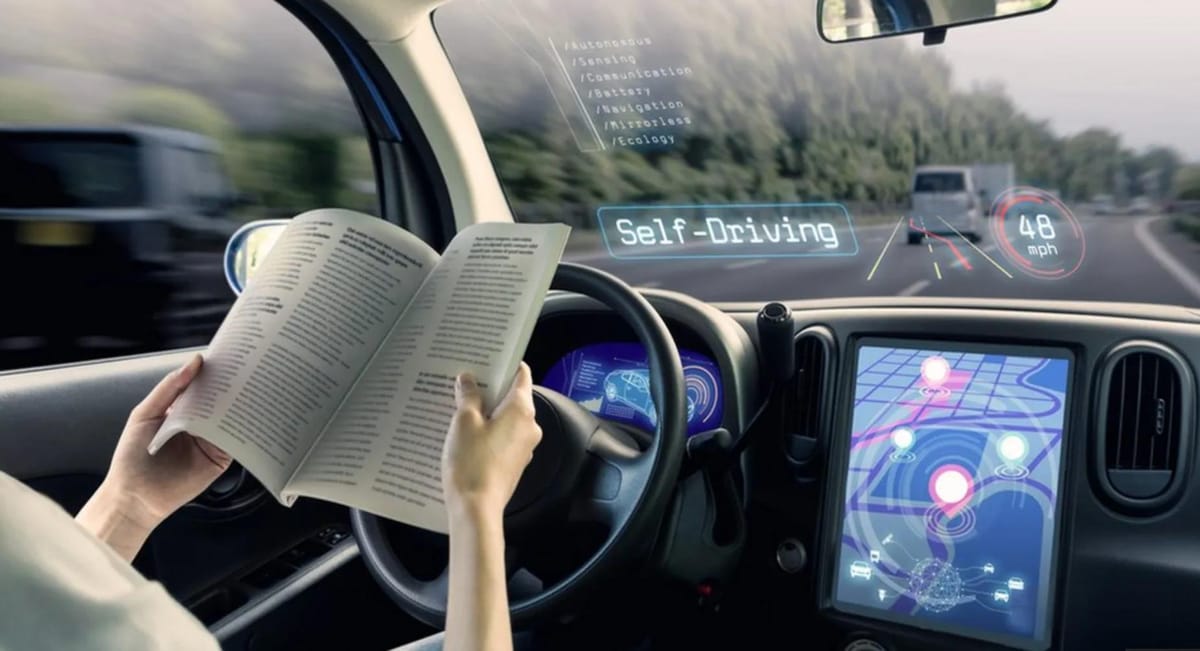
Huawei unveiled an ambitious roadmap for autonomous driving development, projecting Level 4 commercial trials to begin by late 2027 and widespread L4+ deployment across most scenarios by 2035. The Chinese telecommunications giant also outlined plans to explore Level 5 autonomous driving commercialization by the mid-2030s.
Executive Director Wang Tao released the company's "Intelligent World 2035" report on September 16, mapping out technological milestones for the autonomous vehicle industry. The report positions artificial general intelligence (AGI) as fundamental to achieving L4 capabilities, while world model technology will support L3 development.
Huawei forecasts the global RoboTaxi market will reach trillion-dollar scale by 2035, transforming urban transportation ecosystems. The report envisions vehicles evolving from transportation tools into mobile "third living spaces" offering specialized services including office pods, entertainment cabins, and mobile healthcare units.
The projections reflect growing confidence in China's autonomous driving sector, though timeline estimates vary among industry players regarding the technological pathways required for higher automation levels.
Autonomous Driving Technology Roadmap
Huawei's timeline builds on significant progress since 2022, when the industry achieved L2+ capabilities through Transformer architecture, bird's eye view (BEV) systems, and occupancy networks enabling light mapping solutions. The company notes that widespread electric vehicle adoption and continued RoboTaxi development are pushing the sector toward the L3 threshold.
The report identifies end-to-end (E2E) technology as the likely pathway to initial L3 autonomous driving capabilities. World model breakthroughs will subsequently enable L3+ functionality across highway and urban scenarios. For L4 development, Huawei emphasizes AGI technology as the foundational requirement.
By 2030, the company expects L4 systems to achieve commercial scale in select scenarios before expanding to most use cases by 2035. This progression coincides with plans to begin L5 autonomous driving trials during the same period.
Vehicle Transformation Into Mobile Service Platforms
Autonomous driving advancement will fundamentally reshape vehicle functionality, according to Huawei's analysis. RoboTaxi services will offer specialized cabin configurations including "office pods" with secure network connectivity for video conferences, "entertainment cabins" for immersive media experiences, and "family pods" featuring interactive games and child safety monitoring systems.
The report envisions deep integration with urban public services through "mobile clinics" providing basic health screenings for elderly residents, with onboard diagnostic equipment transmitting data to community healthcare providers. Emergency response capabilities would enable one-touch fleet deployment for medication delivery and evacuation services.
Commercial applications include "mobile fitting rooms" for e-commerce returns and "mobile restaurants" delivering fresh meals at specified locations and times. This evolution transforms the traditional "people finding goods" model into "goods finding people," potentially enhancing both consumer experience and business efficiency.
Ten-Year Technology Trends
Huawei's broader technology outlook identifies AGI as the most transformative force over the next decade, while acknowledging significant challenges remain before achieving AGI breakthrough points. The report emphasizes physical world integration as essential for AGI development.
Key predictions include AI agents evolving from execution tools to decision-making partners, driving industrial transformation. Programming methodologies will shift toward human-machine collaboration, with humans focusing on high-level design while AI handles routine coding tasks.
Computing capacity will increase 100,000-fold by 2035, requiring fundamental innovations in architecture, materials, engineering processes, and computational paradigms beyond traditional von Neumann frameworks. AI storage capacity demands will grow 500 times compared to 2025 levels, representing over 70% of total storage needs.
Network connectivity will expand from 9 billion people to 900 billion intelligent agents, facilitating the transition from mobile internet to agent-based internet systems. Energy constraints will become critical factors in AI development, with renewable sources expected to exceed 50% of electricity generation by 2035, managed through AI-optimized grid systems.