
XPeng AeroHT eVTOL Collision Casts Shadow Over China's Low-Altitude Economy Ambitions
Two electric vertical take-off and landing aircraft from XPeng AeroHT collided during a rehearsal flight at the Changchun Airshow on September 16, with one catching fire upon landing, raising fresh safety concerns about the nascent low-altitude economy sector as companies race toward commercial deployment targets.
The accident occurred when the two eVTOL aircraft were conducting formation flight training with insufficient flight spacing, according to a statement from Guangdong HT Aero. While one aircraft landed normally, the other sustained damage and caught fire during landing, though no personnel were injured.
The incident threatens to derail XPeng AeroHT's ambitious plans to achieve mass production and delivery by 2026, while casting doubt over the broader industry's safety readiness as multiple Chinese eVTOL manufacturers target commercialization within the next two years.
The collision has prompted immediate questions about regulatory oversight and safety protocols in China's rapidly expanding low-altitude economy sector, which has attracted billions in investment as companies rush to develop commercial air mobility solutions.
Collision Details Highlight Safety Gaps
According to XPeng AeroHT's preliminary statement, the two aircraft collided due to insufficient flight spacing during formation training exercises ahead of the Changchun Airshow, which officially runs from September 19. Eyewitness accounts described one aircraft suddenly deviating from its preset flight path while circling at low altitude, leading to a violent collision with another aircraft that was landing.
The Civil Aviation Administration of China maintains strict flight separation requirements, mandating 300-meter vertical intervals below 6,000 meters altitude and typically requiring 20-kilometer lateral spacing and 10-minute temporal separation for aircraft safety. The collision suggests these protocols were not adequately maintained during the demonstration flight.
Eyewitnesses reported windy conditions at the time of the accident, with speculation that weather may have caused one aircraft to lose control. However, aviation industry experts note it remains unclear whether the insufficient spacing involved vertical, horizontal, or temporal separation failures.
XPeng AeroHT's Commercial Ambitions at Risk
The accident comes at a critical juncture for XPeng AeroHT, which has positioned itself as Asia's largest flying car company with over 1,400 employees and nearly 5,000 pre-orders for its "Land Aircraft Carrier" split-type flying car. The company completed US$ 250 million in funding over the past year and expects to invest RMB 3 billion yuan (US$ 413 million) in 2025.
Founded in 2020 as an ecosystem company of XPeng Motors, XPeng AeroHT broke ground on its smart manufacturing base in October 2024, designed for annual production capacity of 10,000 units. The company received 2,008 orders from 12 bulk customers across various industries at the November 2024 Zhuhai Airshow.
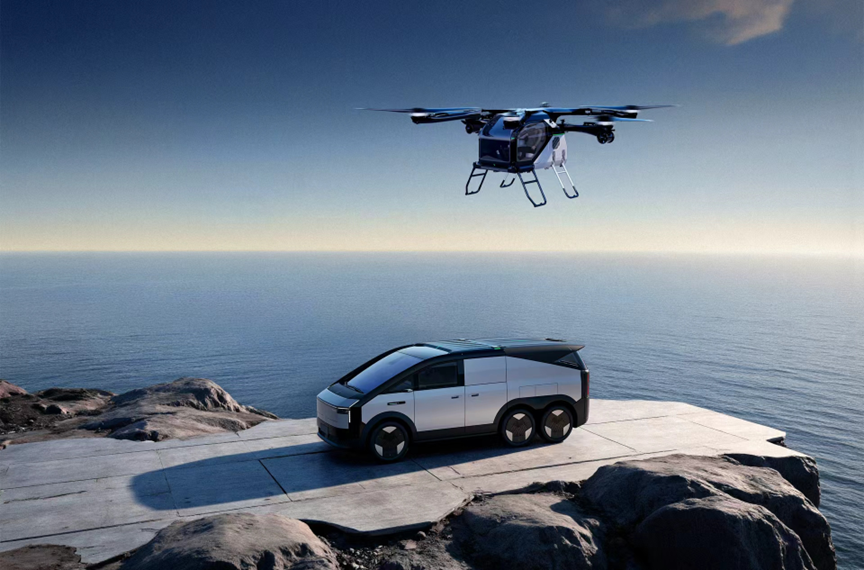
The company's flagship product features a modular design with separate flight and ground components that can automatically separate and combine via a one-touch system. The flight module uses a six-wing dual-ducted configuration with foldable propellers and arms, while the ground vehicle features six-wheel design and 800V high-voltage silicon carbide range-extension power platform.
XPeng AeroHT plans to complete Type Certificate (TC) approval from the Civil Aviation Administration of China by the end of 2025, representing the first of three required airworthiness certificates for commercial operation. The company has already received acceptance for its Production Certificate (PC) application.
Industry-Wide Implications for eVTOL Sector
The collision threatens broader industry momentum as multiple Chinese eVTOL manufacturers, including Huayu Xianxiang and Wanfeng Auto, target TC certification completion in 2025 and commercial deployment by 2026. Aviation industry professionals suggest the accident could delay regulatory approvals and impact investor confidence in the sector.
While XPeng AeroHT has emphasized its aircraft's multi-dimensional intelligent sensing and obstacle avoidance capabilities, along with triple-redundant flight control systems, the collision raises questions about the reliability of automated safety systems under real-world operating conditions. The company markets its aircraft as requiring only five minutes for users to get started and three hours to become proficient, with one-touch takeoff, landing, and route planning in autonomous mode.
The incident has already sparked public skepticism about eVTOL safety, with some potential passengers expressing reluctance to fly in small aircraft despite the technology remaining years away from passenger operations. The accident serves as a reminder for low-altitude economy enterprises to prioritize safety system upgrades before pursuing crewed flight operations, potentially reshaping development timelines across the industry.