
Huawei Qiankun's 3-Million-Unit Target Exposes Automotive Power Shift: OEMs Surrender User Control
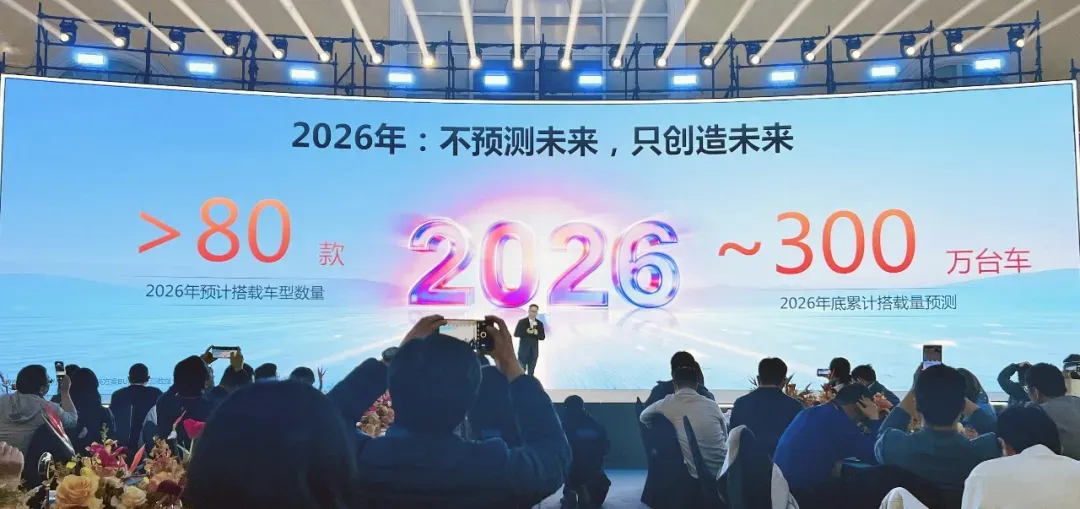
Huawei's automotive ambitions have moved beyond component supply into territory that fundamentally challenges the traditional automaker business model. The company's Intelligent Automotive Solution BU delivered 31.68 million parts across 976,000 vehicles in 2025, but the 2026 target of 3 million ADS-equipped vehicles masks a more consequential development: Huawei now controls the customer relationship through its Qiankun APP, effectively bypassing partner automakers in the user engagement layer. This represents not incremental supplier expansion but a structural realignment of where value and control reside in China's electric vehicle ecosystem.
Speaking at the January 16 Qiankun Media Day in Dongguan, Huawei Automotive BU CEO Jin Yuzhi disclosed that the Qiankun APP—launched just two months prior at the Guangzhou Auto Show—already commands 660,000 active users from over 1 million downloads. The application enables direct vehicle control, car purchases across partner brands, and ecosystem service integration, functions traditionally monopolized by OEM-branded platforms. Jin's casual remark that he uses the Qiankun APP rather than Mengshi's native interface to control his vehicle crystallizes the dynamic: automakers deploying Huawei solutions are ceding the primary customer touchpoint to their supplier.
ADS Deployment Velocity Outpaces Traditional Tier-1 Penetration Curves
Huawei's Advanced Driving System achieved its first 1 million installations over five years, then added nearly another million units in 2025 alone. Monthly deployments exceeded 100,000 units starting October 2025, a run rate Jin confirmed will continue through 2026. The system captured approximately 28% market share through September 2025, with over 50% penetration in the premium segment above RMB 350,000. By year-end 2026, Huawei projects ADS presence across 80 vehicle models with cumulative installations reaching 3 million units.
This trajectory parallels Tesla's FSD deployment cadence but operates through a fundamentally different commercial architecture. Where Tesla retains complete vertical integration from silicon to software to customer data, Huawei's model distributes vehicle manufacturing across partners—Avatr, Voyah, Dongfeng, GAC, Baojun—while consolidating the software stack and user interface layer. The January 15 safety report Jin previewed illustrates this consolidation: 7.283 billion kilometers of ADS driving data flows back to Huawei, not to the dozen-plus brands deploying the system. Vehicles equipped with ADS demonstrate 3.58 times the safety performance of average Chinese drivers under autonomous mode, and 2.72 times safer even under manual driving due to active safety interventions.
Tesla's comparative figures—7.3 times safer than U.S. averages for FSD, 3.3 times safer with safety features enabled—reflect 11.76 billion kilometers (7.312 billion miles) of accumulated data. Jin's explicit reference to competing with "an American company" on safety transparency signals Huawei's intent to position ADS not merely as a domestic leader but as a global autonomous driving benchmark. The critical distinction: Tesla's data feeds a vertically integrated business, while Huawei's feeds a platform that serves competing automakers.
Direct-to-Consumer Infrastructure Redefines Supplier Boundaries
The Qiankun APP's functional scope exceeds typical supplier engagement tools. Beyond remote vehicle control—unlocking, climate preconditioning, feature activation—the platform incorporates a digital showroom where users browse and purchase vehicles across partner brands. The Huajing S from Baojun's collaboration appeared on the Qiankun platform before official brand announcements, demonstrating that Huawei's go-to-market timeline can precede partner communications. The application aggregates 15,000 user feature requests, creating a direct feedback channel that bypasses traditional OEM product development processes.
Huawei's "10-Minute Qiankun Lifestyle Circle" extends this reach into adjacent service layers: parking, charging, and maintenance providers integrate through the platform, with HarmonyOS's 20,000-application ecosystem accessible across mobile and in-vehicle environments. Jin projects Qiankun APP will surpass 10 million users within several years—a threshold fewer than ten Chinese automotive brands have historically achieved in total sales volume. Critically, those legacy sales figures represented weak customer connections, while Qiankun's user base demonstrates daily high-frequency engagement through essential vehicle functions.
The parallel HarmonyOS Smart Mobility APP serving the "Five Realms" brands (AITO, Seres, etc.) follows identical logic: vehicle control, social features, and integrated purchasing for Huawei's deeper partnership tier. Between Qiankun and HarmonyOS Smart Mobility, Huawei constructs duplicate digital infrastructure that mirrors and potentially supplants OEM customer platforms. Partner automakers technically can offer dual-APP control, but user behavior gravitates toward the more functional, ecosystem-rich Huawei interface.
OEM Value Proposition Compression and Strategic Lock-In
This architecture presents partner automakers with an unresolvable tension. Huawei's systems demonstrably enhance vehicle competitiveness—ADS achieves 98% utilization rates among buyers who select the feature, indicating genuine functional value. Models equipped with Qiankun technology span sedans, SUVs, MPVs, and off-road vehicles across pure electric, hybrid, and internal combustion powertrains, covering price points from volume to ultra-premium. Rejecting Huawei means forfeiting proven differentiation in China's hyper-competitive market where monthly bankruptcy filings have become routine.
Yet adoption converts automakers into what increasingly resembles contract manufacturing. When a customer purchases a Voyah or Avatr vehicle and immediately downloads the Qiankun APP for primary interaction, the brand on the vehicle becomes secondary to the software platform enabling its core functions. Huawei captures behavioral data, usage patterns, feature preferences, and service touchpoints—the exact information assets that define customer lifetime value in software-defined vehicle architectures. The automaker receives a unit sale; Huawei acquires an engaged platform user likely to remain in its ecosystem across multiple vehicle lifecycles and brands.
Jin's presentation outlined 2026 product roadmap including ADS 5.0, next-generation HUAWEI XMC digital chassis, LCoS dual-focal-plane AR-HUD, and HarmonyOS Space 6 cockpit system—each representing deepened integration between Huawei's stack and vehicle functionality. The company will deploy a flagship safety product (likely advanced lidar based on presentation materials) on the Denza S800 and AITO M9, further embedding its technology in partner vehicles' core value propositions. New brand launches including Qijing (GAC partnership) and Yijing (Dongfeng collaboration) expand the partner roster even as existing collaborators deepen dependence.
The comparison to Bosch that Huawei articulated in 2019 upon establishing its Automotive BU understates the current reality. Bosch supplies critical components but does not own customer relationships or aggregate cross-OEM usage data into proprietary platforms. Huawei's model more closely resembles Google's Android strategy in smartphones: provide enabling technology that makes partners' products viable while capturing the user layer and ecosystem economics. Chinese automakers face the smartphone industry's historical lesson—differentiation becomes nearly impossible when core experiences homogenize around a shared platform, and the platform operator extracts disproportionate value from an industry it does not directly compete in through vehicle sales.
By ChinaBiz Insider Analysis Desk