
Galbot Deploys Heavy-Duty Humanoid Robot at CATL, Signaling Shift in Industrial AI Application
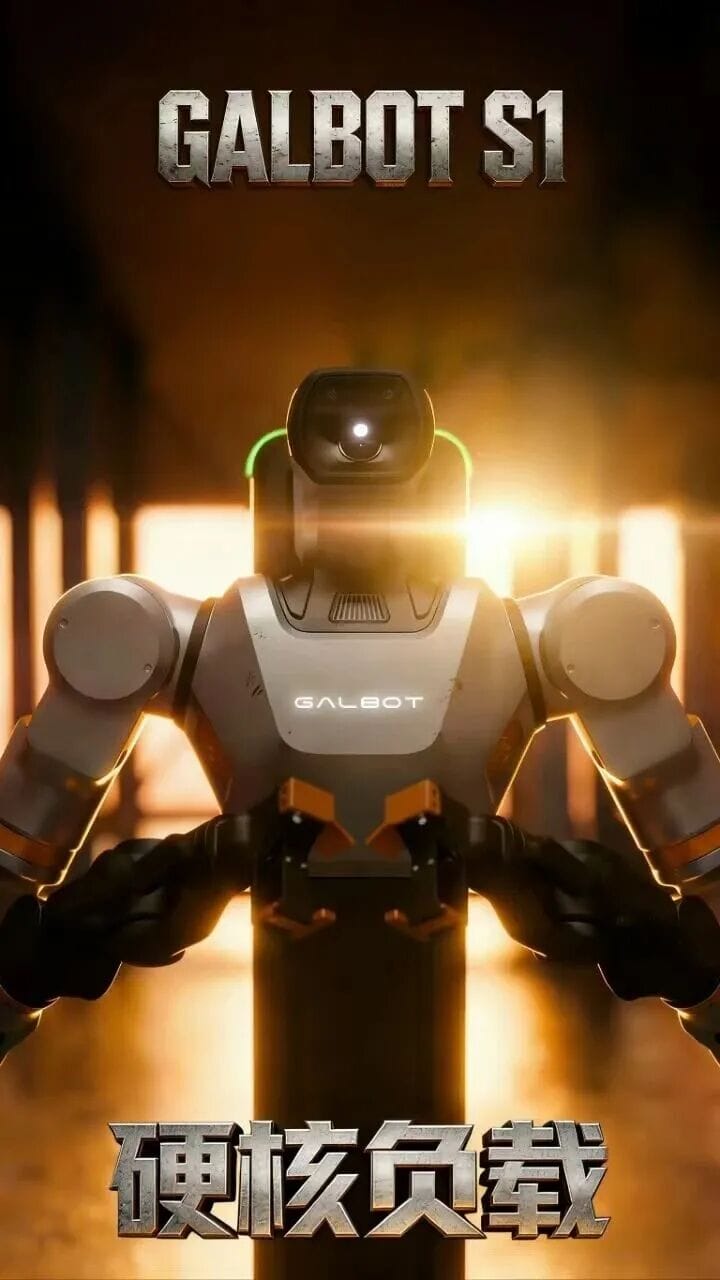
Galbot has launched the Galbot S1, the world’s first autonomous embodied intelligence robot capable of a continuous 50-kilogram payload, effectively bridging the gap between light-duty assistants and heavy industrial machinery. The introduction of the S1 addresses a critical vacancy in the robotics market by offering a solution that meets the rigorous demands of heavy-load manufacturing without relying on static environments or human teleoperation.
The Beijing-based company has successfully deployed the S1 into the core production lines of Contemporary Amperex the world’s largest EV battery maker. Unlike previous iterations of humanoid robots that were relegated to auxiliary roles or demonstrations, the S1 is now performing key heavy-load tasks in a live manufacturing environment. This deployment is significant as it demonstrates the robot's ability to operate fully autonomously—with zero remote control—in complex, real-world factory settings.
This operational milestone underscores a maturing of the embodied AI sector, moving it from conceptual validation to tangible industrial productivity. The market has responded to this potential, with Galbot recently securing RMB 2.1 billion yuan (US291million) infinancing, pushing its valuation past RMB 20 billion yuan (US2.77 billion). This places the company at the top tier of China’s embodied intelligence sector, reflecting strong investor confidence in the scalability of high-payload autonomous systems.
The commercialization of the S1 aligns with the broader push for "new quality productive forces" outlined in China's 15th Five-Year Plan, which commenced in 2026. By integrating artificial intelligence directly into core manufacturing processes, the technology is poised to reshape production organization, moving beyond the limitations of traditional automation that requires pre-programmed paths and static workflows.
Breaking the Industrial Payload Barrier
The primary differentiator for the Galbot S1 is its mechanical capacity. Historically, embodied intelligence robots have struggled with a "payload ceiling," typically capping out at effective loads of under 10 kilograms. This limitation restricted their utility to light tasks, requiring significant performance trade-offs during mobile or dual-arm operations. The S1’s dual-arm system sustains a 50kg load, a specification targeting the "awkward zone" of industrial handling—weights that are physically straining for human workers but too light to justify large-scale overhead crane systems.
Engineered for industrial rigor, the robot features an IP54 rating for water and dust resistance, allowing it to withstand factory environments characterized by dust, vibration, and temperature fluctuations. It offers a vertical operational range reaching 2.3 meters, making it adaptable to various scenarios from ground-level handling to high-shelf warehousing. Furthermore, the unit supports 24/7 continuous operation through an 8-hour battery life combined with an autonomous battery-swapping mechanism.
Autonomous "Embodied Handling Model"
Driving the hardware is Galbot’s proprietary "Embodied Handling Model," a pure vision-based perception system presented as a key achievement in Beijing's AI sector. This software architecture eliminates the need for external markers such as QR codes or reflectors, which are commonly required for traditional Automated Guided Vehicles (AGVs). This reduces deployment costs and allows the robot to integrate seamlessly into existing production lines without infrastructure modification.
The model is designed for high interference resistance, maintaining stability under dynamic lighting, partial occlusion, and human-robot co-working environments. It features 360-degree obstacle avoidance and millisecond-level safety responses, ensuring that the heavy-load capabilities do not compromise safety. This level of autonomy allows the S1 to perform strictly defined, high-repetition tasks without the need for human supervision or remote intervention, a crucial requirement for large-scale industrial adoption.
Commercial Scale and Ecosystem Expansion
The deployment at Contemporary Amperex represents a transition from capability demonstration to a reproducible productivity solution. Galbot has stated that the S1 is not merely a prototype but a standardized product ready for wider adoption. The company has established partnerships with major global and domestic manufacturers, including Bosch (Robert Bosch GmbH), Toyota Motor Corp., BAIC, SAIC Motor, and Zeekr.
These collaborations focus on high-precision, high-stability tasks such as automatic quality inspection, material handling, and component sorting—areas where "performance" allows for zero margin of error. In a move to solidify its supply chain and production capacity, Galbot is also conducting joint hardware R&D with Baida Precision, targeting a deployment scale of 1,000 units. According to Galbot founder Dr. Wang He, the value of these robots lies in the "data loop" generated by continuous operation in real scenarios, which enables the AI brain to evolve and adapt, further widening the gap between embodied intelligence and traditional automation.