
China's Humanoid Robot Deployment Confronts Software Vacuum as Leju Launches Taskor Platform
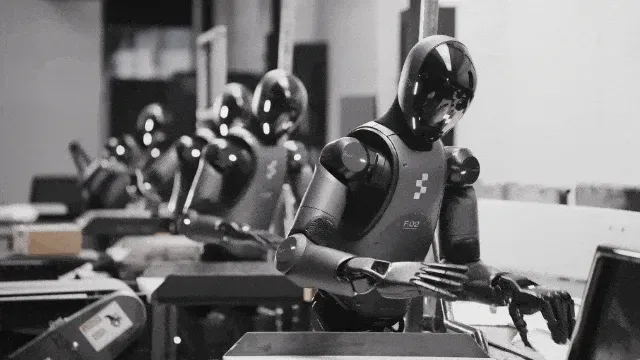
While Figure 01 sorts packages in North American warehouses and Tesla's Optimus attempts component assembly in automotive facilities, China's humanoid robotics sector has encountered a structural bottleneck far removed from hardware capabilities. Leju Robotics' January 15 release of Taskor—positioned as China's first industrial embodied AI software platform—exposes a critical asymmetry: domestic manufacturers have achieved component localization rates exceeding 95%, yet lack the middleware infrastructure required to transition robots from prototype validation to batch production deployment. The platform's emergence signals recognition that industrial commercialization hinges less on actuator torque density than on reducing integration friction between robotic systems and factory execution environments.
Software-Hardware Imbalance Creates Deployment Economics Problem
The concentration of Chinese robotics investment in hardware development has produced capable humanoid platforms while leaving the orchestration layer underdeveloped. Traditional deployment models require specialized engineers to spend weeks configuring individual robots for specific production tasks—an economic structure that collapses at scale. Manufacturing facilities in automotive and electronics sectors typically lack robotics engineering teams, creating dependency on external system integrators for routine task modifications. This bottleneck mirrors challenges Tesla identified in its own manufacturing operations, where Elon Musk's "software-defined" manufacturing philosophy treats industrial software not as auxiliary tooling but as the neural architecture connecting physical automation to production systems.
Leju's Taskor platform directly addresses this integration gap through a two-component architecture: Studio for task programming and Dispatch for fleet coordination. The Studio environment decomposes complex motion sequences into visual modules, enabling production line workers without programming backgrounds to configure robotic workflows. Leju claims this graphical interface compresses single-unit deployment timelines from multi-week engineering projects to same-day configurations—a compression ratio that fundamentally alters the cost structure of adding robotic capacity.
Standardized Workflows Target Repetitive Material Handling Operations
Rather than pursuing general-purpose capabilities, Taskor launches with three pre-configured industrial solutions: plastic container destacking, SMT component tray retrieval, and material box transport. This narrow initial scope reflects pragmatic prioritization of high-volume, repetitive tasks where standardization potential justifies upfront software investment. The platform's integration with Manufacturing Execution Systems allows real-time monitoring of robot status, spatial positioning, and order fulfillment progress—operational visibility requirements in production environments where downtime carries direct revenue impact.
The "program once, deploy to multiple units" model enables task distribution across robot fleets after initial workflow creation. In automotive manufacturing and electronics assembly contexts, this replication capability addresses the batch deployment challenge that has constrained humanoid robots to pilot programs. Leju's partnerships with FAW Hongqi, JAC Motors, and GoerTek provided testing grounds for refining these workflows under actual production conditions, though the company has not disclosed adoption rates or operational uptime data from these deployments.
Ecosystem Maturity and Reliability Thresholds Remain Unproven
Leju's claimed mean time between failures of 1,000 hours—equivalent to roughly 125 eight-hour shifts—establishes a baseline reliability metric, yet industrial automation incumbents like ABB and KUKA maintain uptime standards an order of magnitude higher for traditional industrial robots. The gap reflects embodied AI's relative immaturity in managing environmental variability, sensor fusion uncertainties, and mechanical wear patterns under continuous operation. Taskor's software layer cannot fully compensate for hardware reliability limitations, particularly in precision assembly tasks where positional accuracy requirements exceed current humanoid capabilities.
The platform's viability also depends on cultivating a developer ecosystem capable of extending its functionality beyond Leju's three initial solutions. Industrial software platforms historically require years of iterative refinement informed by diverse deployment contexts—a maturation timeline that tests the financial endurance of venture-backed robotics companies facing pressure to demonstrate commercial traction. Leju's coordination with over 50 ecosystem partners suggests awareness of this dependency, though the depth of these relationships and their capacity to generate differentiated industrial applications remains unclear.
The company's emphasis on achieving 95%+ component localization and establishing production lines scaled for tens of thousands of units indicates preparation for volume manufacturing. However, software platform stickiness—not hardware production capacity—will ultimately determine whether Taskor becomes genuine industrial infrastructure or remains a proprietary tool serving only Leju's own robots. The distinction matters significantly: open platforms that accommodate third-party hardware accelerate market development but dilute competitive moats, while closed ecosystems maximize control but constrain addressable market expansion.
Taskor's release validates the thesis that China's humanoid robotics commercialization now hinges on software maturation rather than mechanical engineering advances. Whether this first-mover advantage in industrial middleware translates to durable market position depends on execution variables largely invisible in product announcements: API design quality, backward compatibility commitments, and willingness to prioritize ecosystem growth over near-term margin optimization.
By ChinaBiz Insider Analysis Desk