
Huawei Returns to Global 5G Arena With Pura 90s Pro, Cracking U.S.-Japan RF Supply Chain Lock
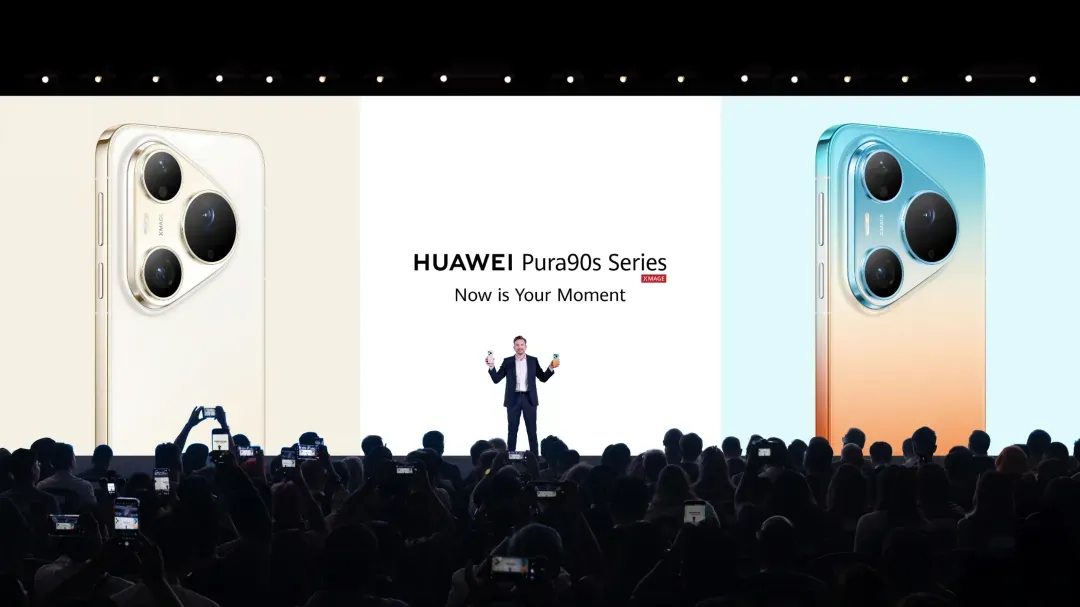
Huawei on July 14 launched its Pura 90s Pro international edition in Kuala Lumpur, Malaysia — the company's first overseas 5G flagship smartphone since U.S. export controls effectively severed its access to advanced radio-frequency components in 2019, marking a supply-chain milestone that extends well beyond a single product launch.
The event signals that Huawei has achieved commercial-grade domestic production of the three RF components that had kept its international handsets locked at 4G: bulk acoustic wave (BAW) filters, gallium nitride (GaN) power amplifiers, and full 5G NR front-end modules. For six years, Washington's most precise instrument of pressure on Huawei was not the chip embargo itself, but the RF-layer interdiction — a chokepoint that rendered even Kirin-powered devices incapable of 5G connectivity outside China. That lever has now been pulled from the other side.
Domestic RF Breakthrough Redefines the Sanctions Calculus
The strategic significance of the Kuala Lumpur launch lies less in the handset specifications than in what the device's 5G capability implies about China's semiconductor supply chain. BAW filters and GaN power amplifiers were, until recently, monopolized by a handful of U.S. and Japanese suppliers including Qorvo, Skyworks, and Murata Manufacturing. Huawei's ability to ship a commercially viable 5G handset with full-band coverage — the Pura 90s Pro supports more than 20 5G NR frequency bands covering major global carriers — confirms that domestic Chinese alternatives have crossed the threshold from laboratory viability to mass production.
Field tests conducted by Saudi-based reviewers recorded downlink speeds exceeding 1,100 Mbps on the device, consistent with mid-band 5G performance on commercial networks. That data point, while anecdotal, directly counters any suggestion that the domestically sourced RF stack represents a performance compromise.
The Kirin 9030S system-on-chip powering the device handles both baseband processing and, in conjunction with the new RF front-end, the full 5G signal chain. Huawei's baseband self-sufficiency had been established years earlier; the RF component gap was the remaining structural vulnerability. Its closure forces a reassessment of how effectively component-level export controls can constrain a determined, state-backed technology integrator over a multi-year horizon.
Pricing and Positioning Target Samsung's Mid-to-Premium Flank
The Malaysia launch establishes a clear pricing architecture. The Pura 90s Pro starts at RM 3,699 (approximately RMB 6,140, or US$853) for the 12GB/256GB configuration, with the 512GB variant at RM 3,999 (RMB 6,640, or US$922). The Pura 90s Pro Max — featuring a 6.9-inch 1.5K display and a 200-megapixel RYYB periscope telephoto lens with a 1/1.28-inch sensor — is priced at RM 4,899 (RMB 8,140, or US$1,131) in the sole 12GB/512GB configuration.
Both models ship with a 6,000mAh battery (5,250mAh in EU-compliant variants due to regulatory constraints), 100W wired and 80W wireless charging, and a bundled charger — a packaging choice that contrasts with Apple's accessory-exclusion policy. The international versions come pre-loaded with Google Mobile Services (GMS), including WhatsApp, YouTube, and Google Maps, resolving the single largest adoption barrier Huawei faced in markets outside mainland China since losing GMS access in 2019.
At these price points, Huawei is directly targeting the upper tier of Samsung Electronics' Galaxy S25 lineup and the base configuration of Apple's iPhone 17 series. The imaging stack — particularly the Pro Max's five-times-greater light intake on the telephoto lens compared with the iPhone 17 Pro Max's equivalent module, according to the company's published specifications — positions the device as an aggressive value proposition in Southeast Asia and the Middle East, two regions where Huawei retains meaningful brand recognition.
Companion Hardware Extends the Ecosystem Offensive
Alongside the smartphones, Huawei introduced the MatePad Air tablet for international markets. The device runs a Kirin T93C processor (derived from the 9030 series architecture), features a 12-inch 2.8K, 144Hz, 3:2 OLED display, and incorporates a 10,100mAh battery with 66W fast charging. At 5.3mm thick and 509 grams, with a six-speaker array and a bezel-embedded front camera, the MatePad Air positions Huawei's tablet ecosystem as a direct alternative to Apple's iPad Pro in markets where GMS compatibility had previously been a dealbreaker.
The tablet's inclusion in the Kuala Lumpur event underscores that Huawei's international re-entry is a platform strategy, not a single-device gambit.
Mate 90 Series Looms as the Next Test of Sustained 5G Capability
With the RF supply chain now validated at commercial scale, attention turns to the Mate 90 series, expected in the second half of 2026. The Mate line has historically represented Huawei's highest-tier engineering statement — the Mate 40 Pro, launched in late 2020 with the Kirin 9000, was the last globally available Huawei 5G flagship before sanctions effectively ended that chapter. A Mate 90 with full international 5G capability would confirm that the Pura 90s Pro launch was a repeatable outcome rather than a one-cycle achievement.
For investors tracking the broader China semiconductor theme, the more consequential read is this: the domestic RF component ecosystem that enabled the Pura 90s Pro's 5G capability is not Huawei-exclusive. The same BAW filter and GaN amplifier supply base is available to other Chinese OEMs, potentially accelerating 5G feature parity across the domestic handset industry and reducing systemic exposure to future component-level trade restrictions.
Huawei did not respond to a request for comment on international distribution plans or production volumes ahead of publication.
Related Coverage:
Huawei Tops China’s 2025 Smartphone Market as Apple Slips to Third