
Xiaomi’s Humanoid Robot Closes Human Gap With 98% Accuracy on EV Assembly Line
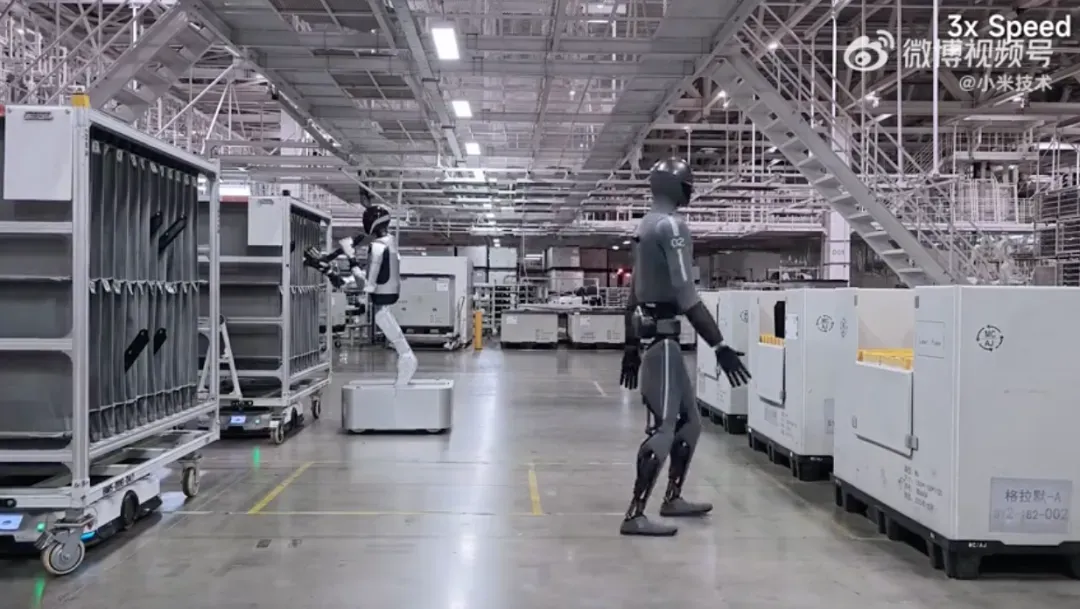
Xiaomi's humanoid robot has narrowed the performance gap with experienced factory workers to a single percentage point after just four months on a live automotive production line—a milestone that signals the technology is transitioning from controlled demos to industrial viability.
Lei Jun, Xiaomi's founder and chief executive, disclosed the progress on his personal Weibo account on July 15, 2026, offering the most detailed operational data the company has released to date on its humanoid robotics program. The timing is deliberate: as China's manufacturing sector faces structural labor-cost pressures, Xiaomi is positioning its robot division not merely as a hardware showcase but as a credible supply-chain asset.
Market observers note that the disclosure arrives ahead of Xiaomi's next earnings cycle and reinforces a broader narrative the company has been building—that its vertically integrated ecosystem, spanning consumer electronics, electric vehicles, and now industrial robotics, can generate compounding operational advantages that pure-play EV rivals cannot replicate.
Screw-Fastening Accuracy Surges, Compressing the Human-Machine Gap
The headline metric is a jump in success rate for self-tapping nut installation—one of the most precision-demanding tasks in a vehicle final-assembly hall—from 90.2% to 98% over the four-month deployment at Xiaomi's smart factory in Beijing Yizhuang Economic Development Zone. The human benchmark for the same workstation sits at 99%, meaning the robot has closed roughly 80% of the original performance deficit in a single internship cycle.
The task is technically non-trivial. Self-tapping nuts feature internal splines, and each unit arrives from the feed mechanism in a random rotational orientation. The robot must first perform real-time angular recognition, then compensate for the nut's magnetic interference before achieving precise alignment—all within a cycle time calibrated to line speed. Lei set a formal "regularization" threshold of 10,000 stable operating hours, a target he originally projected would take one to two years to reach. The current trajectory suggests the timeline may compress.
Flexible-Component Handling Opens a New Frontier in Robot Deployment
Beyond the screw-fastening benchmark, Xiaomi's robot has expanded into two additional workstations: center-console side-panel sorting and bin folding, both achieving a 90% success rate. More strategically significant is what Lei described as the robot's first sustained, long-duration operation on flexible, irregular components—a category that has historically represented the hard ceiling for industrial robot adoption.
Side panels are large, non-rigid parts with no fixed geometry. The robot must retrieve a specified panel from a three-row-deep bin, navigate its own full range of body motion to maintain balance while reaching the far end, and deposit the panel into a precise slot on a material-rack trolley. If the panel snags or jams during placement, the robot relies on end-effector force sensing to autonomously adjust—eliminating the need for human intervention. Lei released an unedited continuous-operation video of the task, a transparency move clearly designed to preempt skepticism about curated lab conditions.
Five-Year Labor Integration Plan Reframes the Investment Case
Lei outlined a five-year roadmap under which humanoid robots become a material component of Xiaomi's factory workforce. Current development priorities include extending mean time between failures, improving single-task completion rates across a broader set of classic workstations, and advancing bionic dexterous-hand capabilities alongside multi-robot collaborative operation.
The industrial deployment strategy carries direct financial logic. Xiaomi's Yizhuang EV plant is a high-capital-intensity asset; any reduction in per-unit labor cost or quality-defect rate flows directly to vehicle-segment margins, which remain under competitive pressure from peers including BYD and Li Auto. If the robot program scales as projected, it could also generate a licensing or equipment-supply revenue stream—a model already being explored by Tesla Inc. with its Optimus platform in North America.
Benchmarking Against the Global Humanoid Race
Xiaomi's 98% accuracy figure invites direct comparison with publicly disclosed metrics from rivals. Tesla has not released granular task-success-rate data for Optimus under factory conditions. Domestically, competitors including Unitree Robotics and UBTECH Robotics have demonstrated assembly-adjacent capabilities but have not published equivalent production-line performance data. That information asymmetry, whether intentional or structural, currently works in Xiaomi's favor as it shapes the narrative around China's humanoid robotics commercialization race.
The broader industry context matters: China's Ministry of Industry and Information Technology has identified humanoid robots as a strategic manufacturing priority, and several municipal governments have announced procurement targets for the 2026–2030 period. Xiaomi's ability to point to live, measurable factory data—rather than trade-show demonstrations—positions it advantageously in that policy environment.
Related Coverage:
Xiaomi Plans Mass Deployment of Humanoid Robots in Factories Within Five Years