
Huawei Unveils Ultra-High-Resolution LiDAR to Boost Flagship EV Driving Systems
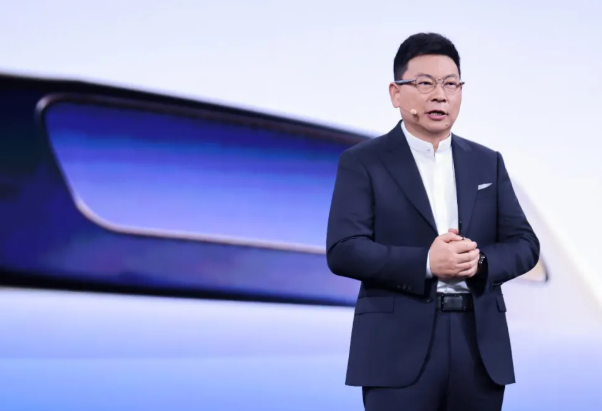
Huawei Technologies Co. has introduced an 896-line LiDAR sensor, billed as the highest-resolution unit in mass production, as the Chinese technology giant intensifies its focus on advanced hardware for autonomous driving capabilities.
The new sensor, revealed by Richard Yu, chairman of Huawei’s Consumer BG, at a Harmony Intelligent Mobility technical event on March 4, can detect obstacles as small as 14 centimeters from 120 meters away. The technology will debut on upgraded versions of the flagship Zunjie S800 and Aito M9 electric vehicles.
While competitors like Tesla Inc. prioritize camera-based vision systems, Huawei and most Chinese automakers are aggressively pursuing LiDAR solutions. The advanced capability comes at a premium: equipping the new sensor increases the starting price of the Zunjie S800 by RMB 20,000 yuan to RMB 728,000 yuan (US$101,800), and raises the Aito M9 price by RMB 10,000 yuan to RMB 479,800 yuan.
The launch signifies Huawei's continued push to dominate the intelligent vehicle supply chain through superior hardware specs, despite the added cost to consumers. The company’s Harmony Intelligent Mobility alliance has delivered cumulative sales exceeding 1.28 million units over the past 43 months.
Image-Grade Sensing Capability
The 896-line LiDAR represents a significant leap in point cloud density—effectively quadrupling the precision of Huawei's previous 192-line unit. Yu noted the sensor had been under development for over five years, beginning when he took charge of the automotive business unit in 2021.
The system utilizes a novel dual-light path architecture that combines wide-angle imaging for broad situational awareness with telephoto capabilities to resolve distant details quickly. Huawei’s Intelligent Automotive Solution BU CEO Jin Yuzhi described the output as "image-grade," transitioning vehicular LiDAR from simple 3D point clouds to 3D imaging.
Huawei claims substantial real-world performance gains. Internal tests showed test vehicles successfully evading small objects like cardboard boxes in low light at 120 km/h, and low-reflectivity obstacles like tires at 130 km/h. The hardware is also reinforced, featuring durability improved by 200% and verified against sandstorm conditions.
ADS 4.1 Expands Operational Domain
Alongside the hardware upgrade, Huawei released version 4.1 of its Qiankun Advanced Driving System (ADS). The update focuses on expanding operational scenarios, unlocking the ability to navigate complex rural mountain roads and cliffside routes without relying on high-definition maps.
The system can now model road boundaries in real-time using multi-sensor fusion, allowing it to center the vehicle even without visible lane markers. It also enables autonomous three-point turns on narrow roads.
Jin provided updated safety data, stating that as of March 3, 2026, the system had avoided over 3.54 million potential collisions. Huawei claims its assisted driving mode is 3.95 times safer than the average human driver on Chinese roads based on average safe driving mileage data. During the 2026 Spring Festival, total assisted driving mileage reached 3.73 billion kilometers, a 210% year-on-year increase.
New Brand Targets Xiaomi Rivalry
Harmony Intelligent Mobility also previewed its fifth brand, Shangjie, introducing the Z7 sedan and the Z7T shooting brake variant.
While full specifications and pricing will not be released until late March, the models are positioned to compete directly with Xiaomi Corp.'s popular SU7. The Shangjie vehicles will feature high-saturation color options and interior innovations such as a moving screen that turns to face the user when interacted with via voice command.