
Huawei vs. Nio: China’s EV War Enters the Software Era
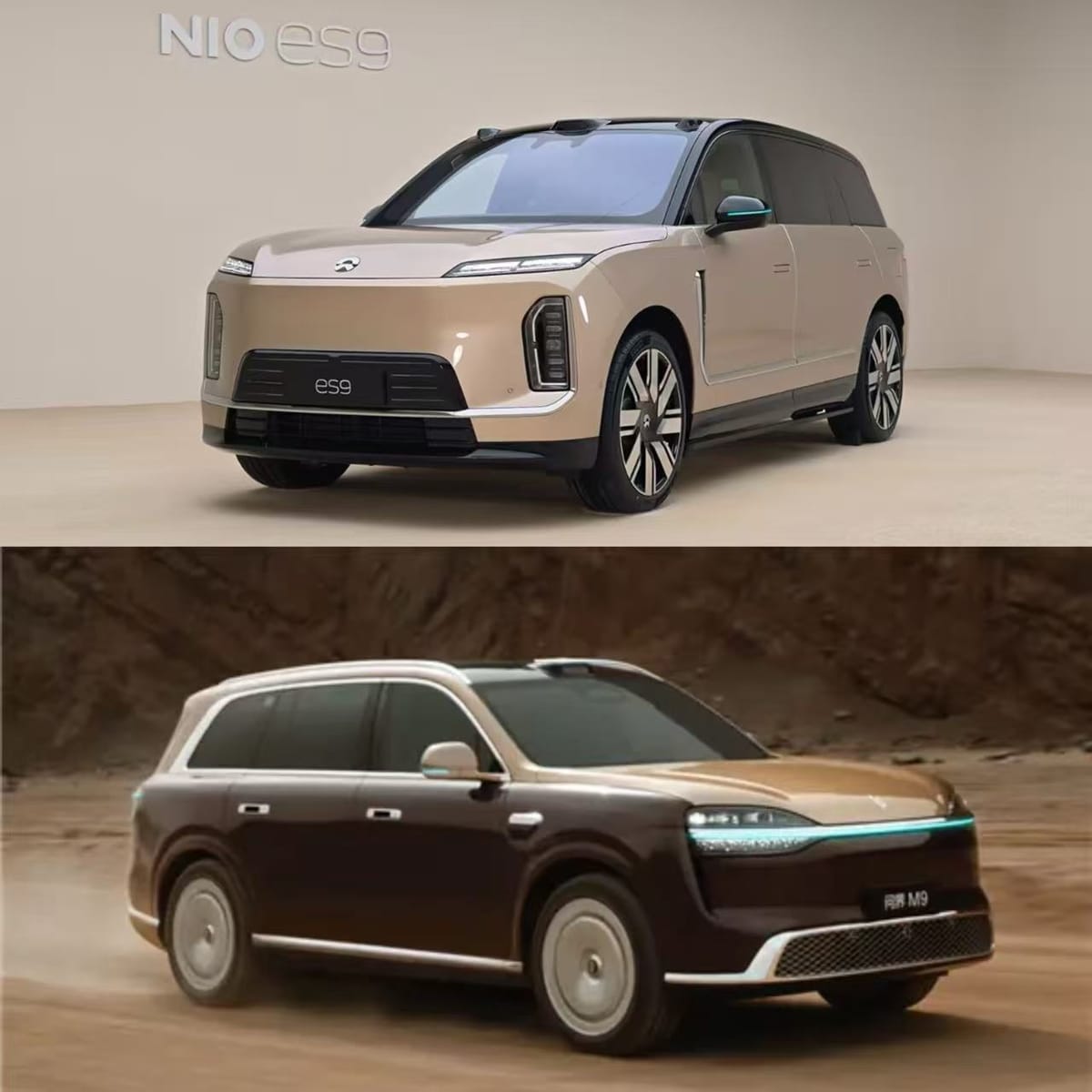
The simultaneous launch of two flagship electric vehicles in China highlights a deepening strategic divide in the global auto industry’s business model, pitting a tech giant’s software-centric ecosystem against a premium automaker’s capital-intensive push for vertical integration.
On May 27, 2026, Huawei and Nio released competing luxury SUVs—the AITO M9 and the Nio ES9—both competing directly in the RMB 500,000 (US$69,444) segment. Behind the overlapping price tags lies a deeper divergence in corporate strategy regarding who captures the ultimate pricing power in the age of artificial intelligence.
Investors and supply chain analysts are increasingly looking past mere delivery volumes to evaluate a structural shift: the transition of core automotive value from mechanical engineering to operating systems. Initial market feedback indicates a growing divide between automakers risking commoditization as hardware assemblers and those absorbing massive capital expenditures to retain brand sovereignty.
Extracting Software Premiums Reshapes Supply Chains
Huawei’s automotive strategy diverges significantly from traditional Tier-1 suppliers or the conventional "Android" licensing model. By controlling the operating system, autonomous driving algorithms, and the consumer-facing retail channels, Huawei operates as an ecosystem aggregator that extracts the highest-margin components of vehicle sales.
Data released during the 2026 launch underscores the scale of this asset-light model. Huawei’s Harmony Intelligent Mobility Alliance (HIMA) reported cumulative deliveries of 1.39 million vehicles, with the AITO M9 accounting for 285,000 units. The financial mechanics of this partnership reveal a stark reallocation of industry profits. According to financial disclosures from Huawei’s manufacturing partner Seres Group, the automaker paid Huawei approximately RMB 75 billion (US$10.41 billion) in procurement fees between 2022 and the first quarter of 2025. Industry estimates suggest that for every AITO M9 sold, roughly RMB 140,000 flows directly to Huawei for intellectual property, including the ADS 5.0 system, HarmonyOS cockpit, and Ascend computing platform.
This dynamic creates a new industrial hierarchy. While partner automakers bear the depreciation of heavy manufacturing assets, Huawei captures the software premium. With Huawei’s Qiankun architecture now integrated into over 50 models across 25 brands—including all eight of China's state-owned automakers—the tech company is rapidly commoditizing the underlying vehicle hardware to prioritize its proprietary digital ecosystem.
Defending Brand Sovereignty Demands Heavy Capital
Conversely, Nio’s rollout of the ES9 validates its controversial, capital-intensive strategy to build a closed-loop technological moat, mirroring Apple Inc.'s hardware-software integration.
Rather than outsourcing its digital architecture, Nio has internalized its core components. The ES9 is powered by the company’s proprietary 5nm automotive-grade chip, the Shenji NX9031, running on its in-house SkyOS and utilizing a self-developed sensing algorithm. This is coupled with a proprietary infrastructure network comprising battery-swapping stations, direct-sales showrooms, and exclusive user communities.
For Nio, absorbing billions in research and development costs is a calculated defense mechanism against ecosystem assimilation. The strategic logic dictates that premium automotive pricing is inextricably linked to brand identity and exclusive user experience. By maintaining full-stack control over both software and hardware, Nio aims to prevent its vehicles from being downgraded to interchangeable nodes within a third-party tech giant's network.
Shifting Value Anchors Redefine Auto Hegemony
The divergence between Huawei and Nio encapsulates the broader macroeconomic transition of the automotive sector from a mechanical industry to an information technology sector. For over a century, European automakers dominated global margins through superior combustion engines and chassis engineering. In 2026, the value anchor has firmly shifted to AI dispatch capabilities, software updates, and autonomous processing.
Huawei is capitalizing on the premise that vehicles are becoming standardized smart terminals, where the operating system monopolizes consumer loyalty and industry profits. Its rapid scaling relies on avoiding factory construction and inventory risks. Nio is betting that the premium automotive market will resist absolute platformization, maintaining that high-net-worth consumers will continue to pay a premium for holistic, brand-specific ecosystems.
The outcome of this structural divergence will dictate the allocation of capital in the EV supply chain for the next decade, determining whether the future automotive landscape will be ruled by decentralized, vertically integrated brands or a centralized, ubiquitous operating system.
Related Coverage:
Nio ES9 Showcases SkyOS Edge in EV Software Race
Aito Unveils New M9 as It Bets on Sensor-Heavy Upgrades to Defend Premium SUV Lead