
Meituan Loosens Its Grip on the Front End to Survive China’s AI Shift
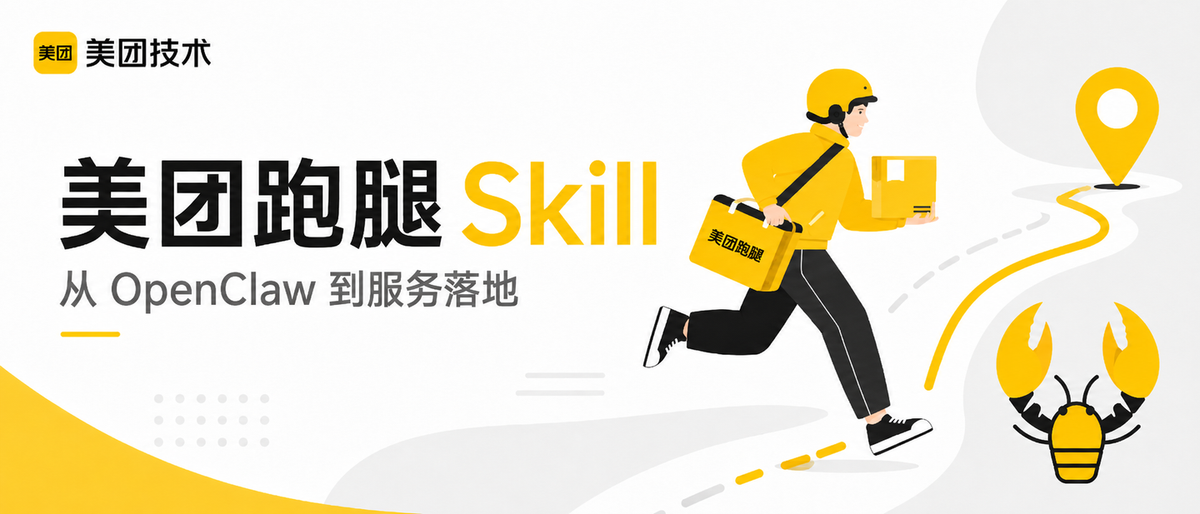
Meituan is voluntarily reducing its super-app to a backend fulfillment provider, launching a natural-language “Errand Skill” plugin for third-party AI assistants to defend its dominance in China’s on-demand retail market.
The May 26 rollout marks a strategic concession in the 2026 tech landscape, acknowledging that standalone AI assistants have definitively outpaced in-app AI features in user adoption. By allowing users of external AI assistants—including OpenClaw, Xiaomi MicClaw, and iFlytek AstronClaw—to execute delivery orders via voice commands without opening the Meituan app, the local services giant is effectively trading front-end user ownership for transaction volume.
Market analysts view this "pipelining" strategy as a necessary, albeit risky, defensive maneuver. Lacking a dominant proprietary large language model to anchor its ecosystem—a stark contrast to Alibaba integrating services through its Qianwen AI—Meituan is leveraging open APIs to capture high-value consumers who increasingly initiate digital tasks through independent AI interfaces.
Bypassing Super-Apps Accelerates Infrastructure Pipelining
The newly launched "Errand Skill" compresses multi-step app navigation into a single, zero-code command. Users instructing an AI assistant to "pick up a package from the station" or "buy fresh groceries" trigger automated scene recognition, historical address matching, and real-time price estimation. The system generates a comprehensive order preview—detailing delivery fees and estimated arrival times—while enabling real-time rider tracking directly within the third-party AI client.
While this frictionless integration expands Meituan's capacity to process non-standardized, highly personalized consumer requests, it fundamentally transfers the primary user interaction away from its own platform. This structural shift echoes the telecom sector's historical trajectory during the mobile internet boom, where network operators funded infrastructure while over-the-top (OTT) software developers captured the user mindshare and commercial upside. For a company that built its valuation on super-app traffic moats, relinquishing the front-end interface signals a pragmatic pivot toward prioritizing fulfillment scale over platform exclusivity.
Targeting Demographic Overlaps to Drive Retail Margins
The underlying commercial logic for this tactical gamble rests on a precise demographic alignment between AI early adopters and premium on-demand retail consumers. Users willing to incur token costs for AI-driven convenience exhibit the exact behavioral profile Meituan targets for its instant delivery segment: a high propensity to trade capital for immediate efficiency.
Industry metrics validate this pivot toward impulse-driven, frictionless commerce. According to 2026 iResearch data, the on-demand retail sector has evolved far beyond emergency purchases. Currently, 68.1% of consumers utilize these services for routine household restocking, while 54% cite a direct reluctance to leave their homes.
By embedding its delivery network into the AI tools these consumers already frequent, Meituan secures access to high-margin, spontaneous purchases. In an ecosystem where building a proprietary AI assistant to rival established tech conglomerates would require prohibitive capital expenditure, Meituan is instead turning its three-million-strong rider fleet into a plug-and-play logistics API. The strategy positions the company as the indispensable infrastructure layer of China’s AI-driven retail economy.
Related Coverage:
Meituan Acquires Dingdong for $717 Million to Bolster Instant Retail Expansion