
Zhipu AI: A Guide to China’s Rising AI Infrastructure Player
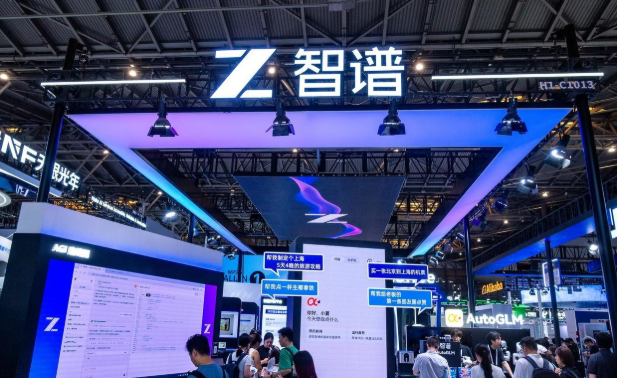
Understanding the company reshaping enterprise AI deployment in the world's second-largest economy
What Is Zhipu AI?
Zhipu AI is China's largest independent general-purpose large language model (LLM) developer, founded in 2019 as a spin-out from Tsinghua University's Knowledge Engineering Group (KEG) laboratory. Unlike tech conglomerates that bundle AI within broader ecosystems, Zhipu operates as a pure-play AI company focused exclusively on developing foundation models and the infrastructure to deploy them at scale.
The company's core innovation is the GLM (General Language Model) architecture—a proprietary pre-training framework that balances performance, controllability, and reduced hallucination rates while maintaining compatibility with over 40 domestic Chinese chip architectures. This positions Zhipu as a critical bridge between cutting-edge AI capabilities and the practical realities of enterprise deployment in China's unique technology landscape.
Why Zhipu Matters Now: The Structural Shift in AI Commercialization
Three converging trends have elevated Zhipu from academic research project to strategic infrastructure player:
1. The Enterprise AI Deployment Imperative
China's enterprise LLM market reached RMB 4.7 billion in 2024 and is projected to grow to RMB 90.4 billion by 2030 (63.7% CAGR), driven by organizations seeking to automate workflows, enhance decision-making, and personalize customer interactions. Unlike consumer AI—where monetization remains challenging—enterprise buyers demonstrate clear willingness to pay for performance, security, and customization.
Zhipu serves this demand through two complementary deployment models:
- Cloud-based APIs (26.3% of 2025 revenue): Subscription or pay-per-use access to models hosted on scalable infrastructure, ideal for companies prioritizing agility and minimal upfront investment
- On-premises deployment (73.7% of 2025 revenue): Private installations within corporate IT environments, serving sectors like finance, government, and healthcare that require strict data sovereignty and real-time performance
This dual approach allows Zhipu to capture both the high-margin SaaS-style revenue from cloud deployments (gross margin improved from 3.3% in 2024 to 18.9% in 2025) and the relationship-intensive project revenue from large-scale customizations.
2. The "Agentic Engineering" Revolution
The January 2026 explosion of OpenClaw—an open-source framework enabling AI agents to autonomously control devices and execute multi-step tasks—marked a paradigm shift from AI as conversational interface to AI as autonomous executor. Within weeks, OpenClaw became one of the fastest-growing GitHub projects ever (250,000+ stars by March 2026) and triggered a chain reaction across the industry:
- Token consumption surged exponentially: Agent workflows involving planning, execution, debugging, and iteration consume 10-100× more tokens than simple Q&A interactions. By mid-March 2026, ~20% of tokens processed on OpenRouter were attributed to OpenClaw-based applications
- Pricing power returned to model providers: Zhipu and peers raised API prices—Zhipu increased rates 83% in Q1 2026 yet saw call volumes rise 400%, demonstrating classic inelastic demand
- Domestic models gained ground: Chinese LLMs consistently outperformed international rivals in OpenClaw compatibility during March-April 2026, driven by tighter integration with local skill ecosystems and faster iteration cycles
Zhipu capitalized on this inflection by positioning its GLM-5 flagship model as "Agentic Ready"—optimized for long-context reasoning, tool invocation, and autonomous task completion—and releasing AutoClaw, a simplified deployment wrapper that reduces OpenClaw setup from hours to minutes.
3. China's Strategic Push Toward AI Sovereignty
Geopolitical constraints on advanced chip access and cloud infrastructure have made domestic AI self-sufficiency a policy priority. Zhipu's GLM architecture is explicitly designed for compatibility with Chinese-made processors (Huawei Ascend, Cambricon, etc.), achieving inference efficiency comparable to NVIDIA GPUs through software-hardware co-optimization techniques like Lightning Indexer and FlashComm.
This "compute sovereignty" capability positions Zhipu as essential infrastructure for state-owned enterprises, government agencies, and regulated industries that cannot rely on foreign AI platforms due to compliance or continuity concerns.
How Zhipu's Business Model Works
The MaaS Platform Flywheel
At the core of Zhipu's strategy is its Model-as-a-Service (MaaS) platform—a unified interface where customers access a comprehensive model matrix spanning:
- Language models: GLM-5 flagship (744B parameters, 40B activated) for general-purpose reasoning
- Multimodal models: CogView-4 (text-to-image), CogVideoX (text-to-video up to 4K/60fps), GLM-4V (vision understanding)
- Agent models: AutoGLM for autonomous task execution across mobile/desktop environments
- Code models: CodeGeeX generating 100M+ lines of code daily
Customers engage through three pathways:
- Direct API consumption: Developers integrate model capabilities via standard REST APIs, paying per token or via subscription tiers
- Fine-tuning and customization: Organizations upload proprietary data to train specialized variants (e.g., legal document analysis, medical diagnosis)
- Turnkey deployment: Zhipu's engineering teams install complete solutions—models, inference infrastructure, monitoring tools—within client data centers
This creates a "insight flywheel": each deployment generates usage data revealing how models perform in real-world scenarios (where they struggle, which prompts succeed), feeding back into training pipelines to improve subsequent versions. As model quality rises, more customers adopt the platform; greater adoption yields richer training signals, accelerating capability improvements.
Revenue Composition and Economics
2025 Performance (RMB millions):
- Total revenue: 724 (+132% YoY)
- Cloud deployment: 190 (26.3% share, +293% YoY, 18.9% gross margin)
- On-premises deployment: 534 (73.7% share, +102% YoY, 48.8% gross margin)
- Gross margin: 41.0% (down from 56.3% in 2024, reflecting product mix shift toward lower-margin cloud services during scaling phase)
- Net loss: -1,918 (widening as R&D and go-to-market investments accelerate)
Key Operating Metrics:
- MaaS API ARR: ~RMB 1.7 billion as of March 2026 (60× growth in 12 months)
- Institutional customers: ~8,000
- Device integrations: ~80 million (smartphones, PCs, smart vehicles)
The economics reflect a classic SaaS transition: short-term margin compression as the company prioritizes market capture over profitability, with expectations that scale effects—declining per-token inference costs, shared infrastructure across customers—will drive margin expansion in subsequent years.
What Differentiates Zhipu From Competitors
1. Technical Moat: The GLM Architecture Advantage
Unlike transformer-based models that face quadratic complexity in long-context scenarios, GLM employs sparse attention mechanisms enabling linear scaling. This allows Zhipu to:
- Process longer documents/conversations without proportional compute cost increases
- Deploy larger context windows (crucial for enterprise use cases like contract analysis or customer history review) on equivalent hardware
- Achieve 50% deployment cost reduction versus prior generations while maintaining performance parity
The Slime framework—Zhipu's asynchronous reinforcement learning system—further accelerates training efficiency, allowing continuous model improvement from real-world agent interactions rather than relying solely on offline datasets.
2. Ecosystem Breadth: Open Source + Commercial Balance
Zhipu operates a dual-track model strategy:
- Open-source releases (GLM-4, GLM-5 family) build developer mindshare and community contribution, positioning the company as an innovation leader
- Commercial offerings (fine-tuned variants, managed services, enterprise SLAs) capture value from organizations requiring production-grade reliability
As of July 2025, GLM-4.5 held the #1 global open-source ranking and #3 overall position on Artificial Analysis benchmarks, while GLM-5 achieved state-of-the-art performance on coding (SWE-bench Verified: 77.8) and agent execution (Vending Bench 2: $4,432 final balance, approaching Claude Opus 4.5 parity).
3. Market Position: Independent Yet Connected
Unlike vertically integrated rivals (Alibaba, Baidu, Tencent) that bundle LLMs within cloud/advertising ecosystems, or foreign providers constrained by data residency rules, Zhipu occupies a unique middle ground:
- Neutrality: Enterprise customers view Zhipu as less likely to compete with them directly or exploit proprietary data insights for adjacent businesses
- Specialization: 100% focus on model quality and deployment tooling, versus conglomerates balancing AI investments against other strategic priorities
- Flexibility: Can partner with any cloud provider, chip vendor, or ISV without platform lock-in concerns
The Path to Profitability: From Investment Phase to Operating Leverage
Current Financial Reality
Zhipu's widening losses—from -RMB 1.43 billion in 2022 to -RMB 4.70 billion in 2025—reflect strategic upfront investment across three cost categories:
- R&D (439% of revenue in 2025): Expanding engineering teams, compute resources for training ever-larger models, and algorithm research
- Sales & Marketing (54% of revenue): Building brand awareness, educating enterprise buyers on AI ROI, and establishing partnership channels
- General & Administrative (70%): Stock-based compensation for talent acquisition and organizational scaling
This mirrors the historical trajectory of SaaS leaders—Salesforce, Workday, Snowflake—that prioritized market leadership over near-term profitability during category formation phases.
Expected Margin Trajectory
Profitability inflection hinges on three operational shifts:
Near-term (2026-2027): Gross margin recovery as cloud revenue share grows (projected 33% → 45% gross margin for API business by 2028) and on-premises projects standardize delivery (reducing customization overhead)
Medium-term (2027-2028): Operating leverage from sales efficiency improvements (customer acquisition costs amortized over expanding contract values) and platform network effects (existing customers expand usage organically)
Long-term (post-2028): Contribution margin optimization as inference costs decline with chip advancements and algorithmic efficiency gains, while pricing stabilizes around value delivered rather than cost-plus models
Analysts project Zhipu reaching breakeven by 2029-2030 as revenue scales to RMB 12-15 billion and adjusted EBITDA margins approach 10-15%—comparable to established enterprise software platforms.
Key Uncertainties and Constraints
Technology Risk: The Relentless Pace of Model Evolution
LLM capabilities improve monthly, not annually. If rivals achieve breakthroughs in reasoning, multimodality, or efficiency that Zhipu cannot rapidly match, customers may switch providers—particularly in cloud deployments where switching costs are lower than on-premises installations.
Mitigant: Zhipu's research pedigree (院士-led teams, Tsinghua collaboration) and open-source engagement provide early warning signals of emerging techniques, allowing faster adaptation than closed competitors.
Market Risk: Enterprise Adoption Velocity
Despite strong macroeconomic demand for automation, individual buyer journeys remain unpredictable. Lengthy procurement cycles (6-18 months for large deployments), budget reallocation inertia, and organizational change management challenges could slow revenue ramps.
Mitigant: Dual go-to-market strategy—quick-win cloud trials establish proof-of-value before pushing for enterprise-wide rollouts, reducing friction in conservative sectors.
Regulatory Risk: Data Governance and Content Safety
Chinese AI regulation continues tightening around training data provenance, generated content auditing, and cross-border data flows. Compliance failures could trigger service suspensions or reputational damage.
Mitigant: Zhipu's GLM architecture emphasizes controllability and low hallucination rates (GLM-4-9B: 1.3% hallucination rate on Stanford HHEM evaluation), providing inherent safety advantages that align with regulatory priorities.
Competitive Risk: Ecosystem Consolidation Pressures
If hyperscale cloud providers (Alibaba Cloud, Huawei Cloud) aggressively subsidize their captive LLMs or leverage bundling tactics, Zhipu's neutral positioning could erode. Similarly, if OpenAI/Anthropic negotiate deeper China market access, foreign models might recapture mindshare.
Mitigant: Deep vertical integrations (e.g., automotive OEMs embedding GLM in vehicle systems) create sticky revenue streams insulated from API commodity pricing pressures.
What Happens Next: The TAC Era and the Path to LLM-OS
Zhipu frames its long-term vision around two concepts:
1. TAC (Token-Architecture-Capability) Economics
Commercial value in AI increasingly correlates to high-quality token consumption at scale—not just raw parameter counts. Zhipu aims to become the infrastructure maximizing society-wide TAC by:
- Continuously raising the "intelligence ceiling" through architectural innovations
- Driving token volume growth via agent proliferation and workflow automation
- Optimizing cost-per-token through software-hardware co-design with domestic chip vendors
This positions Zhipu analogously to AWS in cloud computing—the scalable backend monetizing every AI interaction, regardless of which application or device initiates the request.
2. LLM-OS (Large Language Model Operating System)
As models evolve from dialogue interfaces to autonomous task executors, Zhipu envisions GLM becoming the orchestration layer coordinating:
- Multi-agent workflows (planning, execution, monitoring, error recovery)
- Resource allocation across heterogeneous compute environments (cloud, edge, on-device)
- Security and compliance enforcement (data lineage tracking, access controls)
This mirrors how traditional operating systems abstracted hardware complexity, enabling application developers to focus on user value rather than low-level system management. If realized, LLM-OS would render Zhipu's technology indispensable to the next decade of software development.
The Bottom Line
Zhipu AI represents a high-conviction bet on three structural trends:
- Enterprise AI deployment shifting from experimentation to production, driving sustained demand for performant, secure, and economically viable foundation models
- Agentic workflows replacing static automation, multiplying token consumption and restoring pricing power to model providers
- China's technology sovereignty push, necessitating domestic alternatives to foreign AI platforms across regulated sectors
The company's financial profile—rapid revenue growth, widening losses, and compressed gross margins—reflects a deliberate strategy prioritizing market capture during a category-defining window. Whether this gamble succeeds depends on execution across three dimensions: maintaining technical leadership in an industry where capabilities evolve weekly; converting platform adoption into durable revenue streams before competitors lock in customers; and navigating China's regulatory landscape without compromising commercial flexibility.
For investors, Zhipu offers exposure to China's AI infrastructure buildout at an inflection point—the moment when "AI" transitions from boardroom buzzword to operational reality embedded in millions of workflows. The risks are substantial, but so is the addressable market: if Zhipu captures even 10% of China's projected RMB 90 billion enterprise LLM market by 2030, it would represent a >10× revenue multiple from 2025 levels, with dramatically improved unit economics as operating leverage kicks in.
The company's tagline—"let machines think like humans" —may remain aspirational for years. But in a world where every enterprise workflow becomes an AI workflow, Zhipu's practical mission of being the reliable, performant, and economically sustainable platform powering those workflows matters far more than sci-fi visions of artificial general intelligence. That prosaic reality—being the infrastructure layer others build upon—is where the durable value lies.