
From RMB 30 Million to RMB 1.5 Trillion: InnoLight’s Rise as China’s AI Optical Module Leader
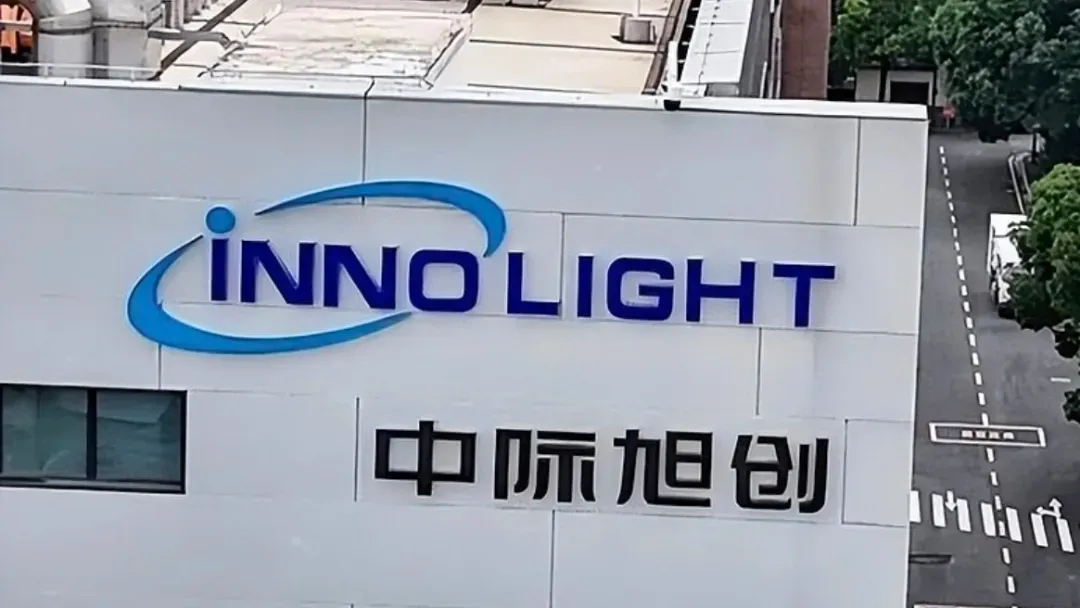
A startup that began with a RMB 30 million (US$4.2 million) seed round in the shadow of the 2008 financial crisis now anchors China's A-share top-ten by market capitalization—proof that capital, when deployed at the right industrial inflection points, can compress decades of supply-chain building into a single valuation re-rating cycle.
Shares of InnoLight Technology surged more than 7% on the final trading session before China's Dragon Boat Festival holiday, closing at RMB 1,367.88 per share—a fresh all-time high—and lifting total market capitalization to RMB 1.526 trillion (US$211.9 billion). The move extends a six-month rally in which the stock has more than tripled, cementing InnoLight's position as the bellwether for the global high-speed optical transceiver sector at a moment when hyperscalers and AI infrastructure builders are racing to scale 800G and beyond.
The price action reflects a fundamental re-rating, not mere momentum trading. InnoLight's full-year 2025 revenue reached RMB 38.24 billion (US$5.31 billion), up 60.25%, with net profit reaching RMB 10.79 billion (US$1.50 billion), a 108.78% increase. Operating cash flow expanded an even sharper 244.31% to RMB 10.90 billion (US$1.51 billion)—a metric that separates genuine industrial scale from paper earnings. In Q1 2026 alone, the company posted single-quarter revenue of RMB 19.50 billion (US$2.71 billion), up 192.12% year-on-year, with net profit of RMB 5.74 billion (US$797 million), a 262.28% jump.
Early Backers Bet on a Cold Sector Before the Cloud Era Arrived
The origin story of InnoLight is inseparable from the timing instincts of its earliest institutional supporters. In 2008, Liu Sheng—who had spent years at Lucent Technologies and Opnext in Silicon Valley—returned to China to found Xuchuang Technology in Suzhou. The venture launched weeks before Lehman Brothers collapsed and risk capital globally retrenched.
Yuan He Holdings, the state-linked venture platform affiliated with Suzhou Industrial Park, led what became a pivotal Series A of approximately RMB 30 million (US$4.2 million). The bet was contrarian: domestic optical communications investment at the time clustered around telecom-grade, low-margin components rather than the cloud data-center transceivers that Xuchuang was targeting. Yuan He did not stop at the first check. The firm deployed capital across three separate fund vehicles and a debt platform, and brought in Suzhou Dongshahu Fund Town-based Detai Capital as a co-investor, accumulating a stake exceeding 7% of Xuchuang through its Kaifeng Jinqu and related vehicles by the time of the eventual restructuring.
The commercial validation that unlocked the next capital tier came in 2011, when Xuchuang's 40G transceiver passed qualification testing at Google. Certification by the world's largest hyperscaler at the time functioned as a dual-use credential: it opened procurement conversations with Amazon and Huawei, and it signaled to international growth investors that the company had cleared the most demanding quality bar in the industry.
Google Capital's First China Check Signals a Strategic Pivot
In the second half of 2014, Xuchuang closed a Series C round of US$38 million, with Google Capital (now CapitalG) and Lightspeed Venture Partners among the new investors. The Google Capital participation was notable beyond its dollar size: it represented the fund's inaugural investment in mainland China, a data point that carried implicit endorsement weight in both Silicon Valley and Beijing venture circles.
The international capital infusion opened a logical next step—an overseas public listing. Xuchuang began constructing a variable interest entity (VIE) architecture and preparing for a U.S. IPO. The plan collapsed around 2015 as a wave of short-seller attacks and valuation compression hit Chinese companies listed on American exchanges. Rather than absorb the execution risk of a discounted offshore listing, management dismantled the red-chip structure and redirected toward the domestic A-share market—a decision that, in retrospect, proved to be the highest-returning capital allocation choice the company ever made.
Reverse Merger Mechanism Converts Private Growth Into Public Pricing Power
The vehicle for re-entry was Zhongji Equipment, an A-share listed manufacturer of motor-winding machinery with a conventional industrial profile and, critically, a clean balance sheet and listing status. Between 2016 and 2017, Xuchuang was injected into Zhongji Equipment through a major asset restructuring, valued at RMB 2.8 billion (US$389 million) at the time of the transaction. The combined entity was renamed InnoLight Technology.
The restructuring price reflected a business that had already demonstrated commercial scale: Xuchuang's unaudited revenue for January through November 2016 reached RMB 1.72 billion (US$239 million), with non-GAAP net profit of RMB 200 million (US$27.8 million). The A-share listing platform gave InnoLight access to a retail and institutional investor base that would ultimately assign valuations unavailable in any offshore market for a China-domiciled, supply-chain-critical technology company.
Three Capital Raises Convert Listing Proceeds Into Generational Capacity
Post-merger, InnoLight executed three discrete fundraising rounds, each calibrated to a specific technology transition in the optical transceiver roadmap. The 2017 placement accompanying the restructuring funded automation integration and R&D line consolidation. A 2019 private placement financed the 400G development and volume production ramp. The 2021 round pushed the company into 800G architecture and next-generation technology stacks.
Capital allocation discipline was tested in 2023, when intensifying competition in high-speed PON, MCU chip shortages, power rationing, and slower-than-expected customer commercialization timelines forced InnoLight to redirect RMB 242 million (US$33.6 million) of remaining proceeds from its Chengdu Chuhan production base upgrade into permanent working capital—an admission that not every raised dollar finds its optimal industrial destination on schedule.
The more consequential reallocation came in June 2024, when approximately RMB 446 million (US$61.9 million) originally earmarked for a high-end module facility in Suzhou was redirected to Phase III of the Tongling Xuchuang High-End Optical Module Industrial Park in Anhui province. The original Suzhou project had targeted annual capacity of 650,000 units of 400G and 800G modules; the Tongling Phase III expansion targets 1.2 million units annually—an 85% capacity uplift from a single capital redeployment decision.
Industrial Investing Extends InnoLight's Supply-Chain Reach Upstream
As demand from hyperscalers and AI infrastructure builders accelerated through 2024 and into 2026, InnoLight began deploying capital upstream through its wholly-owned subsidiary Suzhou Xuchuang Technology. Direct equity investments include positions in Jingyan Intelligent, a semiconductor equipment manufacturer; Aoco Photonics, focused on silicon photonics and optical module driver chips; and Laserchip Photonics, an active laser chip producer.
In parallel, Suzhou Xuchuang established Ningbo Chuanze Yun Investment Partnership, a fund vehicle in which it holds a 99.9% interest. That fund has taken positions in Yuanjie Technology, Changrui Photonics, and Feiang Innovation, covering active optical chips and high-speed analog driver chips for transceiver modules.
Yuanjie Technology's own trajectory illustrates the multiplier effect of InnoLight's supply-chain ecosystem: the active optical chip maker briefly became the highest-priced stock on the A-share market in the same pre-holiday session, touching RMB 1,712 per share—a near-quadrupling in six months. InnoLight has disclosed, however, that it ceased to be a related party of Yuanjie Technology as of March 10, 2024, a separation that Yuanjie acknowledged in its Hong Kong IPO application materials.
Capital Flywheel Analysis: What Eighteen Years of Compounding Looks Like
The InnoLight story offers a case study in how technology companies can use sequential capital events—not as financing transactions in isolation, but as synchronized industrial accelerants—to compress the time between product validation and global market leadership.
The mechanism operated in three phases. In the startup phase, Yuan He's contrarian bet and Detai Capital's follow-on provided runway through a period when optical transceivers for cloud data centers were not yet a consensus investment theme. In the commercialization phase, Google's product certification converted technical credibility into customer credibility, which in turn attracted Google Capital and Lightspeed—demonstrating that client validation and investor validation are mutually reinforcing signals. In the public-market phase, the reverse merger into Zhongji Equipment gave InnoLight access to A-share valuation multiples that rewarded domestic technology supply-chain companies at a premium to comparable offshore listings, while three successive fundraising rounds translated listing proceeds directly into capacity that could absorb the AI infrastructure spending surge beginning in 2023.
The financial results validate the flywheel: a company valued at RMB 2.8 billion at the time of its restructuring now commands a market capitalization 545 times that figure. The compounding was not linear—it required each capital deployment to produce verifiable product iterations, certifiable delivery capacity, and auditable cash flow before the next round could be justified.
For investors assessing InnoLight at current multiples, the relevant question is whether the flywheel can maintain its rotational speed. The company's Q1 2026 operating metrics suggest the near-term demand environment remains supportive. The longer-term risk lies in whether 1.6T transceiver development timelines and potential U.S. export-control adjustments affecting advanced optical components could disrupt the product-certification-to-capital-credit chain that has powered the company's ascent since 2008.
Related Coverage:
Alibaba-Backed Optical Module Firm Tests HK IPO Market as AI Price Wars Squeeze Margins