
Momenta Races to Hong Kong IPO, Betting 'Physical AI' Narrative Can Outrun Tesla FSD
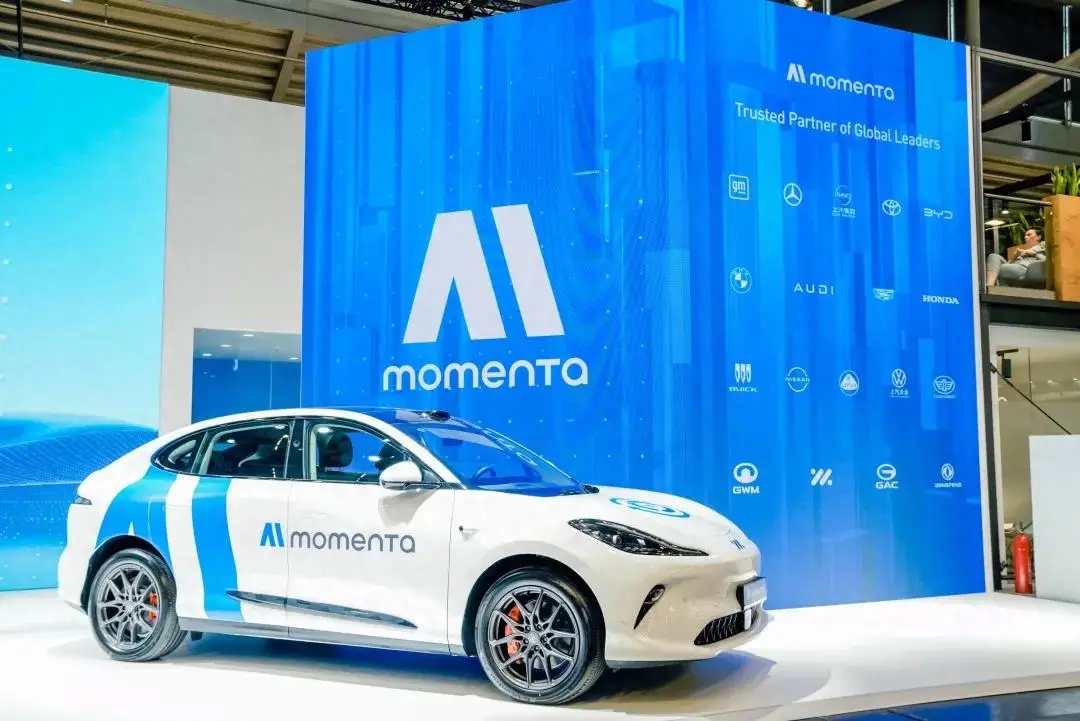
China's dominant urban autonomous driving supplier Momenta is set to launch a Hong Kong IPO by end of June 2026, targeting up to US$1 billion in proceeds at a valuation of approximately US$9 billion (RMB 65 billion)—a listing timed deliberately ahead of Tesla Inc.'s full-scale FSD rollout in the mainland and positioned around a thesis that extends well beyond self-driving cars.
The China Securities Regulatory Commission issued Momenta its overseas listing filing notice on June 18, 2026, clearing the final regulatory hurdle for a share sale of up to 43.754 million ordinary shares on the Hong Kong Stock Exchange. According to sources familiar with the transaction, the company has already passed the HKEX listing hearing and is targeting a roadshow launch around June 30. China International Capital Corporation (CICC) and Deutsche Bank AG are serving as joint sponsors.
The offering would make Momenta the latest—and potentially highest-valued—autonomous driving company to list in Hong Kong, following Pony.ai and WeRide. A person with knowledge of the deal told Tencent Finance that cornerstone investor negotiations are at an advanced stage, with term sheets expected to be signed imminently.
Rare Profitability Sets Momenta Apart From Loss-Burning Peers
In an industry where sustained losses are the norm, Momenta's financials present an unusual case. The company reported accounting revenue exceeding RMB 900 million (approximately US$125 million) for fiscal year 2024, with cash receipts surpassing RMB 1.3 billion (approximately US$181 million), representing year-over-year growth of more than 20%. Adjusted net profit reached approximately RMB 50 million (approximately US$6.9 million)—a figure modest in absolute terms but significant as proof that a technology-to-production-to-data commercial loop can generate positive returns in autonomous driving.
As of April 2026, Momenta's production-grade systems have been deployed across more than 800,000 vehicles spanning over 70 mass-produced models, with design wins exceeding 200 models across more than ten countries and regions. The company's client roster reads as a who's-who of global original equipment manufacturers: Mercedes-Benz AG, BMW AG, Audi AG, Toyota Motor Corporation, Honda Motor Co., General Motors Company, Volkswagen AG, BYD, and SAIC Motor Corporation. Nine of the world's ten largest automakers by volume have active engagements with the company.
65% Market Share Locks In a Structural Moat Before the Window Closes
According to CIC data covering March 2025 through February 2026, Momenta commanded a 65% sales share among third-party urban Navigate-on-Autopilot (NOA) suppliers in China. Combined with Huawei Technologies's HI-mode platform, the two players collectively control more than 80% of the segment—a duopoly that has consolidated rapidly as weaker competitors exit.
The timing of Momenta's listing is directly calibrated to a market inflection point. Urban NOA penetration in China is forecast to surge from 11% in 2025 to 62% by 2030, with the RMB 100,000–200,000 (approximately US$13,900–US$27,800) vehicle price band projected to see penetration jump from 3.8% to 62.7% over the same period. That segment—the volume heartland of the Chinese passenger car market—is precisely where Momenta's production-grade solutions are concentrated.
Industry observers project that China's autonomous driving supplier market will consolidate to two or three viable players by 2027. Momenta's IPO is, in effect, a race to secure a capital markets position before that consolidation window closes.
Competing Shareholders Create a Governance Tightrope
Momenta's shareholder structure is simultaneously its most compelling competitive asset and its most complex governance liability. In March 2021, the company closed a US$500 million Series C round co-led by SAIC Motor, Toyota Motor, and Robert Bosch GmbH, with participation from Temasek Holdings, Yunfeng Capital, Mercedes-Benz AG, GGV Capital, Shunwei Capital, Tencent, and Cathay Capital. In September 2021, General Motors invested an additional US$300 million.
The result is a cap table populated by automakers that compete directly with one another across global markets. SAIC and General Motors contest the same Chinese consumer base; Mercedes-Benz and Toyota compete in premium segments worldwide. Their collective rationale for investing in a shared supplier reflects a calculated bet on Momenta's "greatest common denominator" positioning—a deliberate refusal to become any single OEM's captive technology arm.
This neutrality is commercially powerful. But post-IPO, any OEM shareholder demanding preferential or exclusive technology access would structurally disadvantage its rivals on the same register. Resolving that tension will be among management's most consequential governance challenges in the public market era.
'Physical AI' Reframes the Valuation Conversation
Momenta CEO Cao Xudong has articulated a thesis that reframes the company's addressable market: "The core of physical AI is data scaling and commercial scaling forming a positive feedback loop, and currently the only domain that has achieved both is autonomous driving."
That framing—physical AI rather than autonomous driving—is not merely a marketing label. It reflects a specific technical architecture. In April 2026, Momenta launched its R7 World Model in mass production, built on three layers: a world model pre-trained on physical laws and causal relationships extracted from real-world driving data; a simulation layer enabling closed-loop evaluation of long-tail scenarios; and a reinforcement learning layer that uses the world model as a high-fidelity virtual training environment.
Underpinning all three layers is a dataset of more than 12 billion kilometers of real-world driving mileage, distilled into more than 100 million curated "golden data" segments. By the company's own positioning, this places Momenta in the first tier globally for training data scale in autonomous systems.
The commercial extension of this architecture is explicit: a single foundation model deployed across passenger vehicles, robotaxis, robovans, and—from 2027—robotrucks. Platform economics reduce marginal deployment cost as each new vertical adds incremental data back to the training loop.
If the physical AI narrative holds, Momenta's total addressable market extends well beyond the RMB 500 billion-plus Chinese intelligent driving software market into robotics, logistics automation, and any domain requiring real-world spatial reasoning at scale.
Tesla FSD Entry Accelerates the IPO Clock
On May 21, 2026, Tesla Inc. announced that Supervised FSD would become available to Chinese consumers—a development that sent a jolt through the domestic autonomous driving supply chain. Market reaction initially framed the announcement as an existential threat to domestic NOA suppliers.
The ground-level picture is more nuanced. Supervised FSD is not a fully autonomous solution, and its deployment in China faces compounding constraints: data localization requirements under China's cybersecurity and data security regulatory framework, a subscription pricing model that sits awkwardly against the value-for-money expectations of Chinese consumers, and the absence of the dense OEM integration partnerships that underpin Momenta's distribution.
Nevertheless, Tesla's entry sharpens competitive timelines. Momenta's decision to target a June 30 launch—roughly six weeks after the FSD announcement—reflects an awareness that the narrative window for positioning as China's preeminent domestic intelligent driving infrastructure provider is time-sensitive. A successful listing at or near the US$9 billion valuation would establish a pricing benchmark for the entire sector, influencing how investors value Huawei's automotive business, WeRide, and any future entrants.
Momenta retains its offshore holding structure for the listing, Tencent Finance reported, declining to adopt the H-share domestic-registration format that regulators have encouraged for some other Hong Kong-bound issuers since March 2026.
Key Risks Investors Must Price
Three risks warrant explicit attention. First, Huawei's ADS platform, distributed across 19 automotive brands, represents a vertically integrated competitor with deep OEM relationships and state-adjacent resources that Momenta cannot replicate. Second, the governance complexity of a shareholder base comprising direct OEM competitors creates structural incentive misalignment that standard corporate governance frameworks may be insufficient to manage. Third, market pricing for the autonomous driving sector has become more disciplined: the first-day break of UISEE Technology on its Hong Kong debut signals that investors are applying stricter scrutiny to valuation multiples, regardless of the quality of the underlying technology narrative.
Momenta's US$9 billion ask will be tested against those realities when books open.
Related Coverage: