
BYD Enters South Korea's PHEV Market, Targets Sales Triple Its EV Volume
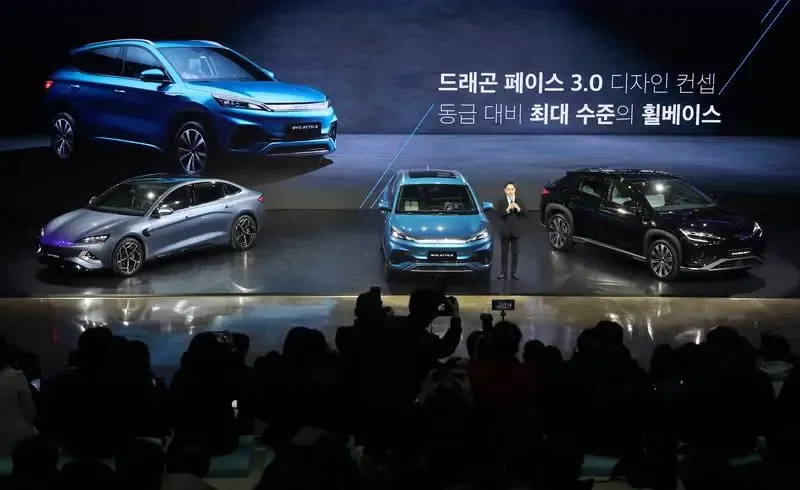
BYD is pushing into South Korea's plug-in hybrid electric vehicle market, betting that its electric-first powertrain technology can rehabilitate a segment that has long struggled to win over Korean consumers.
BYD Korea held a technical briefing in Seoul on June 17, formally announcing plans to launch plug-in hybrid vehicles in the country and showcasing its DM-i Super Hybrid system. The company said it expects PHEV demand to reach approximately three times its current electric vehicle sales volume in the market, citing a consumer base that remains dominated by gasoline and conventional hybrid models.
The strategic logic is straightforward: South Korea's EV penetration rate remains relatively low, and the mass market has yet to shift decisively away from internal combustion and mild-hybrid drivetrains. BYD is positioning its PHEV lineup as a bridge product — one that eliminates range anxiety while keeping fuel costs low for daily commuters.
Central to BYD's pitch is a differentiation from European PHEV rivals. The company argues that most European plug-in hybrids operate on an "engine-primary, motor-assist" architecture, resulting in limited all-electric range. BYD's DM-i, by contrast, is engineered around an "electric-primary, engine-supplementary" design, where the combustion engine functions largely as a range extender. A BYD Korea representative acknowledged that South Korea has earned a reputation as a "PHEV graveyard" due to early-generation models with small battery packs and disappointing fuel economy — but argued the DM-i system is fundamentally different and expects sales to proceed smoothly.
The first model to launch under this push will be the Sealion 6 PHEV, known domestically in China as the Sealion 06. BYD projects monthly sales of 1,000 to 2,000 units for the model once it goes on sale.
BYD's Korea expansion is not starting from scratch. According to data from the Korea Automobile Importers and Distributors Association (KAIDA), BYD registered 1,032 vehicles in South Korea in May 2026, ranking seventh among all imported car brands. Overall, South Korea's imported passenger vehicle registrations reached 29,860 units in May, up 5.9% year-on-year, with cumulative registrations for the first five months of 2026 totaling 145,973 units, a 32.3% increase from the same period a year earlier. Tesla led the import rankings with 10,866 units, followed by BMW at 6,555 and Mercedes-Benz at 3,553.
To accelerate brand recognition, BYD Korea plans to participate in the 2026 Busan International Mobility Show — scheduled for June 26 to July 5 at BEXCO — for the first time, using the platform to demonstrate its DM-i technology directly to Korean consumers. The Busan show is one of South Korea's most prominent automotive events and a key venue for import brands seeking mainstream visibility.
The move puts BYD in direct competition with domestic giants Hyundai Motor and Kia, both of which have established hybrid and PHEV lineups. However, BYD's pricing flexibility and the technical differentiation of DM-i could create meaningful competitive pressure in the mid-range family vehicle segment, where Korean consumers have traditionally prioritized fuel efficiency and value.
South Korea represents the latest addition to BYD's expanding international footprint, following market entries across Europe, Southeast Asia, and South America.
Related Coverage: