
Chinese Automakers Enter Japan as EV Shift Weakens Keiretsu
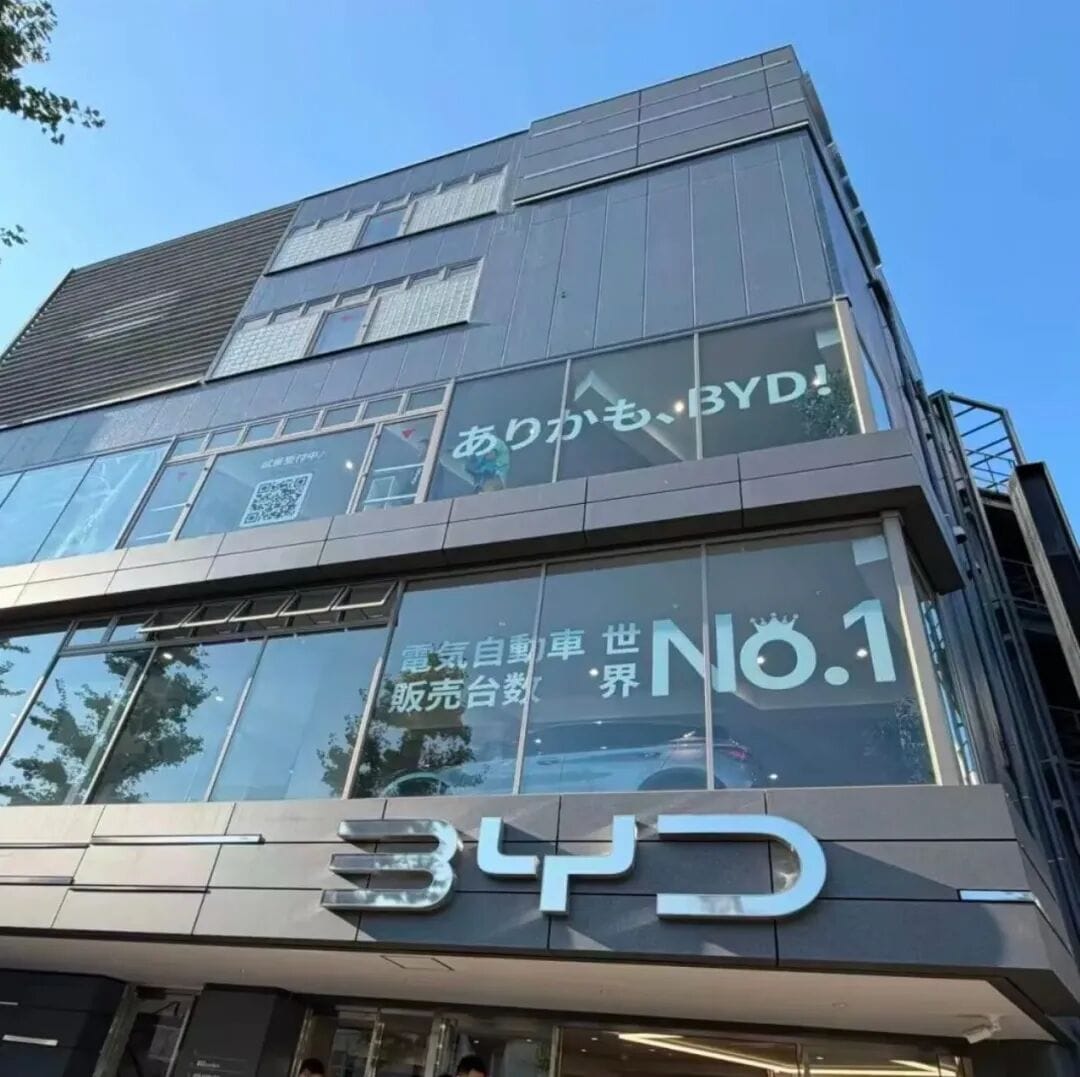
In 2026, Chinese automakers including Chery Automobile, BYD, GAC Group, Geely’s Zeekr, and Xiaomi Auto are all targeting the world’s fourth-largest auto market, which sold 4.57 million vehicles in 2025.
The timing reflects deeper structural shifts inside Japan’s automotive industry. The country’s long-protected supplier ecosystem — built on cross-shareholdings and closed procurement networks — is weakening under electrification pressure and rising Chinese supply-chain competitiveness.
Japan’s eight major automakers reported combined global sales of 24.34 million vehicles in fiscal 2025, down 1.3% year-on-year for a second straight annual decline. Of the seven largest listed automakers, only Suzuki Motor Corporation increased profit.
Honda Motor posted a RMB423.9 billion net loss, its first annual loss in nearly 70 years. Nissan Motor lost RMB533.1 billion in fiscal 2025 after a RMB670.9 billion loss a year earlier, bringing two-year cumulative losses above RMB1.2 trillion. Even Toyota Motor Corporation saw net profit fall 19.2% to RMB3.85 trillion (US$23.2 billion) and projected another 22% decline for fiscal 2026.
Chery’s Low-Profile Japan Entry
Rather than entering Japan directly under the Chery brand, the automaker formed a Singapore-based joint venture with Autobacs Seven, Jiangsu Yueda Automobile Group, Gotion High-Tech, and Anest Iwata Corporation.
The operating unit, EMT (Electric Mobility Technology), is positioned as a “Japan-origin EV brand” using Chinese technology.
The strategy addresses one of Japan’s biggest market-entry barriers: distribution. While BYD had built roughly 70 stores in Japan by April 2026 — below its original target of 100 by end-2025 — EMT gains immediate access to Autobacs Seven’s 1,200-location service network without constructing new dealerships.
EMT plans to launch its first compact EV in Japan in 2027, followed by four models by 2029 spanning compact cars, SUVs, and MPVs. Discussions over local Japanese production after 2030 are ongoing.
Localization extends beyond branding. EMT has recruited former engineers from Honda and Mazda, while former Dongfeng Nissan executive Susumu Uchigoe serves as chief marketing officer. Production will initially come from a leased former HiPhi factory in Yancheng, Jiangsu, with annual capacity of 150,000 vehicles.
The partnership also marks the first time a Chinese battery supplier, Gotion High-Tech, has entered Japan’s automotive supply chain as an equity joint-venture partner rather than a conventional component vendor.
Chinese Brands Split Japan Into Distinct Segments
Chinese automakers are approaching Japan through sharply differentiated strategies.
GAC Group’s Aion brand plans a 2026 launch focused on corporate fleets through distributor MMobility Japan. The company targets 2,000 orders by 2027.
Zeekr is pursuing the premium segment. Its nine-seat Zeekr 009 MPV, first shown at the Tokyo Mobility Show in 2025, is scheduled for a 2026 Japan launch starting at RMB13 million — more than double the domestic price of Toyota’s Alphard.
Xiaomi Auto aims to leverage Xiaomi’s existing retail footprint in Japan to replicate its “smartphone-plus-car” ecosystem strategy. The SU7 Ultra was displayed at Xiaomi’s Tokyo Akihabara store in 2025 ahead of a planned market entry.
Meanwhile, JPMorgan estimated that BYD’s Japan-specific K-car EV, Racco, could capture more than 30% of the segment and generate annual profit contributions of RMB 400 million to RMB 1 billion (US$55.6 million to US$138.9 million).
Japan’s Supplier System Faces EV-Era Pressure
China’s advance into Japan is tied directly to shifts inside Japan’s supplier structure.
For decades, Japan’s “keiretsu” system — cross-shareholding networks linking automakers and suppliers — acted as a competitive moat during the combustion-engine era. EVs are weakening that model.
Chinese suppliers now offer components at costs estimated 30% to 40% below Japanese peers while cutting development cycles from roughly 18 months to about 10 months.
Yorozu President Tsutomu Hiranaka acknowledged that quality gaps have narrowed significantly in recent years.
Japanese automakers are increasingly adopting Chinese supply chains themselves. Toyota’s China-built bZ Platinum 3X sources roughly 90% of components from Chinese suppliers, including batteries from BYD’s Fudi unit, autonomous-driving software from Momenta, LiDAR from Hesai Technology, and domain controllers from Desay SV Automotive.
The pricing impact has been substantial. The average EV price gap between BYD and Japanese rivals narrowed from roughly RMB2 million in 2022 to around RMB200,000 by 2025.
Toyota’s bZ Platinum 3X surpassed 100,000 cumulative sales within 14 months, while Nissan’s N7 reached roughly 45,000 units within nine months.
In March 2026, Toyota CEO Koji Sato warned 484 suppliers that “those who do not change will not survive,” while pushing cost reductions, faster innovation cycles, and broader sourcing beyond traditional keiretsu partners.
The pressure is already reshaping Japan’s supplier base. Teikoku Databank recorded 32 Japanese auto-parts bankruptcies in fiscal 2024, up 33.3% year-on-year and the highest level in a decade. Another 11 companies exited the market during the first four months of 2025.
The shift is also spreading across Southeast Asia, historically dominated by Japanese automakers. Chinese brands captured 47.34% of Thailand’s auto market in January 2026, slightly surpassing Japanese brands’ 47.33% share for the first time.
Toyota now plans to source Chinese components for Thailand-built EVs launching in 2028, targeting a 30% cost reduction.
Not all Japanese suppliers are retreating. Toyota Gosei secured airbag orders from IM Motors, while Musashi Seimitsu Industry won suspension and steering contracts for a BYD MPV worth an estimated RMB6 billion annually.
For Chinese automakers, Japan represents more than sales volume. It is a test of whether China’s EV industry can move beyond cost competitiveness and establish durable credibility inside one of the world’s most demanding automotive markets.
Related Coverage:
Tokyo Motor Show Highlights Japan's Cautious EV Shift as China's BYD Launches Offensive