
JD.com Downgraded to Underweight as Winter Looms: Morgan Stanley Warns of Structural ROE Deterioration
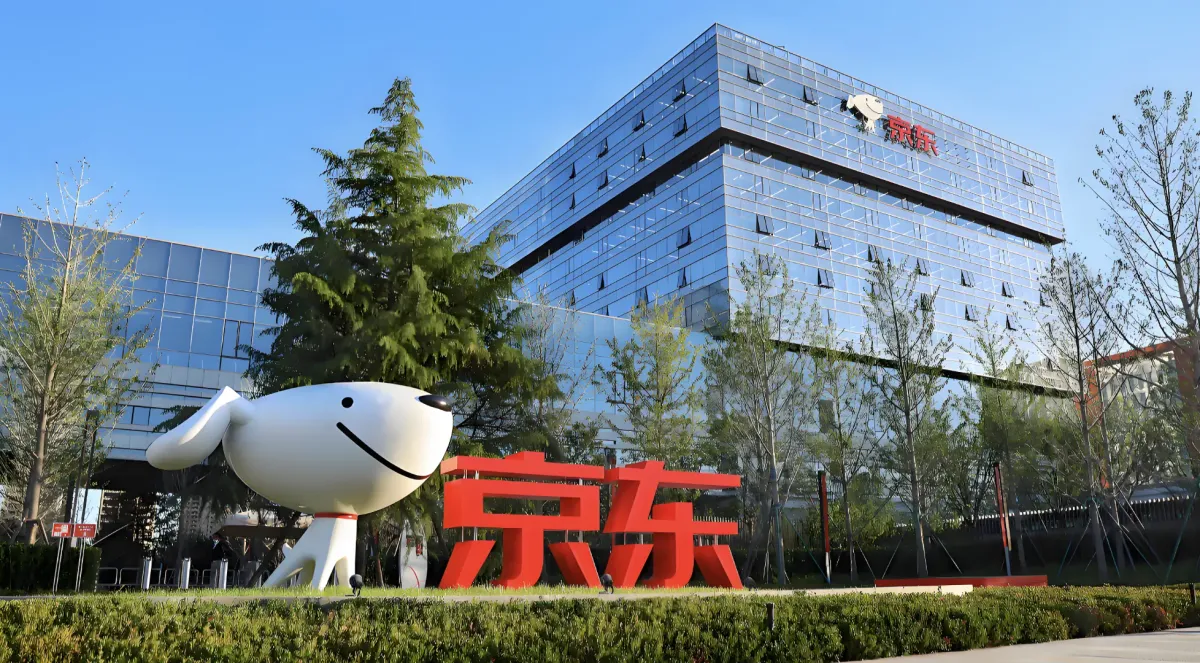
Morgan Stanley has turned decisively bearish on JD.com, slashing its rating from Equal-weight to Underweight in a scathing November 9, 2025 report that warns "winter is coming" for China's second-largest e-commerce platform. The call comes as analysts Eddy Wang and Gary Yu argue the company faces both near-term revenue headwinds and long-term margin erosion that will structurally impair returns – positioning JD as "the worst positioned Chinese e-Commerce stock" over the next twelve months.
The downgrade centers on two converging threats: the tapering benefits of China's national trade-in subsidy program and JD's relentless cash burn on new business ventures yielding uncertain returns. Combined, Morgan Stanley expects these dynamics to slow JD's revenue growth to just 5.6% year-over-year in 4Q25, with potential outright declines in its core home appliance and electronics categories, before further deceleration to 4.4% in 2026 and single-digit-to-low-single-digit growth through 2030.
Trade-In Tailwind Turns Into High-Base Headwind
JD has been the primary beneficiary among Chinese platforms of Beijing's consumer-goods trade-in subsidies launched in late August 2024, given its heavy exposure to electronics and home appliances through its first-party (1P) model. National Bureau of Statistics data showed 3C and home appliance sales surging 32% year-over-year in 4Q24 and smartphones jumping 27% in 1Q25. JD's 1P electronics revenue accelerated sharply – up 23% in 1Q25 versus mid-single digits prior to the program.
Yet that stimulus is now fading fast. By September 2025, NBS 3C/appliance sales growth had collapsed to just 3% year-over-year, and Morgan Stanley's AlphaWise consumer survey conducted in October revealed moderating enthusiasm: only 51% of respondents said they would participate in 2026 if policies remain unchanged (down from prior waves), while 19% – up from 14% previously – said they have no intention of participating at all.
Making matters worse, local governments have begun rolling back subsidies via quota systems or lotteries. Jiangsu now releases limited daily quotas at midnight; Shanghai requires lottery registration every two weeks. "We expect this policy weakening to erode consumer willingness to buy through year-end, further dampening incremental demand," the analysts write. With JD facing tough comparisons starting in 3Q25, the sugar high is officially over – and the hangover is only beginning.
Food Delivery and Quick Commerce: A Margin Destroyer, Not a Growth Driver
JD's aggressive April 2025 push into food delivery (FD) and quick commerce (QC) – reaching a peak of 25 million daily orders – initially surprised observers. But Morgan Stanley's analysis suggests the venture is already unraveling. Using Questmobile merchant-app session share as a proxy, JD's combined FD/QC order share has slumped to just 8% in August and September 2025, down from 11% in 2Q25, as Alibaba and Meituan have fought back with combined quarterly subsidies exceeding RMB 50 billion (US$7 billion).
The firm expects JD's FD/QC losses to reach RMB 34 billion in 2025 alone, narrowing only gradually to RMB 6 billion annually by 2028–30 as the company settles into a marginal 4% order-share position. Critically, Morgan Stanley sees no path to sustainable unit economics or merchant/rider ecosystem depth. Channel checks reveal long delivery times due to limited rider supply, clunky back-end systems frustrating merchants, and rising cost burdens as JD shifts subsidy responsibility from platform to sellers (merchant coupon ratios climbing from 0% at launch to 70–80% by late May).
JD's parallel bet – "7Fresh Kitchen," a robotics-driven, 10,000-store rollout over three years selling RMB 5–30 prepared meals – strikes the analysts as equally misguided: high capex, uncertain recipe standardization, potential channel conflict with restaurants, and a distraction from building FD/QC supply. "JD has limited experience and know-how in restaurant operations," they note dryly, "and building restaurants could divert attention away from establishing supply in FD/QC." The firm's blunt verdict: FD/QC "cannot be JD's new growth driver" and will instead remain "a margin drag if JD chases share again."
Structural ROE Collapse and the FCF Return Dilemma
The margin pressure goes beyond new ventures. Morgan Stanley projects JD's non-GAAP net margin will structurally compress to roughly 2.3–2.5% in 2025–30 (versus 4.1% in 2024), dragging return on equity down from 20.3% in 2024 to a mere 12.6% by 2030. This contrasts starkly with peers: while Alibaba, PDD, and Vipshop have maintained or improved asset turnover and equity-multiplier dynamics, JD's ROE gains since 2021 were driven purely by net-margin expansion – a lever now reversing.
The only potential offset, the analysts argue, would be accelerating free-cash-flow returns to shareholders. JD has announced a three-year US$ 5 billion buyback (September2024–August2027) and roughly US$ 1.5 billion in annual dividends, implying RMB 22–23 billion in annual shareholder returns. Yet the company's 2025 acquisition spree – EUR 2.2 billion (US$ 2.4billion) for German retailer CECONOMY, HKD 4 billion(US$ 515 million) for Hong Kong's Kai Bo Supermarket, plus undisclosed investments in AI/robotics and the upgraded "Jingxi 1P" platform – threatens to deplete cash faster than operations generate it. Tellingly, JD halted share buybacks in May–June 2025 as FD/QC subsidies spiked. "We believe the incessant investments in new businesses could weaken its ability to increase shareholder return, which could lead to further de-rating," Morgan Stanley warns.
Valuation: 10× 2026e P/E Implies Downside Even From Here
Morgan Stanley maintains its US$ 28 price target(derived from a 32.04), JD trades at roughly 12× 2026e earnings. Given the firm's outlook for slowing growth, eroding margins and deteriorating ROE, the analysts see "the likelihood that JD's P/E multiple can re-rate is low" and warn of "further downside risk to current valuation" if free-cash-flow returns disappoint.
Nor does artificial intelligence offer a lifeline. JD's AI efforts – the JD Cloud "Yanxi/ChatRhino" LLM, agent platforms, and long-running JIMI customer service – are "vertical-/operations-oriented and ecosystem-light versus peers," the report notes. Alibaba has deployed its Qwen/Tongyi models across Taobao and Tmall for search and merchant tools, while Meituan has shifted to self-developed foundation models with rising capex. "We see no clear, near-term AI product or model advantage that would change user acquisition, monetization, or margins" for JD, the analysts conclude.
In sum, Morgan Stanley's message is unambiguous: JD.com is caught in a vise of fading policy support, value-destructive diversification, and structural profitability erosion – making it the firm's "least preferred Chinese e-Commerce stock" as 2025 draws to a close.