
Kimi K3.1 Pro Costs 16 Times as Much as Rivals, as Moonshot AI Bets on Premium Models
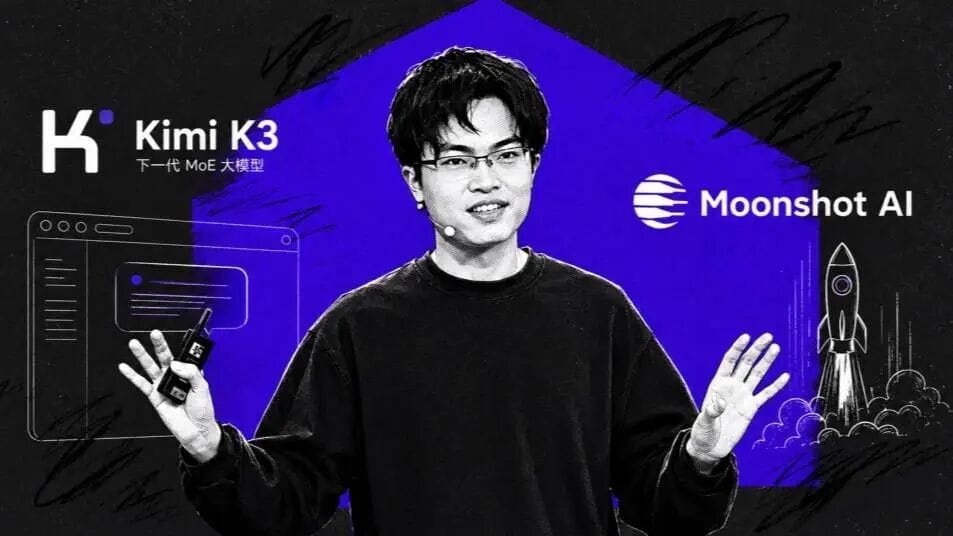
Moonshot AI, the Chinese startup behind Kimi, faces an increasingly urgent strategic dilemma: Can it accelerate monetization ahead of a potential IPO without sacrificing its pursuit of frontier AI capabilities?
On Oct. 24, Moonshot AI officially launched Kimi K3.1 Pro, an upgraded flagship model designed to deliver higher-end performance. Less than 48 hours later, however, the company issued a public apology early on Oct. 26 after users reported unexpected usage restrictions and excessive quota consumption. It also offered all active subscribers compensation equivalent to 25% of their monthly usage allowance.
The episode highlights a structural tension at Kimi: Its models are improving rapidly, but the engineering needed to control inference costs and translate those gains into a predictable user experience has yet to keep pace.
The tension is also reflected in pricing. Kimi K3.1 Pro charges $2 per million uncached input tokens and $10 per million output tokens—up to 16 times the price of comparable usage on DeepSeek V4.1 Flash-1017 and MiniMax M3.1 Flash. At a time when Chinese AI developers are increasingly competing on cost efficiency, Moonshot AI is pursuing a markedly different strategy.
Post-Training Drives Gains Without Expanding Model Size
Kimi K3.1 Pro does not increase the model's parameter count. According to the company, it retains K3's 2.8 trillion total parameters. The main upgrade comes from a substantially larger investment in post-training compute, particularly joint reinforcement learning across hundreds of downstream domains, supported by improvements to training frameworks, sandboxes and task-scheduling infrastructure.
Third-party benchmarks suggest the approach is paying off. Kimi K3.1 Pro scored approximately 55 on Artificial Analysis' Intelligence Index, up from about 44 for K3, a gain of roughly 11 points. DeepSeek V4.1 Flash-1017 scored about 45 at its maximum reasoning setting, while MiniMax M3.1 Flash scored approximately 43.
The three models are not direct peers in terms of positioning: K3.1 Pro is a premium flagship, while the DeepSeek and MiniMax offerings are lightweight Flash models. Yet all three target coding, tool use and extended agent workflows, making their relative performance in these overlapping applications worth comparing.
The benchmarks also suggest that K3.1 Pro's gains are more pronounced on agent-based tasks than on tests of knowledge and scientific reasoning. That pattern aligns with Moonshot AI's latest product push into 3D modeling and financial research, two fields that demand greater precision in tool use and more sophisticated multistep reasoning than conventional text generation.
A 16-Fold Price Gap Reflects Diverging Market Strategies
The price differential is striking, but it reflects a fundamental disagreement over where competitive advantage lies.
Based on the companies' official U.S. dollar-denominated API rates, a workload consisting of one million input tokens and one million output tokens, with no caching or additional tool-call charges, would cost $12 on Kimi K3.1 Pro. The same workload would cost $0.75 on MiniMax M3.1 Flash and $0.75 on DeepSeek V4.1 Flash-1017 during off-peak periods, rising to $1.50 during peak hours. Kimi is therefore 16 times as expensive as MiniMax and DeepSeek at off-peak rates, or eight times as expensive as DeepSeek at peak rates.
K3.1 Pro's input and output rates have fallen by roughly one-third from those of K3. Even after the reduction, however, its pricing remains substantially above that of the two Flash offerings.
The distinction between Flash and Pro reflects two different product philosophies. Flash models prioritize a balance among speed, cost and capability, making them suited to frequent, everyday development and office tasks. Pro models target more complex workloads and higher performance ceilings, appealing to users willing to pay a premium for more reliable results on demanding tasks.
DeepSeek is using self-feedback reinforcement learning to reduce task completion times and output lengths. MiniMax, meanwhile, has pursued aggressive sparsification, saying it has cut overall costs for agent tasks by 70% and increased online inference speeds to nearly three times their previous levels. Both companies are doubling down on the Flash approach.
Moonshot AI is taking the opposite tack. Rather than rush into the Flash segment, it is using K3.1 Pro to demonstrate what a large-base model can achieve on difficult tasks. Huxiu, a Chinese technology publication, has reported that Moonshot AI is developing a Flash version, although the company has not disclosed a release date. As competition in the segment intensifies, that remains a card Moonshot AI has yet to play.
Overseas Demand Fuels a Rapid Rise in Recurring Revenue
Moonshot AI's decision to stick with a premium strategy has a clear commercial rationale.
Bloomberg reported that Moonshot AI disclosed annual recurring revenue, or ARR, of more than $1 billion to investors by August 2026, up from $300 million in June. The company expects ARR to exceed $2 billion by the end of the year. In February, Chinese news outlet The Paper reported that Kimi's revenue over a period of just 20 days had surpassed its total for all of 2025, with overseas revenue exceeding domestic sales.
That revenue mix is shaping the product strategy behind K3.1 Pro. In overseas markets, Kimi is targeting paying users who already rely on leading flagship models such as Claude and GPT. In its official evaluations of K3.1 Pro, Moonshot AI highlights Claude Opus 5.5 and GPT-6 Astra as key benchmarks. The comparison suggests that Kimi is anchoring its pricing to the value proposition of top-tier international models, rather than competing directly with lower-cost Chinese Flash products.
For these users, the central question may not be the absolute cost per million tokens, but whether a model can complete complex tasks they cannot readily solve themselves—and reduce the need for manual corrections and rework. That is the core value proposition behind Kimi's premium pricing.
Its push into 3D modeling and financial research represents a concrete effort to build defensible positions in specialized professional applications.
Unexpected Quota Consumption Threatens the User Experience
Yet there is a growing gap between a model's technical capabilities and the value users actually experience.
After K3.1 Pro went live, users on Reddit reported problems with quota consumption. One user said that, without enabling subagents, a request to build a basic 3D game demo exhausted the model's allowance within a five-hour usage window in roughly 10 minutes—and failed to produce a finished result.
The complaints prompted Moonshot AI to issue its apology on Oct. 26 and announce compensation equal to 25% of the monthly quota for all subscribers whose memberships remained active.
The company also said it would adjust the model's configuration, reducing unnecessary subagent calls and output lengths to help users complete more work within the same allowance.
The potential implications for monetization are significant. Subscription businesses depend on repeat purchases, and renewal decisions hinge on the quality of task completion, the predictability of quota consumption and the continuity of service. All three become harder to manage when users push a model through complex, resource-intensive workflows.
If flagship applications such as 3D modeling repeatedly run into usage limits, Kimi Pro's technical ceiling may fail to translate into tangible value for paying customers.
Moonshot AI now has to make progress on three fronts at once: investing in the training compute needed for its next generation of flagship models, optimizing inference costs across existing products, and ensuring that its forthcoming Flash offering can compete on price and performance.
With ARR rising rapidly and a potential IPO adding to the pressure, allocating limited resources among those priorities is becoming one of the company's most consequential management challenges.
Related Coverage:
Kimi's Compute Crisis Exposes the Fault Line Beneath China's AI Surge