
Li Auto Rewrites Battery Supply Chain Rules, Stopping Short of Making Cells
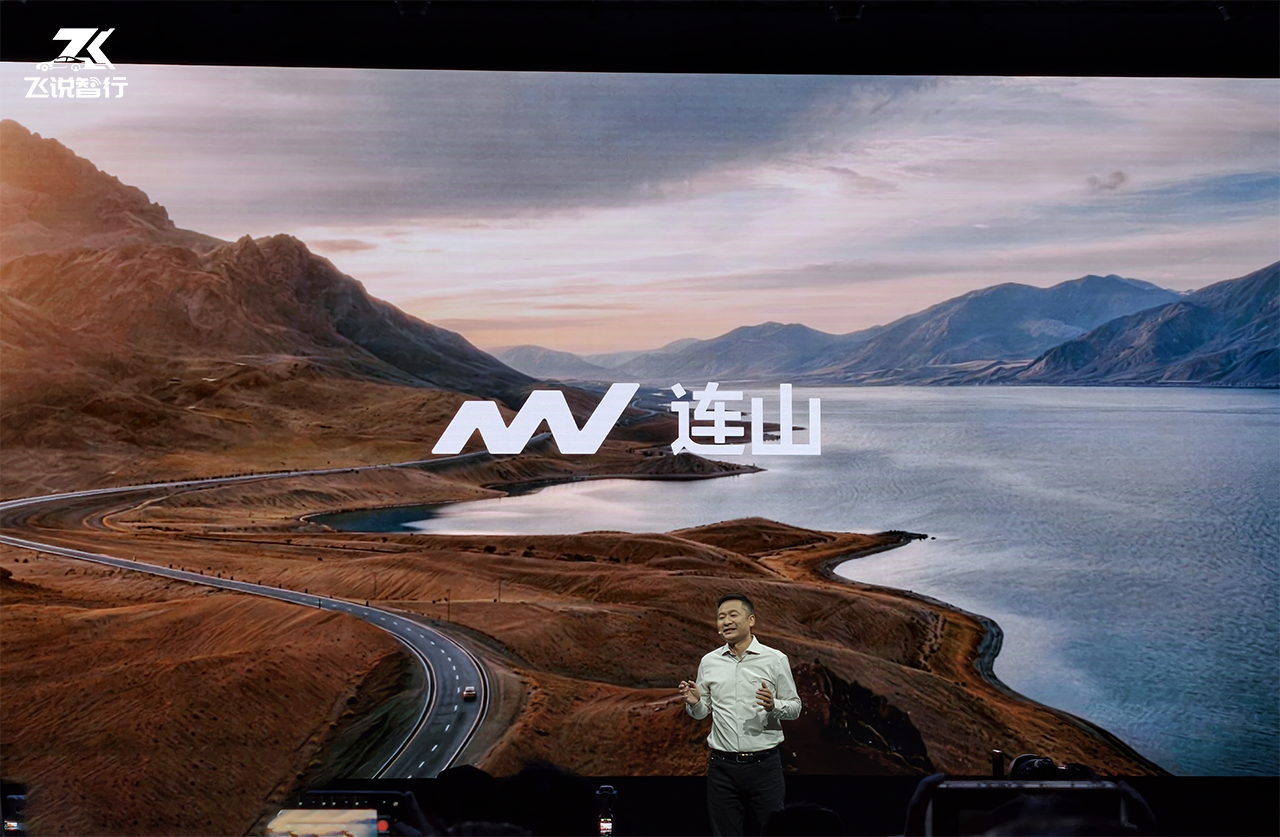
Li Auto used its October 25 Power Day event to seize control of cell design, process data and warranty liability from battery suppliers—a structural shift that Jefferies analysts say positions the automaker as the most replicable upstream integration model among Chinese EV peers, even as near-term costs weigh on margins.
The announcement marks a decisive inflection in how Chinese original equipment manufacturers manage battery risk. Rather than building gigafactories—a capital-intensive path BYD pursued at a cost Jefferies estimates at RMB 5–7 billion (US$694–972 million) per 20GWh plant—Li Auto is claiming design authority and production-data access while leaving physical manufacturing to cell suppliers. The immediate market read: a structurally lower long-term battery cost curve, offset by RMB 200 million-plus (US$27.8 million-plus) in annual battery R&D and expanded warranty liability that will pressure gross profit margins until BEV volumes scale, likely not before fiscal year 2027.
Jefferies maintains a Hold rating on Li Auto's Hong Kong-listed shares (2015 HK, HK$45.08) with a price target of HK$51.10, implying 13% upside. The US ADR (LI) carries a price target of US$13.10, up 15% from the prior close of US$11.39, based on a present value of 20x FY28 estimated earnings.
Power Day Signals a New Battleground: System, Not Specs
Li Auto's "Lianshan" integrated power system—bundling battery, e-drive, supercharging hardware and its proprietary charging network into a single architecture with 5C fast-charging capability—reframes the company's BEV differentiation story. The critical variable is no longer kilowatt-hours; it is the coherence of the full power stack.
The strategic logic is straightforward: as the company transitions from extended-range electric vehicles (EREVs), where its edge lay in cabin space and family-user experience, to battery electric vehicles (BEVs), differentiation migrates from the vehicle body into the battery. Range, charging speed and cold-weather performance are all cell-dependent. A supplier-defined cell therefore becomes a strategic liability, not merely a procurement line item.
The decision to issue lifetime warranties against self-ignition and collision-related fires makes that liability shift explicit and contractually binding. The warranty is less a marketing gesture than a structural commitment: Li Auto now owns the risk profile of every cell that goes into its vehicles, regardless of who manufactures it.
A 2025 Recall Crystallizes the Liability Calculus
The strategic rationale for Power Day was not formed in a vacuum. In 2025, Li Auto recalled approximately 11,400 units of its 2024 MEGA model due to inadequate coolant anti-corrosion performance, which created thermal runaway risk under specific operating conditions. The cells in question were externally manufactured; the cell chemistry was not the root cause. Yet customer disruption, regulatory scrutiny and brand damage accrued entirely to Li Auto.
That episode illustrates the asymmetry at the heart of the OEM-supplier battery relationship: the manufacturer bears reputational and financial exposure while the cell maker retains design authority and process data. Li Auto's Power Day pivot closes that asymmetry by internalizing control over cell chemistry, materials, electrode design and pack architecture—while leaving fabrication, where cell makers retain genuine manufacturing know-how and defect-control expertise, with suppliers.
How Li Auto Redrew the OEM-Supplier Contract
The operational change is more granular than a press release headline suggests. Previously, Li Auto set performance specifications; the cell supplier owned cell design, process data and manufacturing know-how, making supplier switching a full re-development exercise rather than a capacity swap.
Under the new model, Li Auto defines the chemistry and architecture, and accesses real-time production data from supplier plants. That data access is the critical variable. With process visibility, the OEM can validate quality independently, diagnose yield problems and—most commercially significant—qualify a second-source supplier without restarting development from scratch. The addition of CALB as a manufacturing partner alongside Sunwoda is the first concrete evidence of this second-sourcing optionality in practice.
Cell makers, Jefferies notes, still own manufacturing know-how and defect control at scale. What they lose is design authority, data exclusivity and the switching-cost moat that previously anchored supplier lock-in.
Mapping the Competitive Landscape: Who Owns What
Jefferies' Chinese OEM Battery Vertical Integration Scorecard places Li Auto in a "mid-high, rapidly rising" tier—below BYD and Chery (Kunpeng/Rhino), which both have in-house fabrication, but above NIO, XPeng, Xiaomi Corporation and Zhejiang Leapmotor Technology on the combined dimensions of cell design, process data access and liability ownership.
The scorecard underscores why Jefferies characterizes Li Auto's approach as "the most replicable of the set." Building a 20GWh cell plant requires RMB 5–7 billion (US$694–972 million) in capital and a minimum two-year construction and ramp timeline. Li Auto's design-and-data model delivers competitive battery differentiation without that capital commitment—at the cost of ceding manufacturing yield optimization to suppliers.
Investment Costs Front-Load Before GPM Benefits Emerge
The gross profit margin benefit from owning cell design is real but deferred. Jefferies does not expect meaningful GPM improvement to materialize before FY2027, for three compounding reasons.
First, annual battery R&D exceeds RMB 200 million (US$27.8 million) and rising, covering silicon carbide (SiC) components, e-drive systems and charging infrastructure—costs that require BEV volume to amortize efficiently. Second, the lifetime fire warranty transfers a quantifiable but probabilistically uncertain liability onto Li Auto's balance sheet. Third, the charging network build-out required to substantiate the "Lianshan" system's headline performance claims represents incremental capex with a long payback horizon.
Jefferies' price target of US$13.10/HK$51.10, pegged to 20x FY28 estimated earnings, reflects that timeline. Risks to that target include intensifying price competition in China's new energy vehicle market—where BYD, Xiaomi and XPeng are all expanding BEV portfolios aggressively—adverse policy shifts toward EREV powertrains, and execution risk in autonomous driving development.
The Broader Implication: OEMs Are Becoming Battery Companies Without Building Plants
Li Auto's Power Day is best understood not as a product launch but as a signal of where competitive differentiation in Chinese BEVs is heading. The era in which OEMs handed battery suppliers a performance specification and accepted the resulting cell as a black box is ending. Design authority, process data and liability are migrating upstream to the vehicle manufacturer.
The question for the rest of the industry is whether they follow Li Auto's "design-and-data" model or attempt full vertical integration à la BYD. Given the capital and time costs of cell manufacturing—RMB 5–7 billion (US$694–972 million) and two-plus years per plant—the Jefferies base case is that most will choose the former. That makes Li Auto an early template for a structural shift in how the Chinese auto supply chain will allocate value between OEMs and cell makers over the next decade.
For investors, the near-term read is straightforward: the strategic direction is sound, the cost curve is real, but the volume needed to make the economics work has not yet arrived.
Related Coverage:
Li Auto's Mach Cores Hits $2.3B Valuation as EV Makers Build Chips In-House
Li Auto Bets on In-House Battery Mastery to Redraw EV Value Chain