
Li Auto's Mach Cores Hits $2.3B Valuation as EV Makers Build Chips In-House
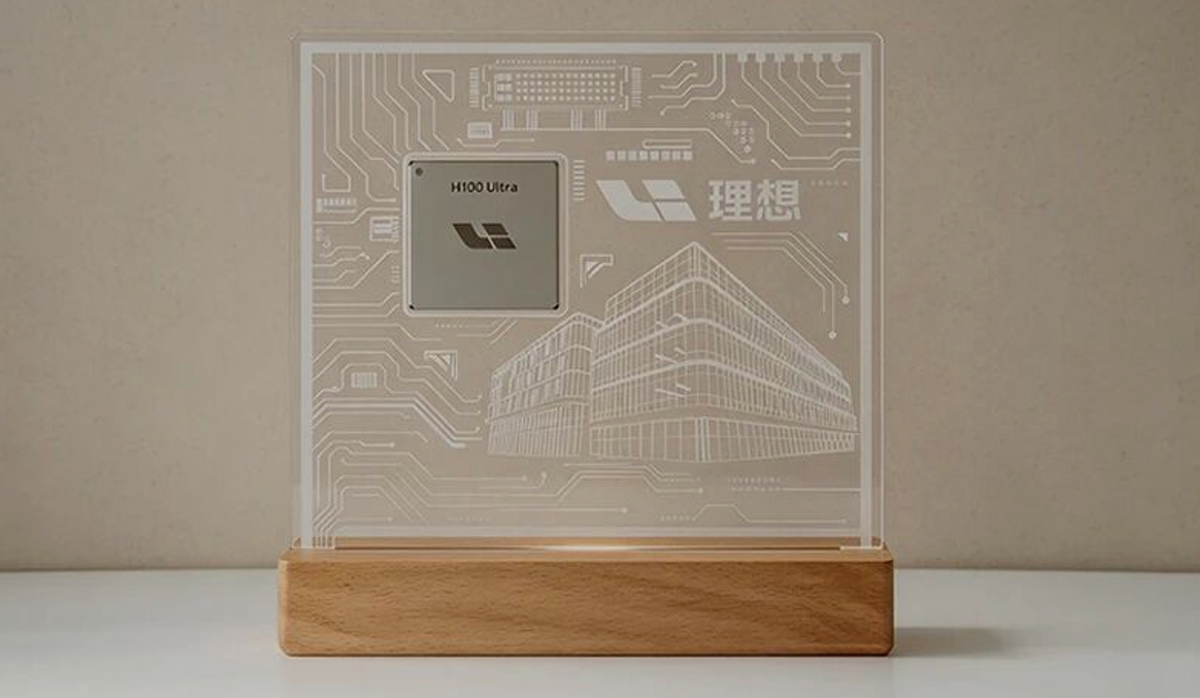
Li Auto has spun out its in-house artificial intelligence chip unit at a post-money valuation of RMB 16.63 billion (US$2.31 billion), transforming a four-year stealth R&D program into a standalone unicorn — and laying bare the accelerating race among Chinese electric vehicle makers to own the silicon that powers their vehicles.
The equity financing round, announced via Li Auto's investor relations platform, raises RMB 1.625 billion (US$225.7 million) for Shanghai Mach Intelligent Cores Technology, known as "Mach-1." Li Auto's own subsidiary, Shanghai Mach Zhixin Intelligent Technology, contributed RMB 1 billion (US$138.9 million), while external investors — including Hangzhou Jingtao, Blue Run Ventures, Huaye Tiancheng, and Chaos Ventures — collectively injected RMB 625 million (US$86.8 million). Li Auto retains a controlling stake and will consolidate Mach-1's financials.
The deal carries a call option: Hangzhou Jingtao may exercise an additional investment right by December 31, 2026 at the same unit price of RMB 23.35, up to RMB 500 million (US$69.4 million), potentially lifting the total round to RMB 2.125 billion (US$295.1 million) and the post-money ceiling to RMB 17.1 billion (US$2.38 billion). Whether that option is exercised remains contingent — but the floor valuation is already set.
Four Years of Stealth Development Surfaces in a Single Quarter
The entity itself is barely two months old. Mach Intelligent Cores Limited was incorporated in Hong Kong on July 14, 2026; its Shanghai operating subsidiary, Mach Zhixin, followed on August 4; and Mach-1 was established shortly after. Yet the technology it houses traces back to 2021, when Li Auto's leadership first entertained the idea of proprietary silicon.
Formal project approval came in November 2022. Large-scale development accelerated through 2023. Tape-out was completed in 2024, wafer-return verification in 2025, and mass production integration arrived in 2026 — with the chip shipping inside the newly launched Li Auto L9 Livis variant. Li Auto Chief Technology Officer Xie Yan, who serves as legal representative of Mach Zhixin, described the total development cycle as "three and a half years," with a team of approximately 200 engineers handling AI compute architecture design while integration, peripheral, and back-end work was outsourced to suppliers.
The chip itself — designated Mach M100 — is a general-purpose AI accelerator built on a 5nm automotive-grade process. Designed as a monolithic SoC rather than a chiplet architecture, it delivers 1,280 TOPS per die. The L9 Livis deploys two units in tandem, yielding 2,560 TOPS of total on-board compute. Critically, the team completed a Transformer-specific optimization pass in early 2024 in under one month — a data point that speaks to architectural flexibility. Since mass production commenced in May 2026, more than 50,000 units of Mach M100 have been delivered as of August.
The Economics Driving Vertical Integration — and Its Limits
The commercial rationale for self-developed silicon in the EV sector is by now well-rehearsed, but Li Auto's version of the calculation deserves specific attention. Xie Yan framed it bluntly: supplier chips "are still quite expensive," and proprietary design yields cost advantages that scale with volume. His conditional threshold was equally direct — if a supplier could offer half the price at three times the performance, self-development would be unnecessary. No supplier currently clears that bar at the required compute level.
CITIC Securities has modeled that automotive chip self-development only achieves positive unit economics when lifetime shipment volumes reach the millions. At 50,000 units delivered through August, Mach-1 is still well short of that threshold — which explains why Li Auto has already signaled a strategic pivot: Mach-1 will pursue external customers and expand beyond automotive applications. Five months prior, Xie Yan had explicitly positioned the chip as internal-only; that position has been revised. Li Auto is also reportedly evaluating externalizing its silicon carbide power modules and range-extender units.
The financial runway for this expansion is not a constraint. Li Auto's consolidated cash, cash equivalents, time deposits, and short-term investments stood at RMB 87.5 billion (US$12.15 billion) as of Q2 2026 end. External investor capital in this round amounts to RMB 625 million — a rounding error against that treasury balance. The spinout structure, therefore, appears less about capital necessity and more about price discovery, talent incentivization, and optionality for an eventual independent capital markets event.
Peers Are Running Parallel Playbooks — With Diverging Outcomes
Li Auto's structural move mirrors a pattern already established across the new-energy vehicle sector, though execution and scale vary meaningfully.
NIO spun out its chip business as "Shenqi" in June 2025. In February 2026, Shenqi closed its first funding round at RMB 2.257 billion (US$313.5 million) with a post-money valuation approaching RMB 10 billion (US$1.39 billion). NIO retains approximately 62.7% ownership, with co-investors including Hefei Investment, Hefei Haiheng, CSMSC, Oriza Puhua, and IDG Capital. NIO Chairman Li Bin articulated a comparable arithmetic: NIO once spent approximately US$300 million annually procuring NVIDIA Orin-X processors, translating to roughly RMB 11,000 per vehicle in chip cost. Internal projections suggest Shenqi's NX9031 will reduce per-vehicle chip expenditure by approximately RMB 10,000, generating annual savings exceeding RMB 1.8 billion (US$250 million) at 2025 sales volumes. NX9031 reported shipments range from 250,000 to 550,000 units across various disclosures, and the chip is reportedly in commercial discussions with Leapmotor and Geely.
Xpeng has taken a different approach, keeping its Turing chip effort within the parent entity. Cumulative Turing shipments exceeded 200,000 units through March 2026, with a full-year target approaching one million. A production contract with Volkswagen Group was secured in June 2026. CEO He Xiaopeng has cited a per-chip cost advantage of approximately RMB 1,200 versus external procurement. Xpeng has disclosed no independent funding for Turing.
BYD remains the furthest along structurally. The company carved out BYD Semiconductor in 2020, raising approximately RMB 27 billion across Series A and A+ rounds at a RMB 10.2 billion valuation, before suspending its ChiNext IPO in November 2022 — citing wafer capacity constraints during the EV demand surge. In May 2026, BYD unveiled its Xuanji A3 intelligent driving chip: 4nm process, approximately 700 TOPS per unit, and 2,100-plus TOPS across a three-chip configuration.
Market Skeptics Point to Structural Oversupply
The enthusiasm for EV-maker silicon is not without credible challenge. China Passenger Car Association Secretary-General Cui Dongshu has argued that self-developed chips lack sufficient volume support to achieve commercial closure. Leapmotor founder Zhu Jiangming has noted that annual global demand for intelligent-driving chips totals only 10 to 20 million units — against which 14 competing products already exist in the market, prompting Leapmotor to remain on Qualcomm silicon.
High Work Intelligence data for H1 2026 adds further context: among NOA-capable domestic passenger vehicles, NVIDIA commands 39.43% of chip content, Horizon Robotics holds 22.82%, and NVIDIA, Horizon, and Huawei collectively account for nearly 80% of the market. For new entrants like Mach-1 to capture external business, they must erode a market still dominated by three entrenched incumbents.
Investment Lineage Reveals a Widening "Li Auto Ecosystem"
The Mach-1 investor roster illuminates a broader capital network with Li Auto at its center. Blue Run Ventures participated in Li Auto's Series C in 2019; seven years later, it is writing a RMB 200 million check into the parent's chip subsidiary. Chaos Ventures and Huaye Tiancheng both have fund vehicles that received investments from Che Zhiyuan, Li Auto's primary corporate investment entity.
The upstream relationship is equally structured. Li Auto founder Li Xiang became a founding LP in Source Code Capital when Cao Yi launched the firm in 2014 — alongside Meituan founder Wang Xing and ByteDance founder Zhang Yiming. Li Xiang also backed Mingshi Capital from its inception, a firm that later co-invested in Li Auto's Series A (then Car and Home) in May 2016 alongside Source Code Capital. Capital that Li Xiang seeded into venture firms returned as institutional backing for his own company — a structural alignment that now extends to Mach-1.
Che Zhiyuan's deal log includes six recorded investment events through enterprise registry data, most recently a Pre-A participation in Qianjue Robotics in 2025. In 2026 alone, Li Auto co-invested in autonomous driving startup Xieque Intelligent in April, backed dexterous-hand firm Xinuo Future in a multi-hundred-million yuan Series A in May, and in September announced a RMB 2.65 billion (US$368.1 million) capital injection into EV battery supplier EVE Power— acquiring 8.79% of the enlarged share capital at an implied post-money valuation of approximately RMB 30.15 billion (US$4.19 billion), making Li Auto the second-largest shareholder.
The talent dimension adds a further layer. Former Li Auto AI Chief Scientist Chen Wei co-founded Xieque Intelligent; former CTO Wang Kai co-founded Zhijian Power, which closed five funding rounds in eight months; former intelligent driving VP Lang Xianpeng serves as co-founder and CTO of Kunlun Xing. At Li Auto's March 12, 2026 earnings call, Li Xiang openly encouraged outbound entrepreneurship from the company's ranks. The pattern is deliberate: Li Auto is exporting both human capital and financial capital into the broader intelligent mobility stack, while retaining strategic linkage through equity.
Related Coverage:
Li Auto Bets on In-House Battery Mastery to Redraw EV Value Chain