
Leapmotor Brings LiDAR to $12,000 Segment, Escalating China’s ADAS Price War
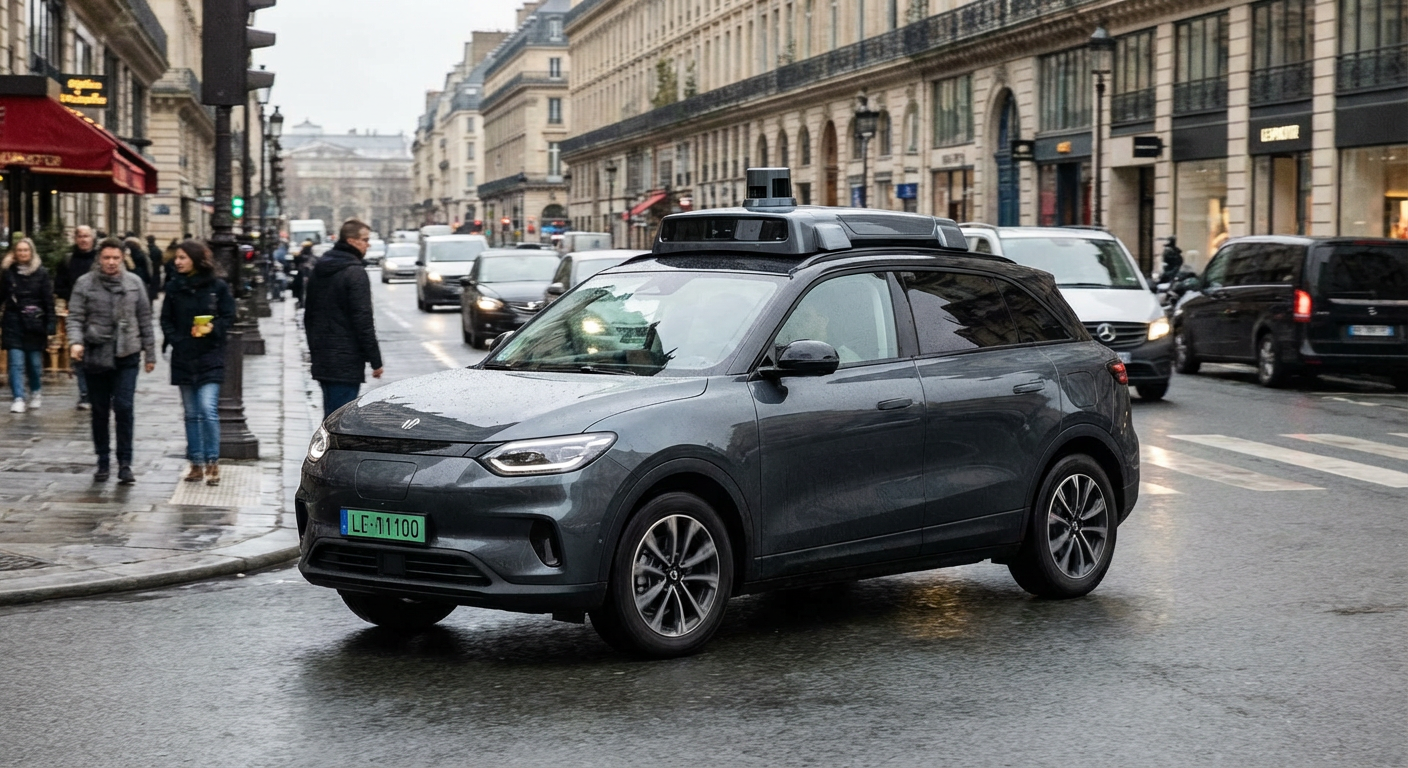
Leapmotor has aggressively lowered the financial barrier for advanced autonomous driving technology, launching a compact SUV equipped with LiDAR and high-level driver assistance systems (ADAS) for under RMB 90,000 (US$13,000). The move signals a pivotal shift in China's fierce EV market in 2026, transitioning from a pure price war to a battle for "technological equity" in the mass market.
The Hangzhou-based automaker released the A10 on March 26, 2026, with a starting price of RMB 65,800 (US$9,536). However, market attention focused on the top-tier trim priced at RMB 86,800 (US$12,580), which includes hardware capabilities typically reserved for premium vehicles costing double that amount. Leapmotor confirmed receiving 3,041 non-refundable orders within 75 minutes of the launch, with the ADAS-equipped top trim accounting for over 50% of the mix.
Betting on "Tech democratization"
Leapmotor’s strategy hinges on the thesis that high-level ADAS is migrating from a luxury novelty to a mass-market necessity. CEO Zhu Jiangming stated the company sees "no difference between luxury and ordinary cars, only categories," effectively commoditizing smart driving features.
The A10’s top specification offers "parking-space-to-parking-space" navigation capabilities, utilizing a sensor suite that includes LiDAR—a rarity in the sub-RMB 100,000 segment. The vehicle runs on Qualcomm’s 8650 intelligent driving chip and the 8295 cockpit chip.
While the 8650 chip offers 100 TOPS (trillions of operations per second)—significantly lower than the Nvidia Orin X chips found in premium models—Leapmotor argues this is sufficient for dedicated driving tasks. "The goal is to be fundamentally useful. We believe 100 TOPS is enough for driving alone, without the need for excessive multimodal large models," the company management noted, countering the industry trend of hardware over-specification.
Vertical Integration Drive Margins
The aggressive pricing is underpinned by Leapmotor's extreme vertical integration. The company claims to manufacture over 65% of its components in-house, including the oil-cooled electric drive systems and controllers used in the A10, which are shared modules from its higher-end vehicle lines.
This cost structure is critical for Leapmotor’s 2026 financial targets:
- Sales Volume: 1 million units globally (including 150,000 overseas).
- Profitability: RMB 5 billion (US$725 million) net profit.
This follows a strong 2025, where the company delivered 596,600 vehicles and recorded a net profit of RMB 540 million.
Closing the Competitive Window
Leapmotor faces immediate pressure to scale. Senior Vice President Cao Li admitted the A10’s technological lead in the budget segment might only last "a few months" before competitors respond. The primary rivals include the BYD Yuan UP and the Geely Xingyuan.
Competitive Breakdown:
- Range: The A10 offers a CLTC range of 505km, outperforming the Geely Xingyuan (410km) and BYD Yuan UP (401km).
- Tech: The BYD Yuan UP requires a spend of nearly RMB 100,000 to access its "DiPilot 100" system, which lacks the urban navigation capabilities promised by Leapmotor’s top trim.
- Size & Dynamics: Rivals offer advantages in chassis dynamics. The Geely Xingyuan features a multi-link independent rear suspension and a front trunk, whereas the A10 utilizes a simpler torsion beam rear suspension.
The high "take rate" of the smart driving trim (over 50%) suggests that budget-conscious consumers in China are increasingly prioritizing software capabilities over traditional mechanical attributes. Leapmotor is betting that this shift in consumer behavior will allow the A10 to secure a dominant position before industry giants like BYD fully pivot their budget lineups to match these specifications.
Related Coverage:
Leapmotor's Dual Gambit: Vertical Integration Meets Premium Pivot After Million-Unit Milestone