
Leapmotor Prices Lafa 5 Under 100,000-Yuan Mark to Stoke EV Competition
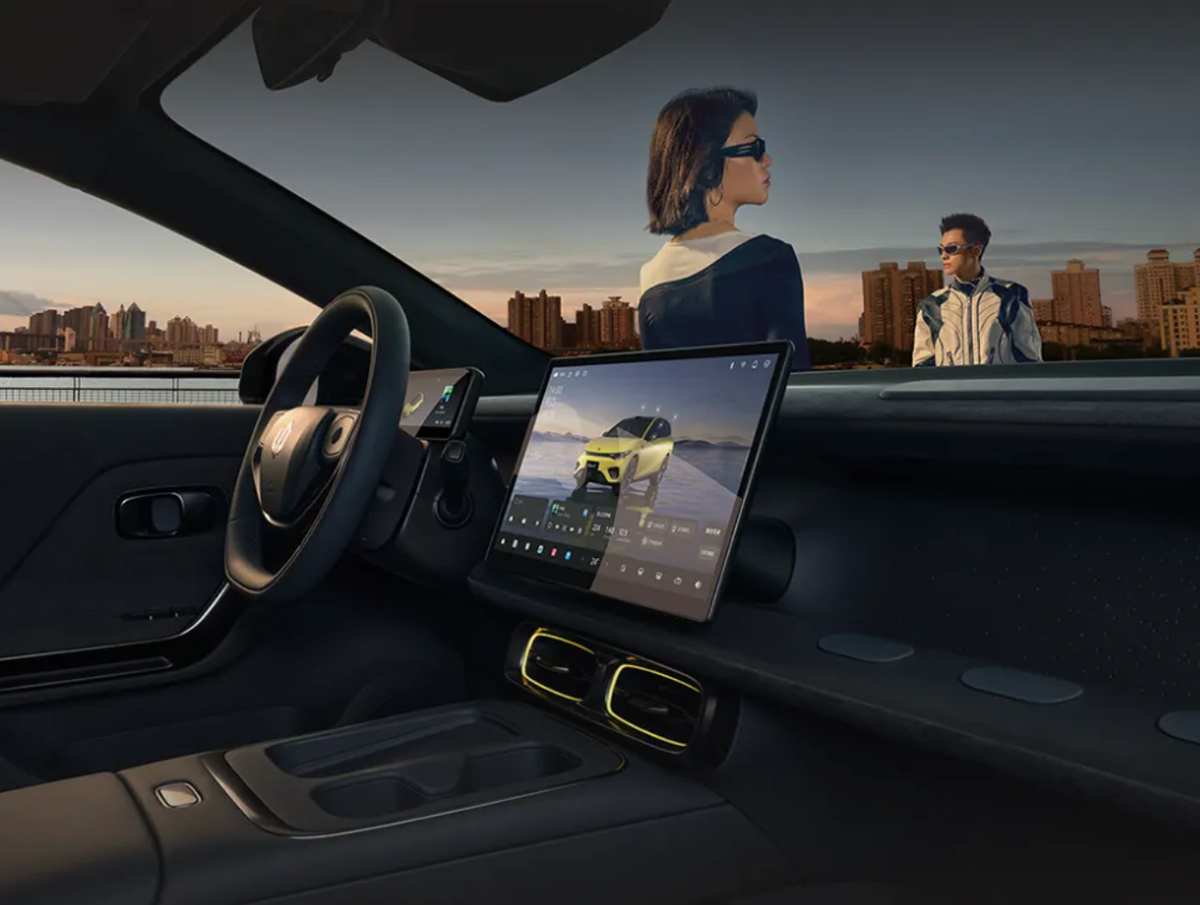
Leapmotor has launched its latest electric vehicle, the Lafa 5, with a pricing strategy that aggressively undercuts pre-sale estimates, aiming to consolidate its position in China's mass-market electric sedan segment through high-specification technology and aggressive cost positioning.
The vehicle, officially released on the evening of November 27, carries a starting price of 92,800 yuan (US$12,800), marking a substantial reduction from the initially projected entry point of 105,800 yuan during the pre-sale phase. The range-topping configuration is priced at 116,800 yuan, positioning the model as a highly competitive option in the budget-conscious consumer bracket.
Beyond pricing, the Lafa 5 integrates advanced technologies typically reserved for premium segments, including standard 800V high-voltage architecture across all trims and a dual-AI voice system powered by DeepSeek and Qwen. These features appeal to tech-savvy buyers focusing on connectivity and charging efficiency at an entry-level price point.
The launch reflects a broader trend among Chinese automakers to exceed consumer expectations through strict cost-performance management. With its combination of high-speed charging, advanced driver-assistance systems (ADAS), and accessible pricing, the Lafa 5 is positioned to become a high-volume product in the competitive year-end automotive market.
Aggressive Pricing Strategy
The official pricing structure reveals a strategic attempt to capture market share by managing consumer psychological expectations. While the pre-sale range was set between 105,800 and 131,800 yuan, the final launch price dropped significantly to a range of 92,800 to 116,800 yuan. This move lowers the barrier to entry for the pure electric compact sedan, enhancing its value proposition against rivals.
High-Voltage Architecture and Performance
Leapmotor has equipped the entire Lafa 5 lineup with an 800V high-voltage platform, a feature that significantly improves charging efficiency. According to company data, the vehicle can replenish 200 kilometers of range in five minutes and charge from 10% to 80% in just 15 minutes. The system is also designed to maintain 85% of its range performance in winter conditions.
Performance specifications include a rear-mounted motor delivering a peak power of 160 kW and peak torque of 240 N·m, enabling acceleration from 0 to 100 km/h in 6.4 seconds. The vehicle offers a turning radius of 5.17 meters. Power is supplied by lithium iron phosphate batteries with capacities of 56.2 kWh and 67.1 kWh, providing CLTC ranges of 515 km and 605 km, respectively.
AI-Driven Smart Cockpit and Autonomy
The Lafa 5 places a strong emphasis on intelligence, utilizing a Qualcomm Snapdragon 8295P flagship chip for its cockpit operations. A key differentiator is the integration of a dual AI voice large model featuring DeepSeek and Qwen, supported by voiceprint recognition. The interface includes an 8.8-inch instrument panel and a 14.6-inch 2.5K central control screen.
For autonomous driving, the vehicle features a perception hardware suite comprising 27 sensors, including LiDAR, powered by a Qualcomm 8650 chip with 200 Tops of computing power. The system utilizes an end-to-end large model to support 26 driver-assistance functions, covering scenarios such as highway and urban memory navigation as well as all-scenario parking assistance.
Design and Configuration Specs
The Lafa 5 is built with a 50:50 weight distribution and dimensions of 4430mm in length, 1880mm in width, and 1520mm in height, with a wheelbase of 2735mm. Exterior features include active grille shutters (AGS), frameless doors, 19-inch sport wheels, and a drag-reducing rear diffuser.
Interior amenities cater to comfort and utility, featuring a 50W air-cooled wireless charger, a 12-speaker sound system, and a 1.02-square-meter panoramic sunroof equipped with an electric sunshade. The vehicle is available in six exterior colors and three interior color schemes. While the hidden door handles remain a point of debate for some consumers, the overall package presents a compelling case for high-volume sales.