
Leapmotor's Margin Collapse Exposes the Fatal Flaw in China's EV Price War
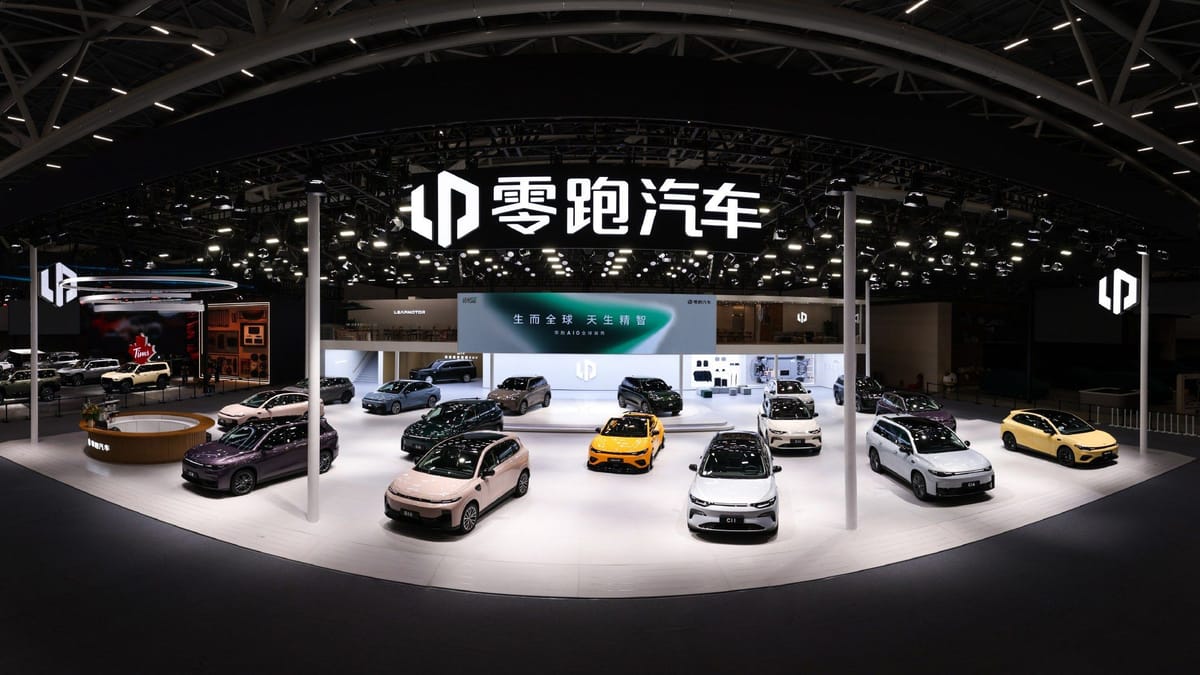
Leapmotor has built China's most aggressive EV pricing machine — but its first-quarter 2026 results reveal that selling more cars is now costing it money with every unit shipped.
The Hangzhou-based automaker reported a Q1 2026 net loss attributable to shareholders of RMB 390 million (US$54.2 million), snapping three consecutive quarters of profitability and exposing a structural contradiction at the heart of its "high-spec, low-price" growth model. The loss arrived just as Leapmotor launched its most audacious pricing move yet: the A05 compact EV, starting at RMB 63,900 (US$8,875) — a vehicle equipped with LiDAR, a Qualcomm 8650 chip, an 8295 cockpit processor, and a 510-kilometer CLTC range that, by any benchmark from three years ago, would have commanded a RMB 150,000 price tag.
Capital markets registered their skepticism immediately. Leapmotor's Hong Kong-listed shares were little changed following the A05 launch, a muted response that contrasts sharply with the social-media frenzy the announcement triggered on Weibo and Douyin, where competitors were jokingly described as "rewriting their PowerPoints overnight."
Gross Margin Implosion Signals a Scale Trap Taking Hold
The headline numbers from Q1 2026 are stark. Leapmotor's overall gross margin fell to 9.4%, down 550 basis points from 14.9% in the same period a year earlier. Vehicle-specific gross margin deteriorated further, to approximately 7%. Free cash flow swung to a deficit of RMB 7.4 billion (US$1.03 billion), with operating cash flow at negative RMB 6.61 billion (US$918 million). Average selling price per vehicle dropped to RMB 98,000 (US$13,611), a near two-year low.
CFO Li Tengfei, speaking on the Q1 earnings call, attributed the margin compression to three factors: a shift in product mix toward lower-priced B-series vehicles, reduced capacity utilization inflating per-unit manufacturing costs, and a contraction in strategic partnership revenues. The candid disclosure that Leapmotor is currently losing approximately RMB 4,000 (US$556) on every car it sells crystallizes what analysts at Guojin Securities described as a combination of "product mix deterioration, insufficient scale economies, and below-optimal capacity utilization."
Caitong Securities noted in a research note that Q1 results were "in line with expectations" given industry-wide demand softness, but flagged that C-series vehicles — Leapmotor's higher-margin lineup — fell to just 45.1% of total sales mix, creating a simultaneous compression of both average selling price and gross margin. The firm's analysts characterized this as a "dual headwind" with limited near-term relief.
Raw material costs compound the pressure. Li disclosed that Leapmotor pre-purchased key materials in 2025 to buffer Q1 production, but acknowledged this is not a sustainable hedge. If lithium carbonate, chip, and precious metal prices — all trending higher in 2026 — continue rising into the second half, the company's margins face further erosion without any corresponding ability to raise retail prices in a market defined by aggressive discounting.
Overseas Surge Flatters Revenue but Masks Brand Fragility
Leapmotor's international narrative appears compelling on the surface. Q1 2026 overseas deliveries reached 40,900 units, representing 37.1% of total global volume of 110,000 units, with year-on-year growth of 442%. In Europe specifically, the company registered 23,300 units across 16 countries in Q1, a 726.5% annual increase; in Italy, it captured a 33.5% share of the pure-electric vehicle segment.
These figures, however, require context. Leapmotor's European penetration is structurally dependent on its joint venture with Stellantis — "Leapmotor International" — which provides access to nearly 1,000 sales and service outlets across more than 40 countries. The company is also pursuing local manufacturing in Spain through Stellantis facilities, a strategy designed to sidestep the European Union's anti-subsidy tariffs on Chinese EVs, which reach as high as 37.6% for some manufacturers.
The strategic question investors are quietly asking is whether European consumers are purchasing a "Leapmotor" brand or simply selecting an affordable Chinese EV from a Stellantis showroom. The distinction matters enormously for long-term pricing power. BYD markets its Blade Battery technology globally; Geely leverages the Volvo and Zeekr brand architecture; Xpeng differentiates on full-stack autonomous driving. Each of these competitors has built an exportable technological or brand narrative. Leapmotor's primary export proposition remains price.
The historical parallel is instructive but double-edged. Japanese automakers in the 1980s and Korean brands in the 1990s similarly entered Western markets on value positioning — but Toyota subsequently codified lean manufacturing into a global standard, and Hyundai-Kia executed a deliberate brand elevation through design investment and quality improvements. Both eventually escaped the low-price trap. Leapmotor has yet to demonstrate a comparable transition pathway.
Full-Year Targets Now Require a Near-Impossible Second Half
Leapmotor entered 2026 with declared targets of 1 million units in annual deliveries and RMB 5 billion (US$694 million) in net profit. After Q1, both look increasingly theoretical.
With 110,000 units delivered in Q1 — roughly 11% of the annual target — the company would need to deliver approximately 640,000 vehicles in the second half alone to reach 1 million for the full year. On the profit side, the RMB 390 million Q1 loss means Leapmotor must generate approximately RMB 5.4 billion (US$750 million) in net income across the remaining three quarters to hit its stated goal, a trajectory that implies not just a return to profitability but a dramatic acceleration of earnings that its current unit economics do not support.
An unnamed Hong Kong-based fund manager who holds positions in Chinese EV equities framed the concern bluntly: "Leapmotor's problem isn't whether it can sell cars. It's whether it can make money. At 74 billion in free cash outflow in a single quarter, even a RMB 30.6 billion cash position has a finite runway if the price war persists for another two years."
The macro backdrop reinforces the concern. China's automotive sector recorded a profit margin of just 2.9% in January–February 2026, roughly half the 5.8% average across downstream industrial enterprises — a structural signal that the industry as a whole is absorbing costs that cannot be passed to consumers.
Premium Pivot Attempts to Break the Brand Ceiling
Leapmotor's management is not blind to the trap. Li Tengfei confirmed that the company is developing a second brand targeting the RMB 300,000-plus (US$41,667-plus) segment, with a planned launch in the second half of 2027. In the nearer term, the flagship D99 MPV is scheduled to open pre-sales in June 2026, and the D19 sedan is being positioned to sustain monthly sales of 10,000 units.
Whether these moves can reposition Leapmotor in consumer perception is the critical unknown. The precedent from SAIC-GM-Wuling, which struggled to shift buyers' mental models when it attempted to launch premium "Silver Badge" models despite the overwhelming association of its brand with the RMB 30,000 Hongguang Mini EV, illustrates the durability of low-price brand anchoring. Once a manufacturer becomes synonymous with affordability, the path upmarket demands years of sustained investment and credible product execution — not just a new nameplate.
In China's EV 2.0 era — defined by a market penetration rate that has now crossed 50%, slowing volume growth, and competition shifting from conquest sales to retention — cost leadership alone is no longer a moat. It is an entry ticket. The companies positioned to define the next decade of Chinese automotive are those with defensible technology stacks, brand equity that commands a price premium, and global operations built on product differentiation rather than arbitrage.
Leapmotor has demonstrated, convincingly, that Chinese manufacturing can compress the cost of a LiDAR-equipped intelligent EV to a price point that shocks the industry. The harder question — whether it can build a business that is sustainably profitable at that price point, or whether it can migrate upmarket before its cash reserves are exhausted — remains unanswered.
In 120 years of automotive history, no company has achieved enduring greatness by being the cheapest. Leapmotor's next chapter will be written not on its price tags, but on whether it can construct a story about brand, technology, and margin that investors, consumers, and global partners are willing to buy.
Related Coverage:
The Leapmotor Moment: How Scale and Cost Are Reshaping China’s EV War