
The Leapmotor Moment: How Scale and Cost Are Reshaping China’s EV War
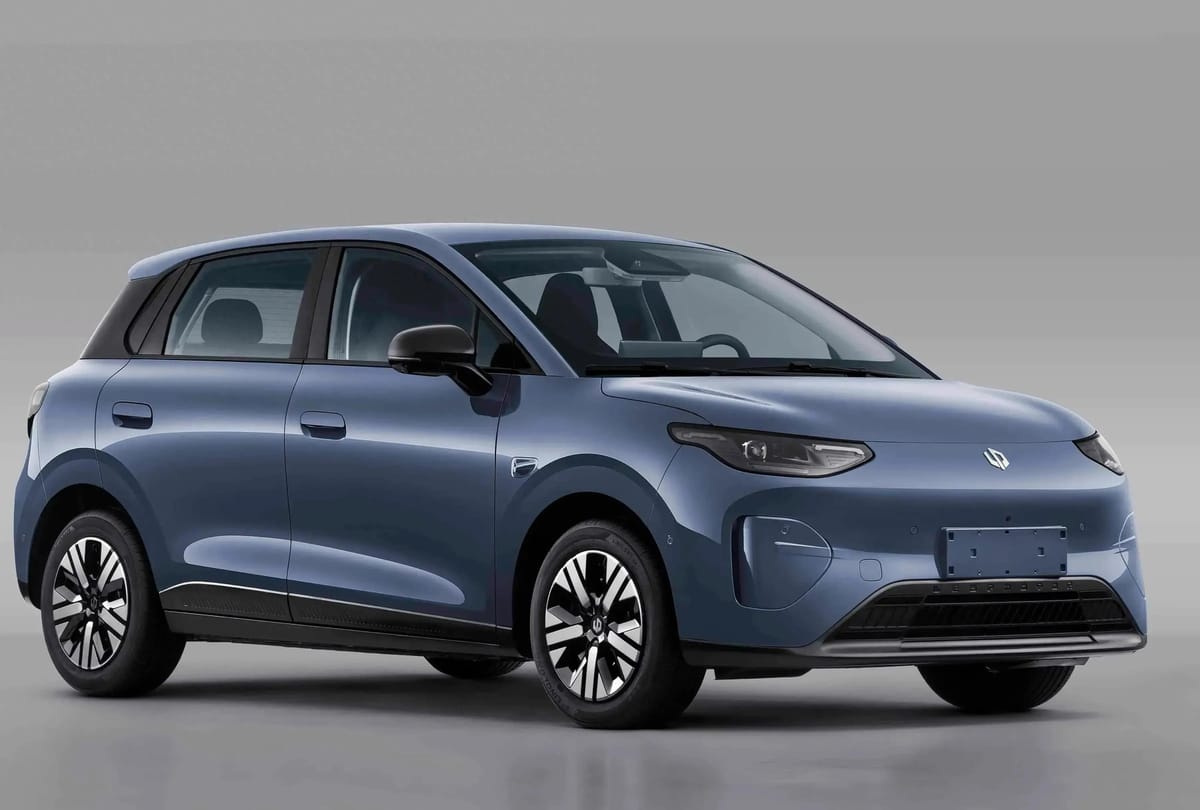
Leapmotor delivered 101,267 vehicles in July 2026, becoming the first Chinese new-energy vehicle startup in the industry's 12-year history to breach the 100,000-unit monthly threshold—a milestone that simultaneously renders the old "NIO-Xpeng-Li" power hierarchy obsolete.
The July figure, up 102% year-on-year, arrived as a direct rebuke to the premium-narrative playbook that defined China's EV startup era. In the same month, Huawei's Harmony Intelligent Mobility delivered 45,000 units, Xpeng 38,000, NIO 35,900, Li Auto 30,500, and Xiaomi Auto just over 30,000. Leapmotor's single-month output roughly equaled the combined deliveries of NIO, Xpeng, and Li Auto—the three brands that, for the better part of a decade, defined what a Chinese EV startup could be.
Through the first seven months of 2026, Leapmotor has accumulated 457,800 cumulative deliveries, keeping its full-year target of one million units mathematically viable—though that trajectory demands average monthly volumes above 100,000 units for the remainder of the year.
Vertical Integration Rewrites the EV Competition Playbook
The significance of Leapmotor’s milestone lies as much in who achieved it as in the number itself. Unlike peers that built their early differentiation around consumer ecosystems, premium services, or founder-led product narratives, Leapmotor has pursued a manufacturing-first strategy. Xiaomi Auto benefited from one of China's strongest consumer technology ecosystems; NIO built its identity around service innovation and community experience; Li Auto established a reputation for product definition and family-oriented positioning. Leapmotor’s founder Zhu Jiangming has taken a different route, focusing resources on engineering efficiency and cost structure rather than high-profile brand building.
That strategy has produced a cost base that competitors cannot easily replicate. Leapmotor internally develops and manufactures components accounting for more than 65% of total vehicle cost, including electric drive systems, battery packs, electronic-electrical architecture, cockpit controllers, and intelligent driving processors. Its A-series and C/D-series models share a unified Qualcomm 8650 cockpit-driving integrated controller, allowing R&D investment to be amortized across a wider product portfolio and higher sales volume.
The financial results demonstrate the commercial impact of this approach. In full-year 2025, Leapmotor generated RMB 64.73 billion (approximately US$8.99 billion) in revenue, up 101.2% year-on-year, and achieved RMB 540 million (US$75 million) in net profit attributable to shareholders — making it the second Chinese EV startup after Li Auto to deliver annual profitability. Gross margin reached approximately 14.5%, a resilient level in a market defined by prolonged price competition. The company’s first quarterly profit in Q4 2024 was followed by full-year profitability in 2025, indicating that the improvement was supported by structural changes rather than a temporary fluctuation.
Analysts estimate Leapmotor’s net profit per vehicle at approximately RMB 1,810 (roughly US$251), modest by global automotive standards but meaningful in a segment where most competitors remain loss-making. Broker consensus forecasts full-year 2026 net profit of approximately RMB 3.19 billion (US$443 million), with the key variable being whether scale-driven efficiency gains can continue to offset industry-wide pricing pressure.
A Product Matrix Engineered to Capture China's Structural Volume
Leapmotor's commercial architecture reflects a deliberate segmentation strategy absent among its higher-profile rivals. The T03 anchors the sub-RMB 50,000 entry tier; the A-series targets under RMB 100,000; the B-series occupies RMB 100,000–150,000; the C-series holds RMB 150,000–200,000; and the D-series pushes into the RMB 250,000–300,000 range. Both pure-electric and extended-range powertrains run in parallel across the lineup.
The relay mechanism within this matrix is what distinguishes it from competitors' product strategies. When the C11—the SUV that earned Leapmotor its early "half-price Li Auto" reputation at launch in October 2021 and has since accumulated 250,000 cumulative deliveries—began to age, the A10 absorbed demand momentum, recording 26,800 units in June 2026 alone, with factory daily capacity exceeding 1,000 units. The D19 and D99 models are filling the premium gap upward, while the A05, priced between RMB 50,000–80,000 (US$6,944–11,111), is scheduled for launch in August 2026.
This cadence produced an unbroken 18-month delivery growth curve: Leapmotor first topped new-force monthly rankings in March 2025 at 37,000 units, crossed 50,000 in July 2025, 60,000 in September, 70,000 in October, and 100,000 in July 2026.
Channel Architecture Targets Where Rivals Refuse to Compete
Leapmotor's distribution strategy inverts the conventional new-force playbook. NIO's flagship NIO Houses occupy premium real estate on Beijing's Chang'an Avenue, commanding annual rents in the tens of millions of renminbi. Li Auto and Xiaomi Auto concentrate their showrooms in tier-one and tier-two city shopping malls. Leapmotor, by contrast, has expanded its dealer network to approximately 1,500 outlets by 2026, with deliberate emphasis on tier-three and tier-four cities and county-level markets.
The strategic logic aligns with a macro structural shift. China's new-energy vehicle penetration rate rose from 5% in 2020 to 40% in 2024, with incremental volume driven overwhelmingly by mass-market consumers—precisely the demographic that Leapmotor's pricing and channel geography are designed to capture. Positioning a laser-radar-equipped vehicle at under RMB 100,000 transforms advanced driver-assistance technology from a premium differentiator into a mass-market commodity, a move that resets competitive benchmarks across the segment.
Stellantis Partnership Converts a Liability Into a Global Distribution Asset
Leapmotor's international strategy represents the most structurally distinctive element of its model. Where Xpeng has pursued self-built overseas channels—accumulating approximately 105,200 cumulative international deliveries over a decade at significant capital cost—Leapmotor exchanged equity for distribution infrastructure.
In October 2023, Stellantis NV committed approximately €1.5 billion (RMB 11.59 billion, or US$1.61 billion) for a 21.26% stake at a 14.5% premium to market price, becoming Leapmotor's second-largest shareholder. In May 2024, the two parties established Leapmotor International on a 51:49 ratio with Stellantis holding control, granting the joint venture exclusive responsibility for all sales outside Greater China. In December 2025, FAW Group acquired a 5% stake for RMB 3.744 billion (US$520 million).
The commercial results have been rapid. By June 2026, Leapmotor had entered 40 countries with over 2,000 overseas service points. Overseas exports reached 67,000 units in full-year 2025, the highest among Chinese EV startups. In Q1 2026, international deliveries hit 40,900 units—a 442% year-on-year surge—representing 37.1% of total group volume.
The arrangement resolves a structural problem that has constrained every Chinese automaker's international ambitions: the twin barriers of channel capital expenditure and regulatory compliance. Stellantis CEO Carlos Tavares has publicly stated the need for "a successful Chinese company" as the group navigates its own EV transition lag, while indicating that Stellantis's global manufacturing footprint could be deployed to localize Leapmotor production and circumvent European Union tariff exposure.
Three Structural Risks Constrain the Path to Industry Leadership
Leapmotor's trajectory faces three constraints that its delivery record does not resolve.
Margin depth remains precarious. Per-unit net profit of approximately RMB 1,810 leaves virtually no buffer against further pricing pressure. The 442% international delivery growth in Q1 2026 has renewed concerns about revenue growth outpacing profit growth. Sustaining broker-consensus full-year net profit of RMB 3.19 billion requires scale efficiencies to consistently exceed the cost of price reductions—a condition that has historically proven difficult to maintain as volume bases expand.
Intelligent driving credibility lags commercial momentum. Leapmotor's ADAS proposition rests on a value-for-money argument: laser radar at sub-RMB 100,000 price points. However, in urban NOA (Navigate on Autopilot) performance benchmarks, Huawei's ADS system and Xpeng's XNGP retain clear reputational advantages. As advanced driver assistance becomes table-stakes rather than a differentiator, the gap between "equipped" and "best-in-class" will increasingly influence purchase decisions in Leapmotor's core price bands.
Premium segment validation remains unproven. The D-series models targeting RMB 250,000–300,000 represent Leapmotor's test of whether its manufacturing-cost brand identity can coexist with aspirational positioning. The answer will determine whether the company evolves into a volume-and-margin powerhouse analogous to Toyota Motor Corporation or remains structurally bounded to the high-volume, thin-margin segment—China's electric-era equivalent of SAIC-GM-Wuling.
Manufacturing Logic Reclaims the Industry Narrative
Leapmotor's origin story sharpens the analytical contrast. Zhu Jiangming co-founded Dahua Technology, one of China's largest video surveillance equipment manufacturers, before spinning out Leapmotor on December 24, 2015, with backing from Dahua chairman Fu Liquan. The founding team of roughly 20 engineers came directly from Dahua's automotive electronics division—an origin in hardware manufacturing, not consumer internet.
The company's first vehicle, the S01 electric sports coupe launched in 2019, sold fewer than 3,000 units cumulatively. The T03 microcar in 2020 rescued the balance sheet. In October 2020, Leapmotor became the only Chinese automaker to have self-developed and mass-produced an AI intelligent driving chip—the Lingxin 01. The Hong Kong IPO in September 2022 priced at HK$48 per share and closed its first day down more than 30%, valuing the company at HK$36.4 billion—a figure that, against the July 2026 delivery data, now reads as a historic mispricing.
The broader industry implication is structural rather than anecdotal. China's EV startup era opened with a competition to construct the most compelling brand narratives. NIO sold community and service. Li Auto sold family utility and product clarity. Xpeng sold technology ambition. Leapmotor sold a cost structure. In the RMB 100,000–200,000 segment—China's highest-volume EV price band—the cost curve has proven more durable than the brand story.
The question that Leapmotor's July 2026 milestone poses to the broader industry is not whether manufacturing logic can beat narrative logic. The data has already answered that. The question is how much time the narrative-first companies have left to adapt.
Related Coverage:
China Auto Hits Record H1 Slump as Leapmotor Rises and NIO Stages Comeback