
Pony.ai Enters Autonomous Truck Mass Production, Leveraging Robotaxi DNA
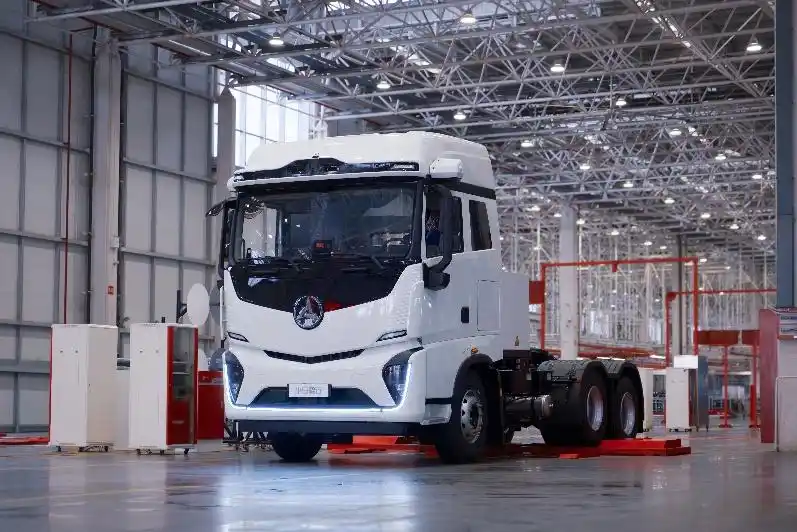
Pony.ai disclosed on August 3 that its fourth-generation L4-level fully autonomous battery-electric heavy truck has entered mass production, while its first-generation L4-level autonomous light truck is advancing toward commercial deployment in parallel. The announcement, made at the company's 2026 Pony Truck Communications Event, signals a decisive shift from technology validation to scaled commercial operations in its unmanned freight business.
The strategic underpinning of the cost breakthrough is not the truck itself, but the supply chain maturity built through Robotaxi production. Pony.ai said the autonomous driving hardware cost for the fourth-generation heavy truck has fallen approximately 70% compared with the previous generation — a reduction it attributes directly to component sharing with its Robotaxi program. The company disclosed that the technical overlap between its autonomous heavy trucks and Robotaxi platform exceeds 80%, while the figure for light trucks surpasses 90%. By reusing vehicle-grade components already validated at scale in passenger mobility — including sensors and computing platforms — Pony.ai has effectively transferred the economies of scale from consumer vehicles to commercial freight, addressing what had long been the core commercial barrier for L4 autonomous trucks: prohibitive unit costs.
The fourth-generation heavy truck is built on a pure-electric platform developed with Sany Heavy Industry and equipped with a battery pack exceeding 400 kWh. It features six redundant systems covering braking, steering, power supply, communications, perception, and computing, with a designed service life of 20,000 hours.
Alongside the hardware rollout, Pony.ai has formalized a dual commercial model for its Robotruck business. Under the Transportation-as-a-Service (TaaS) structure, the company owns and operates vehicles directly, providing driverless freight services to cargo owners and building a track record on safety and unit economics. Under the Autonomous Driving-as-a-Service (ADaaS) model, it licenses its front-installed autonomous driving system to logistics operators and asset partners in exchange for technology service fees, enabling asset-light expansion.
The company has identified three priority deployment scenarios: trunk logistics routes for Sinotrans and China Post, port transport at Shenzhen Mawan Port, and bulk commodity corridors in the Golmud region of northwest China. Pony.ai plans to deploy between 500 and 1,000 autonomous heavy trucks across these three scenarios within the next two to three years.
The autonomous light truck, with an 18-cubic-meter cargo capacity and a range of 320 to 450 kilometers, is targeting urban logistics applications including express parcel sorting, supermarket replenishment, and food cold-chain delivery. The company claims per-kilometer freight costs will be 40% to 50% lower than human-operated alternatives, with scaled operations targeted for early 2027.
Financial data points to an emerging commercial inflection. In the first quarter of 2026, Pony.ai's Robotruck service revenue reached $10.2 million, up 31% year-over-year and surpassing Robotaxi revenue of $8.57 million for the first time. While Robotruck's growth rate still trails that of the Robotaxi segment, the reversal in revenue composition indicates the autonomous freight business has developed independent revenue-generating capacity.
The broader market context supports further expansion. China's Ministry of Transport reported that national road commercial freight volume grew 3.4% in 2025. Data from the China Automobile Dealers Association showed that new energy penetration rates for heavy and light trucks reached 41.5% and 29.5%, respectively, in May 2026 — dual tailwinds of policy support and electrification that expand the addressable market for autonomous freight.
For investors, the significance of Pony.ai's mass production milestone lies less in the truck's technical specifications than in what the 70% hardware cost reduction and 80%-plus cross-platform synergy figures reveal about the commercial logic of L4 autonomous freight: at scale, supply chain discipline and cost control carry more decisive weight than single-vehicle technological sophistication.
Related Coverage:
Pony.ai Launches Singapore Robotaxi Service in Global Expansion Push