
Leapmotor’s Zaragoza Bet: China’s Auto Exporters Face a Survival Test
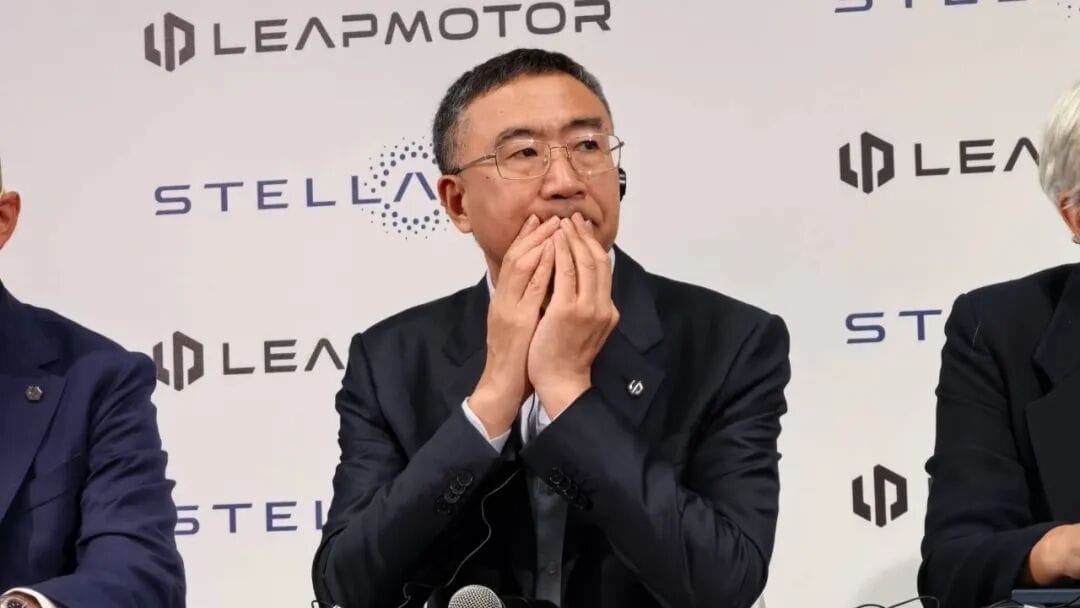
China shipped a record 5.096 million vehicles overseas in the first half of 2026—yet the industry's profit margin has collapsed to 3.8%, and Leapmotor's lean-asset European factory model offers the clearest window yet into how the sector is attempting to reconcile volume with viability.
The divergence is stark enough to stop any analyst mid-sentence. China's automakers broke every export record in H1 2026, yet thirteen Hong Kong-listed carmakers posted universal share-price declines over the same period—five of them down 50% or more. The market is not celebrating the tonnage. It is penalizing the economics. Against that backdrop, Leapmotor International quietly rolled its first B10 SUV off a 43-year-old Stellantis line in Zaragoza, Spain, offering a live-fire test of whether "asset-light" can rescue the math that brute-force export never could.
Record Exports Mask a Deepening Profit Collapse
China's auto sector shipped 5.096 million vehicles in H1 2026, up 65.3% year-on-year and the first time semi-annual export volume has cleared the 500-million-unit threshold. The country retains the global export crown for the third consecutive year.
The profit picture tells a different story. Sector-wide operating margins have compressed in a straight line: 4.5% in 2024, 4.1% in 2025, 3.8% in H1 2026. Aggregate net profit for the period stood at RMB 195.4 billion (approximately US$27.1 billion), down 20% year-on-year. For listed automakers specifically, net profit attributable to shareholders fell 25.74%.
Hong Kong-listed equities absorbed the verdict. BAIC Motor dropped 59.6%, Seres fell 56.7%, Voyah lost 54.1%, Brilliance China shed 52.8%, and GAC Group declined 49.1%. The A-share passenger vehicle index lost roughly 26% over the same span.
The pattern is consistent: revenue is growing; returns are evaporating.
Earlier Overseas Bets Reveal Where the Money Went
The current reset is best understood against the spending binge that preceded it.
NIO entered Norway, Germany, and the Netherlands through a wholly-owned direct retail model, committing RMB 200–300 million per market in upfront infrastructure. Founder Li Bin has since acknowledged the error in scale, noting that installing a single battery-swap station in Europe took 10 to 12 months in many cases. The company has since pivoted to a dealer distribution model.
Great Wall Motor committed over RMB 5 billion (approximately US$694 million) to its Tula, Russia assembly plant. The investment has produced market share—Haval held 14% of Russia's passenger car market in the first four months of 2026, ranking first among foreign brands—but not profit. Each vehicle sold currently generates a net loss of approximately RMB 30,000 (roughly US$4,167). The root cause: Great Wall's local-content score of 1,805 points falls well short of the 3,701-point threshold required to qualify for Russia's full scrappage subsidy. The shortfall halves the available incentive and makes the cost structure untenable at current volumes.
Both cases illustrate the same dynamic: early-mover capital expenditure purchased market presence, not margin.
Leapmotor Runs Three Separate Calculations in Zaragoza
Leapmotor International's Zaragoza operation is structured differently from the outset, and its logic requires unpacking across three discrete financial dimensions.
Labor Costs Reveal a Persistent Scissors Gap
A figure circulating in Chinese financial media—that European blue-collar wages are several multiples of domestic equivalents—is arithmetically imprecise. The actual comprehensive employment cost on Leapmotor's Zaragoza battery pack line, confirmed to this publication at the factory, is approximately €2,660 per month. That figure covers base salary, social insurance, and benefits allocations under the applicable union agreement. It is not a take-home figure.
At current exchange rates, €2,660 converts to roughly RMB 20,700—approximately 2.6 times the RMB 8,000 monthly gross that a comparable Chinese production worker earns. However, nominal exchange-rate conversion overstates the real purchasing-power difference. Using a 500ml Coca-Cola as a purchasing-power anchor: a Chinese line worker at RMB 8,000/month can buy approximately 2,667 bottles at a convenience store price of RMB 3 each; a Spanish counterpart at €2,660/month can buy approximately 1,773 bottles at a DIA supermarket price of €1.5. The purchasing-power ratio is roughly 1.5:1, not 2.6:1.
The gap that matters for Leapmotor is not the wage ratio but the employer-cost ratio: the company pays more than twice as much per worker in Spain as in China, while that worker's real standard of living is only modestly higher. The scissors gap between employer cost and worker purchasing power is permanent and structural.
Compounding this, Leapmotor confirmed to this publication that the Zaragoza passenger-vehicle plant (B10 line) currently employs 600 production workers on a single shift. The ERTE flexible-working agreement covering the facility allows for up to 35 working days of production suspension annually. A second and third shift—the stage at which fixed-cost amortization begins to generate meaningful savings—have not yet been initiated. True cost efficiency cannot be calculated until that expansion occurs.
EU Tariff Rules Define the Investment Rationale
The financial case for local manufacturing, rather than continued direct export, is embedded in EU trade law. Under Commission Implementing Regulation (EU) 2024/2754, Leapmotor—as a cooperating but non-sampled entity in the EU anti-subsidy investigation—faces a countervailing duty of 20.7%, layered on top of the standard 10% import tariff. The combined burden exceeds 30% of CIF value.
Escaping that liability requires Leapmotor's B10 to qualify as a product of Spanish origin under EU rules of origin. Leapmotor International CEO Tiemo Annasee confirmed at the Zaragoza launch that local suppliers account for more than 40% of vehicle value, a threshold he characterized as compliant with current requirements. He noted, however, that a draft revision would raise the requirement to 70%.
Leapmotor founder and chairman Zhu Jiangming offered a more durable framework: "Components where China has an advantage are made in China; large parts with high logistics costs are made in Europe. The soul and heart of the car are in China; the body is in Europe." He added that the B10 meets the 40% local-content threshold and that Leapmotor intends to meet whatever revised threshold may be enacted.
A Leapmotor tier-one supplier, speaking on the sidelines of the Paris Motor Show, was more direct: "At 40%, the B10 qualifies as Spanish-origin under the current countervailing-duty rules, eliminating the 20.7% surcharge. That is the entry ticket. The plant's existence accelerates the outbound migration of the broader Chinese auto supply chain into Europe, which carries symbolic weight beyond Leapmotor itself."
Production Seniority Belongs to Whoever Ships the Most Volume
Zaragoza is not Jinhua. The factory assembles Opel Corsa, Peugeot 208, and Lancia Ypsilon on the same line as the Leapmotor B10. Stellantis confirmed to this publication that the facility has the flexibility to reallocate production capacity between nameplates—effectively prioritizing whichever model generates higher volume demand.
The rationale for Stellantis's cooperation is visible in its own financials. The group recorded a net loss of €22.3 billion in fiscal 2025. Its five-year strategic plan, published in May 2026, calls for reducing European production capacity by more than 800,000 units annually through 2030 via restructuring and alliance arrangements. The Zaragoza and Madrid plants have been explicitly designated as alliance vehicles within that framework. Leapmotor is, in effect, absorbing stranded capacity that Stellantis could not profitably fill independently.
Zhu Jiangming articulated the exchange terms clearly: "This is not a speed advantage; it is an integration advantage." He added that the B05 model is scheduled to enter production at Zaragoza in Q1 2027, at which point he expects the plant to be running at full utilization.
The structural risk in this arrangement is technology transfer. Leapmotor's component architecture is currently being used to enable new vehicle programs across Stellantis's broader brand portfolio. If Stellantis internalizes sufficient capability to replicate the cost structure independently, Leapmotor's leverage as a technology supplier diminishes. The Zaragoza Opel electric SUV and the Leapmotor B10 would shift from complementary products to direct competitors on the same line.
An Oil-Price Shock Accelerates the European EV Cycle
An external variable has materially improved near-term demand conditions. In March 2026, Israeli and U.S. strikes on Iranian infrastructure drove Brent crude above $100 per barrel. European petrol queues lengthened. E-Mobility Europe Secretary-General Chris Heron stated publicly that the surge in European EV sales represents "one of Europe's most significant recent gains in energy security," with France, Germany, Italy, and Spain each recording growth above 40%.
Zhu Jiangming disclosed a data point not previously reported in Chinese media: "China's new-energy vehicle penetration rate last month approached 70%. Spain's was 30% last month. Across all of Europe last month it exceeded 40%." Against that backdrop, he said Leapmotor's B10 generated more than 8,000 consumer retail orders in Europe in a single recent month, approaching parity with its domestic Chinese volumes. The T03 ranked among the top three in France's private A-segment market; the B10 led the Spanish electric C-SUV sub-segment.
The channel economics support the volume trajectory. Approximately 90% of Leapmotor's European retail network is integrated within Stellantis's existing dealership infrastructure, sharing showrooms and aftersales facilities with Jeep, Fiat, and Peugeot. Estimated per-outlet capital cost runs roughly 65% below that of an independent greenfield network. One dealer visited in Madrid recorded approximately 2,300 Leapmotor deliveries in the first nine months of 2026 across two locations, including 609 units from its two Madrid stores—modest by mass-market standards, but operationally viable given near-zero fixed-network investment.
Demand-side incentives reinforce the trend. Madrid continues to offer unlimited free parking for battery-electric vehicles in all regulated SER zones. Valencia, Seville, and Málaga offer comparable privileges. Several European markets additionally provide up to €3,000 in purchase incentives for new BEV buyers.
The Leapmotor Template Is Not Replicable by Definition
Assigning universal applicability to the Zaragoza model would be analytically reckless. The structure depends on three conditions that are difficult to satisfy simultaneously: a large European OEM willing to lease production capacity and embed technology cooperation; a manufacturing location combining below-average European labor costs with government-level EV policy support; and a governance arrangement that allows the Chinese partner to maintain technological and quality-control primacy without holding a controlling equity stake.
Other Chinese OEMs are pursuing structurally distinct paths. Chery is partnering with Ebro-EV Motors in Barcelona; BYD is constructing a greenfield facility in Hungary; Geely has established a presence in Valencia. None of these arrangements is contractually interchangeable with Leapmotor's Stellantis agreement.
The entry ticket to the European market has been validly stamped. The conversion of that ticket into a durable, profitable position will be determined in production scheduling negotiations, union rosters, and the pace at which Stellantis develops independent capability with the technology Leapmotor is currently transferring. Zhu Jiangming said the partnership has "theoretically no reason to fail." That is, theoretically, true. Making a living, however, has never been purely a theoretical exercise.
Related Coverage:
China EV Outlook: Domestic Saturation Triggers Export Pivot and Channel Wars in 2026
Chery's Global Gamble: Overseas Exports Explode 70% Even as China Home Market Implodes