
Li Auto Overhauls Strategy to Counter Sales Slump, Betting on AI and Global Push
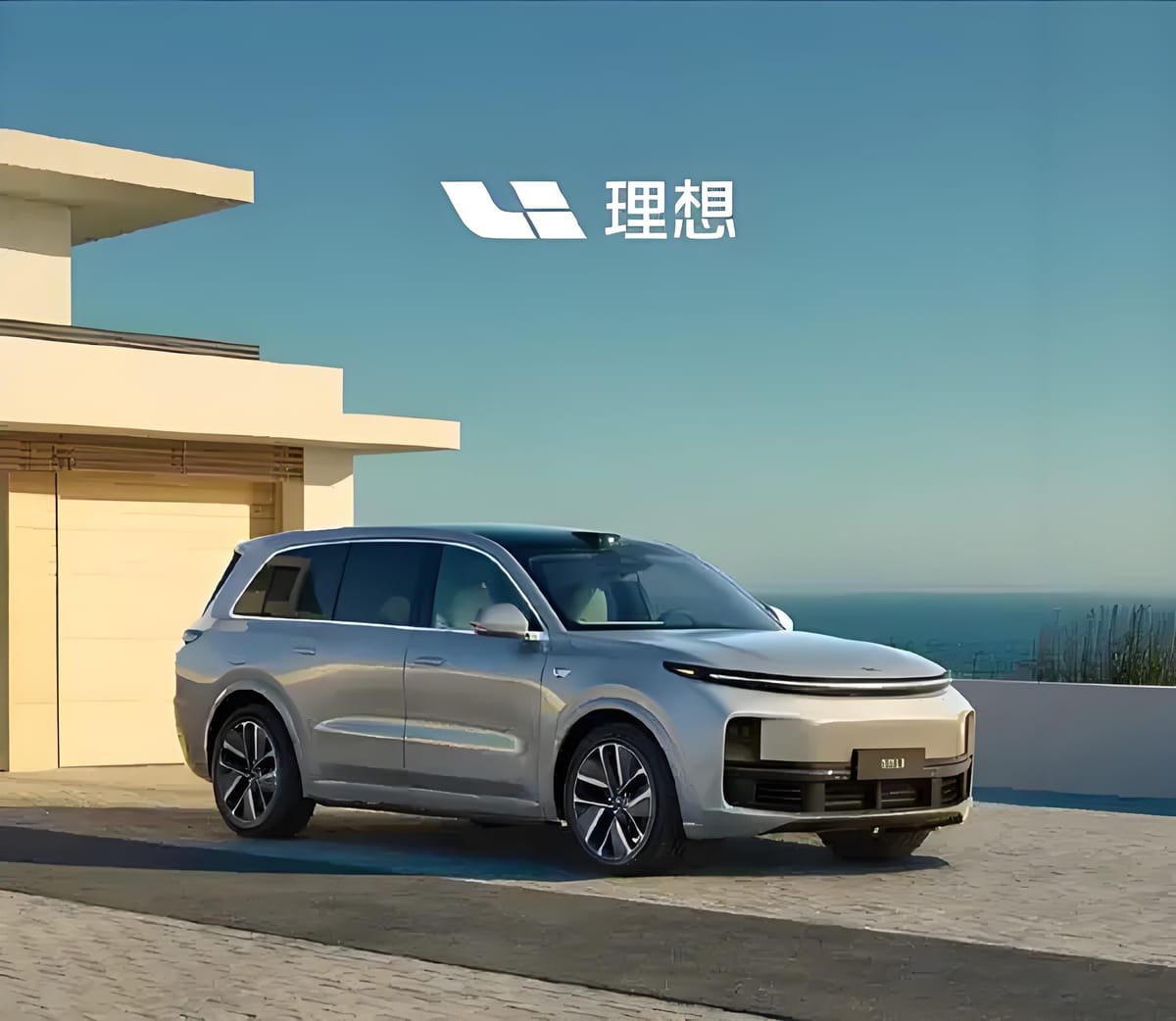
Li Auto has initiated a comprehensive strategic pivot to reverse a recent decline in deliveries, acknowledging internally that its operational pace has lagged behind aggressive domestic rivals in China’s intensifying electric vehicle war. Following a high-stakes, closed-door executive retreat in mid-October 2025, the Beijing-based automaker has decided to significantly shorten its product development cycles and abandon its conservative spending approach to regain market share.
Management at the three-day strategy meeting, held at Beijing’s Yanqi Lake, concluded that the company’s previous efficiency-first model is no longer viable against faster-moving competitors like Xiaomi and Huawei's automotive partners. Consequently, Li Auto plans to overhaul its research and development framework, shifting from a four-year platform iteration cycle to a faster two-year rhythm to match industry leaders.
The strategic recalibration also marks an urgent shift in the company’s international ambitions. After relying on grey-market "parallel exports" for overseas volume, Li Auto is now accelerating plans to establish an official global presence, admitting that it underestimated the urgency of formal expansion. Simultaneously, the company has committed to heavy investment in artificial intelligence, targeting the rollout of proprietary inference-focused chips within two years.
These moves come as the automaker faces mounting pressure, with October sales slipping to 31,767 vehicles—a decline both year-on-year and month-on-month. The retreat underscores a recognition that the company’s existing product portfolio, including the recently launched pure-electric i8 and supply-constrained i6, faces stiff resistance in a market now dominated by rapid iteration and fierce price wars.
Accelerating Product Cycles and Design
Central to the strategic shift is the admission that Li Auto’s development efficiency has been eclipsed. CEO Li Xiang acknowledged during the retreat that while Li Auto plays a card once, competitors are playing twice, leaving the company in a reactive position. The company’s "L series" extended-range models, which once commanded monthly sales exceeding 50,000 units, have seen volumes drop to approximately 20,000 amid encirclement by rival models.
To counter this, Li Auto is compressing its platform iteration cycle from four years to two. This acceleration is being coordinated with supply chain partners to ensure faster go-to-market, competing directly with the rapid "yearly overhaul" pace set by the broader Chinese EV industry. The company is also abandoning its reluctance to "stack specifications," moving toward a strategy of maximizing features to ensure product competitiveness.
Furthermore, the automaker plans to scrap its "Russian doll" design philosophy, where models across different price points shared nearly identical aesthetics. This approach, while efficient for hardware reuse, diluted the premium appeal of higher-end models. Future vehicles will feature distinct designs to create clear differentiation between models, addressing consumer feedback that the entry-level and flagship SUVs were indistinguishable.
Rethinking R&D Efficiency
The strategic review also prompted a departure from the company's rigid adherence to the "fee-efficiency ratio"—a metric used to minimize costs relative to output. Executives determined that an overemphasis on this metric during revenue downturns risks creating a vicious cycle of underinvestment.
Under the new directive, Li Auto will protect R&D budgets regardless of short-term revenue fluctuations. This follows a morale-damaging restructuring last year after the commercial underperformance of the MEGA MPV. To stabilize the organization, CEO Li Xiang has taken direct control of the human resources department. Additionally, the engineering division is preparing to establish an independent architecture structure, similar to Xiaomi's organization, to foster greater product innovation.
Pivot to Official Global Expansion
Li Auto is fundamentally restructuring its international strategy, moving away from a reliance on parallel exports. Previously, the company targeted 2028 for a formal push, content to let unauthorized exporters ship cars to markets like Russia and Central Asia. At its peak, parallel exports accounted for 4,000 units monthly, with the Li L9 SUV selling for nearly RMB 900,000 yuan (US$124,200)—double its domestic price.
However, regulatory crackdowns have rendered this channel obsolete. New Russian tax rules implemented in April removed the cost advantages of transit via Central Asia, and Chinese authorities will ban the export of "new used cars" effective January 1, 2026. With parallel export volumes collapsing to hundreds per month, Li Auto is now prioritizing official entry into the Middle East, Central Asia, and Europe. New models launching in 2026 are being designed to meet international regulatory standards.
Doubling Down on AI and Computing
The final component of the strategy involves a massive increase in artificial intelligence spending. During the strategy meeting, attended by Y Combinator China founder Lu Qi, the company resolved to focus resources on "inference computing power," which it views as the future scarcity over training power.
Li Auto is currently spending over RMB 100 million yuan (US$13.8 million) monthly on computing power. The company is developing its second-generation proprietary chip, slated for release in two years, which will prioritize inference capabilities. Meanwhile, its first-generation self-designed chip has completed tape-out and is undergoing in-vehicle testing, with deployment in flagship models expected next year.
Beyond the vehicle cockpit, the company is exploring broader AI applications. New departments dedicated to "spatial robotics" and "wearable robotics" were established in June, and discussions at the retreat included the potential development of smart glasses, signaling ambitions to expand beyond being solely an automotive manufacturer.