
Lingchu Intelligence Raises Over 2 Billion Yuan to Solve Embodied AI's Data Bottleneck
In a significant development for China's embodied AI sector, Lingchu Intelligence has disclosed its financing progress for the first time: the company has completed Angel and Pre-A rounds, raising a cumulative total of 2 billion yuan ($275 million). The funding comes from a prestigious lineup including state-level investors such as China Development Bank Capital and CCTV's integrated media industrial fund.
A Data-Centric Approach to Embodied AI
Born at the end of 2024, Lingchu Intelligence has quickly distinguished itself by focusing on what founder and CEO Wang Qibin calls the industry's most critical bottleneck: high-quality training data for embodied AI systems.
Unlike companies pursuing robot-centric data collection, Lingchu takes a "body-free data acquisition" approach. Through human wearable devices, the company collects operational data at scale to train embodied models, addressing the chronic data shortage that has plagued the field.
The Human Data Advantage
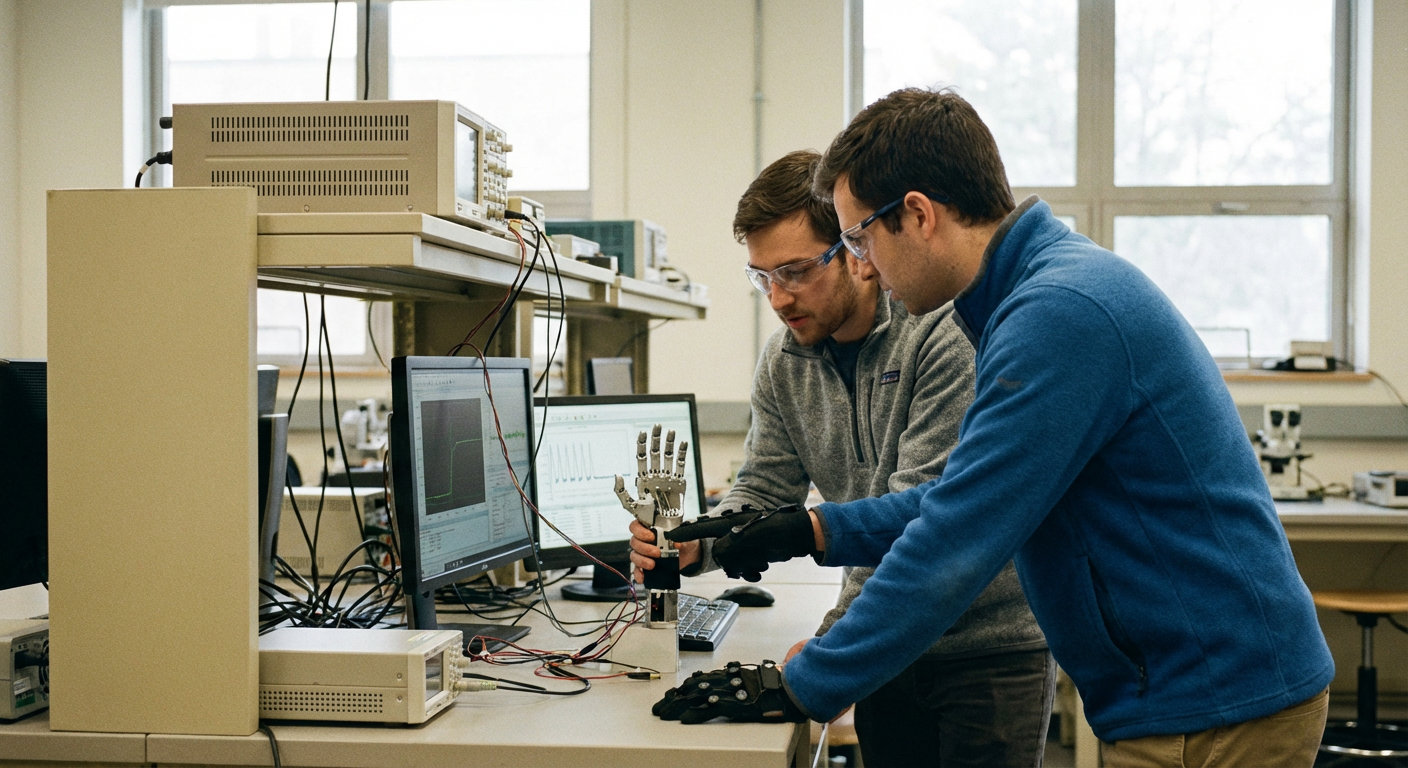
Lingchu's technical strategy centers on collecting multimodal human operation data through specialized data gloves equipped with tactile sensors, visual cameras, and joint angle tracking. This data is then retargeted to various robot end-effectors during model training.
"Human data is the largest and most diverse data source," said co-founder Chen Yongpei, who studied in Professor Li Fei-Fei's lab at Stanford. "Robots change—end effectors get updated, architectures evolve. But humans remain constant. By anchoring on human data, we minimize the risk of our training data becoming obsolete."
Logistics as the Entry Point
After evaluating multiple scenarios, Lingchu converged on logistics and supermarket applications as its initial focus. Despite being founded less than two years ago, the company has already entered preliminary commercial deployment with systems achieving up to 800 units per hour.
Facing Competition from Tech Giants
When asked about competition from large tech companies entering embodied AI, CEO Wang remained confident: "Big tech can train models that look good in demos if they throw enough resources. But embodied AI has a critical barrier that LLMs don't: data silos."
This data moat positions the company to capture market share before larger competitors can establish comparable data assets.