
Midea Group Unveils Six-Armed Industrial Robot to Automate Production Lines
Midea has introduced a new humanoid robot designed to enhance manufacturing efficiency, signaling the Chinese appliance giant’s deepening integration of robotics into its production ecosystem.
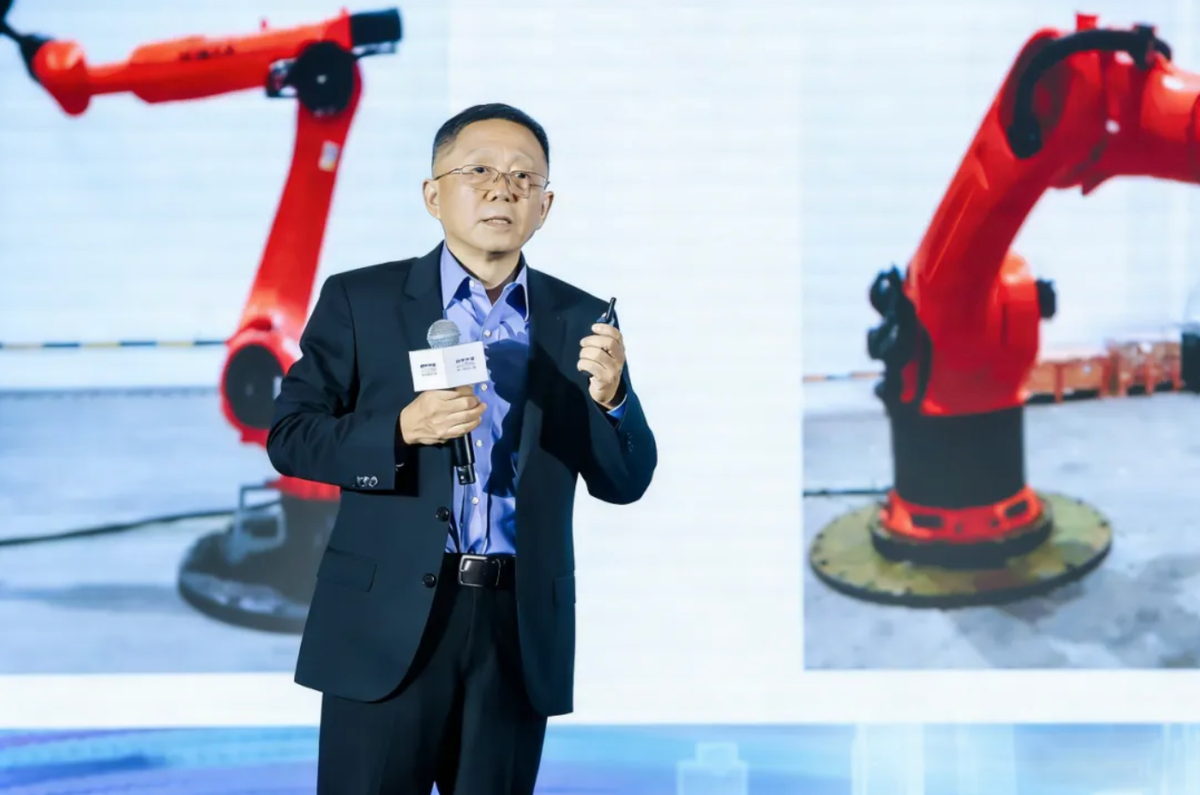
The company’s Chief Technology Officer, Wei Chang, presented the "MIRO U" at the 2025 Greater Bay Area New Economy Development Forum in Guangzhou. Described as the industry’s first six-armed, wheeled-legged humanoid robot, the machine is engineered to perform tasks beyond human physiological limits. Wei stated that the robot features a proprietary technical system developed entirely in-house, capable of stable lifting, 360-degree rotation, and high-precision control of its six bionic arms to execute multi-dimensional collaborative work.
The MIRO U is scheduled for deployment at Midea’s high-end washing machine facility in Wuxi by the end of 2025. According to the company, the robot is expected to significantly improve production line rhythm and increase line changeover efficiency by 30%. "The core value of MIRO U lies in breaking through morphological imitation to achieve a leap in operational efficiency in industrial scenarios," Wei said, describing this as a critical breakthrough for the practical application of humanoid technology.
This development follows Midea's long-term strategic layout in robotics, which includes the establishment of a central research institute in 2014, the acquisition of KUKA Group in 2017, and the founding of a Humanoid Robot Innovation Center in 2024. The company has secured a complete industrial chain capability ranging from core component R&D to system integration and operates the "Blue Orange Laboratory," a national key laboratory for high-end heavy-duty robots.
Beyond industrial applications, Midea is advancing its commercial and household robot segments. Wei disclosed that the "Mela" series, designed for commercial and home service settings, is currently in the final testing phase. These units are slated to enter Midea’s offline retail stores in 2026 to perform tasks such as product guidance and function demonstrations.
Wei outlined a roadmap prioritizing industrial application, followed by commercial use, and finally household exploration. Midea intends to leverage its network of over 100 smart manufacturing factories and smart home ecosystems to facilitate scenario verification and data accumulation. The company plans to continue increasing investment in artificial intelligence and robotics R&D to push humanoid robots from laboratory development to mass production.