
Moonshot AI’s Kimi K3: How China’s AI Startups Can Scale Globally Without Building Alone
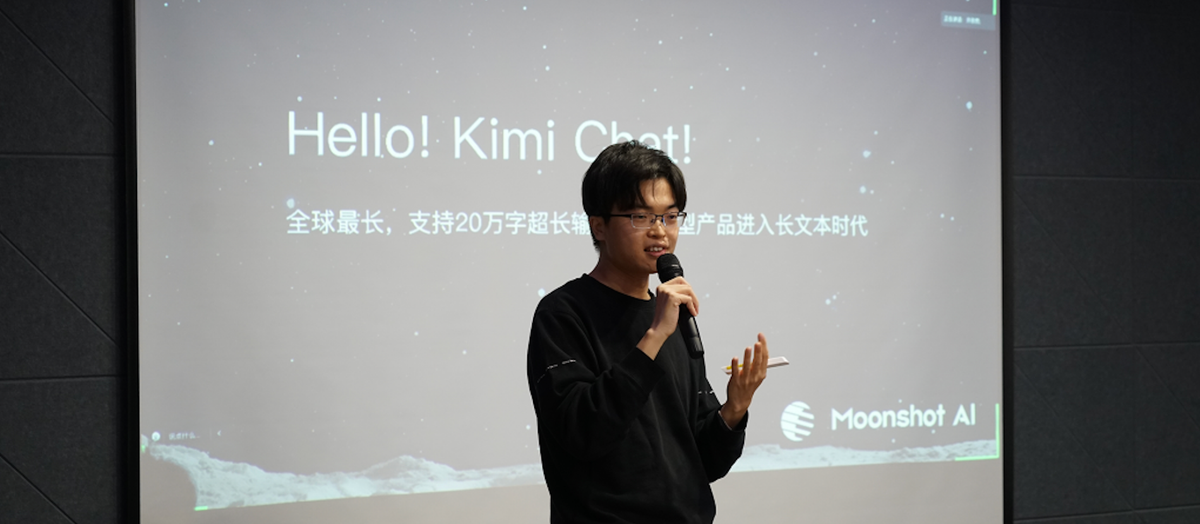
A structural look at Moonshot AI's commercialization strategy, open-source model releases, and the "ride the ship" approach to international expansion
What Is Kimi, and Why Does It Keep Making Headlines?
Kimi is the flagship AI model and product of Moonshot AI, a Chinese AI startup founded in 2023. Despite having a headcount of roughly 300 people, the company has become one of the most closely watched names in global AI — not just in China.
The attention intensified in mid-2025, when Moonshot AI released Kimi K3: a 2.8-trillion-parameter open-source model using a Mixture-of-Experts (MoE) architecture, with approximately 104 billion parameters activated per token across 896 experts. It was the first open-source model at the 3-trillion-parameter scale, and it also supports multimodal inputs — text, image, and video.
Within 30 minutes of its release on Hugging Face, K3 had received more than 4,000 upvotes and topped the platform's trending charts. Nearly 3,700 developers had queued to download it before launch. Demand was so heavy that Kimi temporarily suspended new consumer subscriptions due to compute constraints. Elon Musk commented "Impressive" under a benchmark report.
That is the product story. But the more durable question is: what is the commercial logic behind it?
Why the Business Numbers Are Drawing as Much Attention as the Model
Technology benchmarks are one signal. Revenue trajectory is another — and Kimi's is unusually steep.
- March 2025: Kimi's Annual Recurring Revenue (ARR) crossed $100 million
- Mid-June 2025: ARR reached $300 million — a 3x increase in roughly three months
- API revenue: grew 400% year-over-year, now accounting for more than 70% of total company revenue, with that share still rising
- International paid users: grew 400%, with products reaching 180+ countries and territories
These figures help explain the capital market's enthusiasm. Moonshot AI closed a financing round at a $20 billion valuation in late June 2025, and almost immediately launched a new round. Its Series F, reportedly exceeding $3.5 billion, has since closed at a post-money valuation of approximately $35 billion, with a Series G already initiated.
The K3 release also reverberated through financial markets more broadly. Reports indicate that within 72 hours of K3's launch, overseas AI-sector stocks shed approximately $32 billion in combined market capitalization, with 17 investment banks revising down valuations of compute-infrastructure companies overnight. The logic is straightforward: in a market where capital and developer attention are finite, a breakout model from one company compresses the expected returns of others.
Four Paths Chinese AI Companies Are Taking Overseas
To understand Kimi's strategy, it helps to map the landscape of how Chinese large language model (LLM) companies are approaching international markets. Four distinct models have emerged:
1. Open-Source Penetration + Volume Pricing (DeepSeek)
DeepSeek releases full model weights publicly, allowing developers to download, verify, and self-deploy. It monetizes through an official API priced at aggressive per-token rates. On platforms like OpenRouter, DeepSeek has consistently ranked among the highest in global token consumption. The trade-off: large user base and ecosystem influence, but relatively low monetization efficiency per unit.
2. Lightweight Models + Hit Consumer Apps (MiniMax)
MiniMax pairs its model capabilities with consumer products: Talkie (AI character roleplay, international) and Hailuo AI (video generation). In 2025, MiniMax reported revenue of $79 million, up 159% year-over-year, with AI-native product revenue of $53 million. This model depends on finding product-market fit in specific consumer verticals.
3. Sovereign AI and Government Contracts (Zhipu AI)
Zhipu AI has focused on B2B and government clients, including deploying a national-level AI platform in Malaysia and building positions in the Middle East and Southeast Asia. In 2025, Zhipu reported revenue of 724 million RMB (up 132%), with 74% coming from localized on-premise deployments. This path requires deep local relationships and long sales cycles.
4. "Riding the Ship" — Cloud Platform Distribution (Moonshot AI / Kimi)
This is Kimi's chosen path, and it is structurally different from the others.
How Kimi's "Ride the Ship" Strategy Actually Works
The phrase captures the core logic: rather than building its own global sales infrastructure, Kimi distributes its model capabilities through established cloud platforms that already have the global reach, compliance frameworks, and enterprise customer relationships that a 300-person startup cannot replicate.
The most detailed public disclosure of this approach came from Kimi's Head of Enterprise Business, Huang Zhenxin, at an AWS China Summit. He described a four-layer partnership architecture with Amazon Web Services:
Layer 1 — Infrastructure
Kimi uses AWS's global data center network across North America, Europe, the Middle East, and Asia-Pacific as its compute and connectivity backbone. Building equivalent infrastructure independently is not feasible at Kimi's current scale.
Layer 2 — Platform Services
Multiple Kimi models are available on Amazon SageMaker for training and inference. Amazon Bedrock has integrated Kimi K2.5 and other open-source models, with newer models being added.
Layer 3 — Marketplace Distribution
Kimi's official API is listed on the AWS Marketplace, enabling global enterprise customers to access it on a pay-as-you-go basis with zero integration friction. Kimi has committed to prioritizing TPM (tokens per minute) capacity allocation for this channel.
Layer 4 — Vertical Industry Solutions
Kimi and AWS solution architects co-develop industry-specific applications in finance, healthcare, and manufacturing. Kimi contributes the core model; AWS contributes sector expertise and client access.
Huang drew a clear distinction between the Marketplace and Bedrock integration modes: in the Marketplace model, inference still runs on Kimi's own infrastructure — AWS is the distribution channel. In the Bedrock model, inference runs directly on AWS compute — it is a deeper technical integration. The first is "selling through a store"; the second is "being embedded in the platform."
Kimi has not concentrated on AWS alone. It is also listed on Google Cloud Platform, Microsoft Azure, Groq, Together AI, and coding-agent tools like Cursor and Cline. Multi-cloud distribution reduces dependency on any single channel partner.
What Are the Risks and Trade-offs of This Model?
The "riding the ship" approach is not without structural tensions. At the AWS Summit media session, a journalist asked directly: by hosting models on AWS, does Kimi risk becoming a commodity pipeline — handing customer relationships and data to the cloud provider while margins get compressed?
Huang's response was measured: for certain customer segments, co-selling with AWS is the right approach, and compliance is a key reason. He did not fully resolve the tension.
The honest structural answer is that channel dependency is a real constraint, but it is a known trade-off, not an unforeseen risk. The mitigation is model differentiation: if Kimi's models are consistently among the highest-performing available, enterprise customers will seek them out regardless of which platform hosts them, and willingness to pay a premium for top-tier capability reduces margin compression. As Huang put it: "Users have a willingness to pay a premium for the highest-performance token supply."
The Anthropic precedent is instructive here. Anthropic grew its ARR from $100 million to approximately $9 billion with AWS as its primary cloud distribution partner throughout that journey — without losing its identity as the model provider.
What Is Kimi's Long-Term Positioning?
Moonshot AI has articulated an ambitious framing for where Kimi fits in the broader AI economy. Huang described it as: "finding the optimal solution for converting energy into intelligence — making intelligence scalable, parallelizable, storable, and a foundational public utility, the way energy and food are."
In practical terms, this positions Kimi as an AI infrastructure layer — a "power plant" — with cloud platforms functioning as the distribution grid. The model is not primarily a consumer product or an enterprise software suite; it is a capability that other products and services are built on top of.
This is a high-stakes bet. It requires continuous model leadership (hence the importance of K3's reception), a reliable commercial distribution network (hence the multi-cloud strategy), and sufficient capital to sustain the compute costs of frontier model development (hence the rapid fundraising cadence).
What to Watch Going Forward
Several variables will determine whether Kimi's trajectory holds:
- Model competitiveness: K3's reception validates the technical approach, but the frontier moves quickly. Sustained leadership requires continued R&D investment at scale.
- ARR growth rate: The jump from $100M to $300M in three months is extraordinary. Whether that pace continues — or normalizes — will be a key signal of structural demand versus launch-cycle spikes.
- API revenue share: Already above 70% of total revenue, this metric reflects enterprise adoption depth. Further increases would indicate that B2B infrastructure positioning is solidifying.
- Channel diversification: The multi-cloud listing strategy reduces single-platform risk, but the depth of integration with each partner varies. How Bedrock-level integrations develop will affect both revenue mix and strategic leverage.
- Geopolitical and regulatory environment: Chinese AI companies operating globally face ongoing scrutiny in certain markets. Compliance infrastructure — one of the stated reasons for the AWS partnership — will remain a structural cost and operational requirement.
Related Coverage:
Moonshot AI's Kimi K3 Rattles Wall Street as Hong Kong IPO Looms Within Six Months