
New Chips, 200MP Cameras to Define China's 2025 Flagship Phones
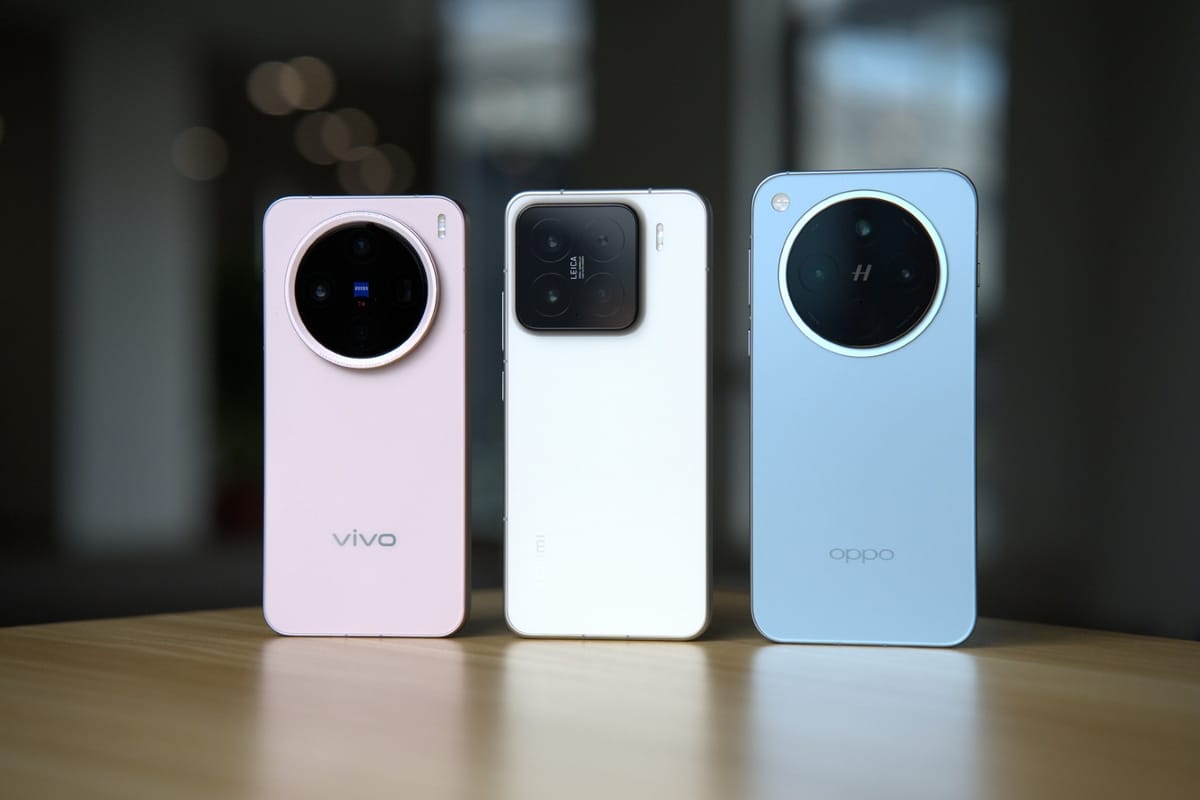
Chinese smartphone makers are set to launch their 2025 flagship models earlier than usual, escalating competition in the premium market with significant advancements in processing power, display technology, and camera systems. This accelerated timeline is primarily driven by the early release schedules for next-generation chipsets from industry giants Qualcomm Inc. and MediaTek Inc.
The new product cycle is expected to kick off in late September 2025, following chip announcements from Qualcomm and MediaTek. The early launches will give brands including Xiaomi, OPPO and Vivo a head start in what is anticipated to be a fiercely contested fourth quarter, as they race to integrate cutting-edge features to attract consumers.
Key technological shifts will define this new generation of devices. Manufacturers are widely expected to adopt 200-megapixel sensors for main cameras, moving away from the previously favored 1-inch sensor size. Concurrently, a pivot from LTPO to LTPS screen technology signals a strategic focus on user eye comfort, even at the potential expense of some power efficiency.
These internal upgrades will be complemented by refined industrial designs, most notably the widespread adoption of LIPO technology to achieve near-invisible screen bezels. The combination of performance and design enhancements underscores a concerted effort by Chinese manufacturers to innovate and consolidate their position in the high-end segment of the global smartphone market.
A New Generation of Power
The performance of the 2025 Android flagships hinges on the upcoming 3-nanometer processors from Qualcomm and MediaTek. Qualcomm is scheduled to hold its Snapdragon Summit from September 23 to 25, where it will unveil its next-generation Snapdragon 8-series flagship chipset. Meanwhile, MediaTek is expected to announce its Dimensity 9500 processor on September 22.
Both chipsets are built on Taiwan Semiconductor Manufacturing Co.'s advanced 3nm process, but they feature different architectures. The new Snapdragon is expected to maintain a 2+6 CPU core configuration and support the SME instruction set. Early Geekbench 6.4 benchmark results from a test device showed single-core and multi-core scores of 3,393 and 11,515, respectively, with a test frequency of 4.0 GHz. At its peak frequency of 4.74 GHz, scores could potentially surpass 4,000 and 12,000.
In contrast, MediaTek's Dimensity 9500 will reportedly feature an "all-big-core" architecture. While its CPU performance is projected to be comparable to its rival, its primary focus is on GPU enhancement. Leaks posted on the social media platform Weibo suggest a more than 40% improvement in GPU power efficiency and ray-tracing performance, potentially enabling mobile gaming at over 100 frames per second. Xiaomi has been announced as the first manufacturer to launch a device with the new Snapdragon chip, while Oppo and Vivo are competing to be first with the Dimensity 9500.
The Push for Vanishing Bezels
The pursuit of slimmer screen borders continues, with manufacturers increasingly leveraging LIPO (Low-Injection Pressure Overmolding) technology. This manufacturing process, inspired by the formation of amber, uses a liquid polymer to encapsulate and tightly bond the display module to the phone's frame, significantly reducing the width of the black bezels.
Apple Inc. first introduced LIPO in its 2023 iPhone 15 Pro, shrinking bezels to 1.5mm from the previous 2.2mm. Chinese manufacturers quickly followed suit, popularizing displays with ultra-thin, uniform bezels on all four sides. In 2025, LIPO is set to become even more prevalent, making large bezels a feature of the past in the premium segment.
A Shift in Display Philosophy
A notable trend for 2025 is a strategic shift in screen panel technology from LTPO (Low-Temperature Polycrystalline Oxide) to LTPS (Low-Temperature Polycrystalline Silicon). For the past several generations, LTPO has been the standard for flagship phones due to its ability to dynamically adjust refresh rates, which conserves battery life.
LTPS panels, while typically consuming more power, offer higher pixel density and faster response times. Crucially, they are considered by many to offer better eye comfort. The debate within the industry reflects a classic trade-off: LTPO's power efficiency versus the perceived practical benefits of LTPS. Some manufacturers believe the power disadvantage of LTPS can be effectively mitigated by using newer silicon-carbon anode batteries, making eye comfort a worthwhile priority.
The 200-Megapixel Era Arrives
High-resolution imaging is poised to become a mainstream feature, with 200-megapixel sensors expanding beyond specialized telephoto lenses to become the new standard for main cameras. The trend, which gained traction with telephoto applications in devices like the Vivo X100 Ultra, will see wider adoption across different price tiers, trickling down from "Ultra" models to more accessible "Pro" versions in 2025.
Significantly, several brands are expected to abandon the 1-inch sensors that have dominated flagship main cameras in recent years in favor of 200-megapixel alternatives. This move addresses the old industry argument that high pixel counts were impractical; today's powerful Image Signal Processors (ISPs) in the latest chipsets have the computational power to handle the massive data throughput, unlocking new potential in digital zoom and image detail.