
Nio CEO Doubles Down on Q4 Profit Goal, Pledging Growth Over Cuts
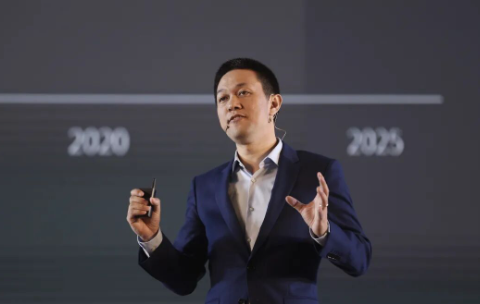
Nio Inc.’s founder and chief executive, William Li, has reiterated his “must-achieve” goal of delivering a profitable fourth quarter in 2025, telling senior staff that the target hinges on boosting sales volume rather than relying solely on cost-cutting measures, as the Chinese electric-vehicle maker navigates persistent losses and intense market competition.
In an internal meeting with mid-to-senior level management on Oct. 17, Li framed the Q4 profitability target as a critical "report card" on the team's operational efficiency and a cornerstone for the company's long-term sustainable development. “This is not to show off to others, but is the foundation for the company's long-term sustainable development,” Li stated.
To achieve this, Li outlined a three-pronged strategy focused on effective marketing for key models, securing the supply chain while reducing its costs, and delivering high-quality software versions on schedule. “It's about achieving profitability by selling more cars, not just by cutting costs, so we don't drain the pond to get the fish,” he emphasized.
The renewed internal push comes after Li first made the public pledge in March 2025, a high-stakes bet for a company that has yet to turn a profit. Nio’s net loss for the second quarter narrowed to 4.995 billion yuan from 6.89 billion yuan in the first quarter, though it remains under pressure from rivals including Li Auto, Xiaomi, and Xpeng.
A Pragmatic Turn
Nio’s path to profitability in 2025 reflects a strategic shift toward becoming more “down-to-earth and pragmatic,” moving beyond its initial premium-only focus. This change is evident in the pricing and market reception of its newer models, which are aimed at a broader customer base.
The most notable success has been the Onvo L90, an affordable model launched in July. The vehicle recorded sales of over 10,000 units in both August and September, making it the only model across Nio’s brands to achieve this monthly sales milestone. Similarly, the refreshed Nio ES8, launched in September, sold 2,803 units in its debut month, marking a three-year high for the flagship SUV model. This performance suggests the company's strategy of diversifying its product portfolio is beginning to yield results in sales volume.
The Financial Picture
Despite recent sales momentum, Nio’s financial situation remains challenging. The company reported total revenue of 19.01 billion yuan ($2.6 billion) for the second quarter of 2025, a 9% increase year-over-year and a 57.9% jump from the previous quarter. However, its net loss of 4.995 billion yuan widened slightly from the same period a year earlier.
In the second quarter, Nio delivered a total of 72,056 vehicles, a 71.2% increase from the first quarter. These deliveries were split across its three brands: the main Nio brand delivered 47,132 units, the mass-market Onvo brand delivered 17,081 units, and the entry-level Firefly brand delivered 7,843 units. Analysts note that even with three brands, Nio's combined sales volume still trails that of single-model successes from competitors like Xiaomi Corp.
Overhauling for Efficiency
To steer the company toward its goal, Li is leading a hands-on overhaul of its internal operations. He revealed plans to personally attend more than 30 workshops and meetings in the fourth quarter to solidify the company’s organizational capabilities.
A core component of this effort is the Cell Business Unit (CBU) mechanism, which Li clarified is designed to improve efficiency and return on investment, rather than being a simple cost-cutting tool. The CBU system breaks down all business operations into distinct units, each with clear ROI targets and performance-based incentives. “The purpose of CBU is to make everyone think about where the value creation is and what the return is when they spend money,” Li said, adding that "opportunity cost is the biggest cost.”
He illustrated his management philosophy by comparing a company-wide step-counting competition to individual fitness goals, noting that systemic, mutually-supervised goals have a higher success rate. “This is the power of a system,” he concluded.
A High-Stakes Pledge
The fourth-quarter profitability goal represents a significant personal commitment for Li. In March, he described the target as a "military order," and in an April interview, he stated that he would be an "unfit CEO" if the company could not achieve profitability and operate sustainably.
Missing this target would not only impact Li's credibility but would also, by his own admission, pose a "severe test" to Nio’s long-term development and business model, which includes heavy investments in a signature battery-swapping network and premium user services. For investors, the fourth quarter will be a crucial indicator of whether Nio's strategic pivot can finally translate sales growth into financial viability.