
Nio’s Revival: Stock Doubles on Mass-Market Pivot
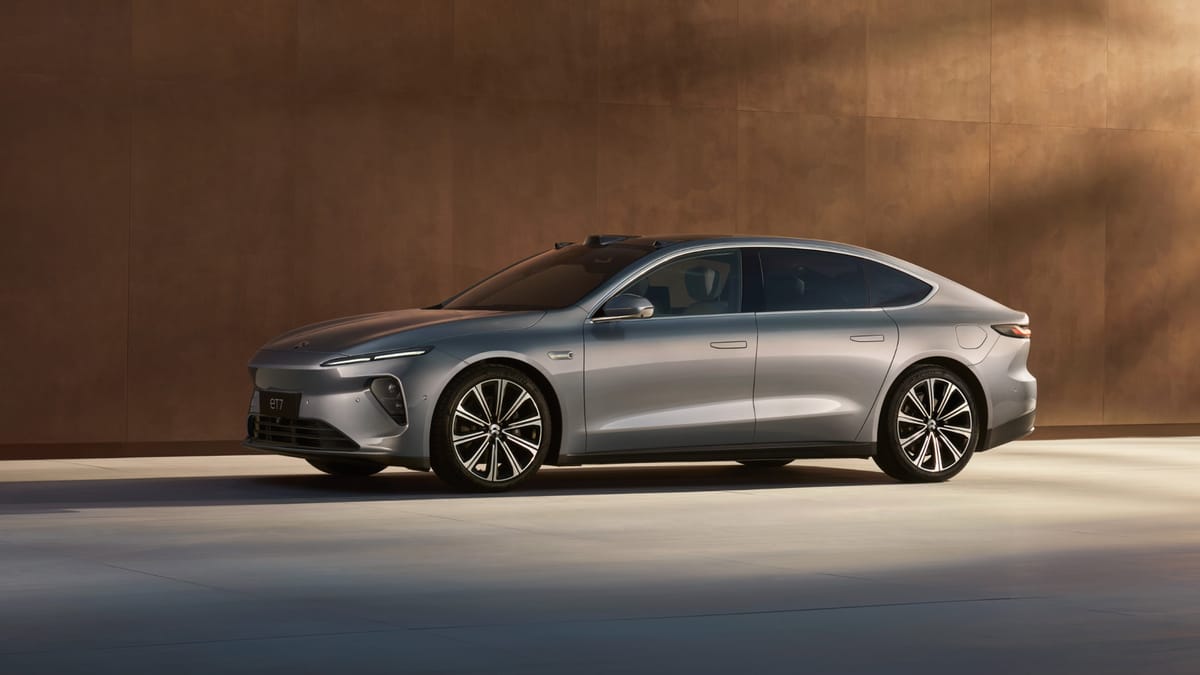
Nio Inc. is engineering a dramatic turnaround, with its stock doubling from historic lows driven by a strategic pivot to more affordable, user-focused models that signals a fight for survival over maintaining its premium-only image.
The rally from a low of $3.40 in recent months is fueled by unexpectedly strong pre-orders for two new vehicles: the Onvo L90, from its new mass-market brand, and a revamped flagship ES8 SUV. The surge in investor confidence comes just after the electric vehicle maker posted another significant loss in its first-quarter earnings, highlighting a precarious cash position.
Underscoring the strategic shift, CEO William Li has openly acknowledged the new reality facing the company. "It's difficult for Nio to compete if it continues to maintain high prices," Li said at the launch of the new ES8. "Survival is the most important thing."
The market has responded positively to this newfound pragmatism, betting that the new product-led strategy can steer the embattled EV maker toward financial stability. However, analysts caution that significant questions about long-term profitability and execution capabilities remain critical for the company’s future.
A Winning Formula for New Models
The strong market reception for Nio’s latest offerings stems from a clear strategy of offering more features at a lower price point, directly addressing consumer demand.
The Onvo L90, the second model from Nio’s new mainstream brand, is priced aggressively from RMB 265,800 yuan (approximately US$36,800) to RMB 299,800. This positions it competitively against rivals by offering a larger size for its price, targeting families seeking space and value. Its success is attributed to making popular comfort features—dubbed the "refrigerator, color TV, and large sofa" in China—standard, while its compatibility with Nio’s battery-swapping network and 900V fast-charging helps alleviate range anxiety. Crucially, Nio Inc. learned from past mistakes, ensuring the L90 was available for delivery immediately upon launch, preventing order cancellations.
Similarly, the flagship Nio ES8 SUV received a major overhaul, with its price slashed by RMB 80,000 to RMB 140,000 to a new range of RMB 416,800 to RMB 456,800. The lower price point, which dips to around RMB 308,800 under the Battery-as-a-Service (BaaS) plan, opens the model to a much wider customer base. The new ES8 is also built on Nio’s next-generation NT3.0 platform, featuring significant upgrades in performance, efficiency, and luxury configurations. Initial pre-orders for the ES8 have reportedly outpaced even the popular L90.
An Awakening in Product Strategy
The success of these models reflects a deeper shift in Nio’s product philosophy, moving away from "over-engineering" towards a more customer-centric and cost-conscious approach.
The company has established clearer brand differentiation, with the Nio brand targeting premium business and family users, while the Onvo brand focuses on practical, mass-market family needs. This has led to more focused product definitions; for example, the Onvo L90 sacrifices some high-end intelligent driving features for more perceivable value in space and standard comfort amenities.
This marks a correction from what CEO Li now calls "mistakes" in the product definition of earlier models on the NT2.0 platform. These vehicles were criticized for high costs—driven by features like four Nvidia Orin-X chips—and subpar range, with an over-reliance on battery swapping. The new NT3.0 platform addresses these weaknesses with a 900V high-voltage architecture for faster charging, a more efficient centralized computing structure, and lightweight design that improves range and creates more cabin and storage space, including a large front trunk.
The Path to Profitability
Behind the appealing new products is a concerted effort to improve financial health through rigorous cost controls and operational efficiencies.
Nio is working to lower its bill-of-materials (BOM) costs by using in-house developed components, such as its NX9031 chip, which is estimated to save RMB 10,000 per vehicle compared to the previous four-chip solution. The NT3.0 platform also allows for greater component sharing across Nio and Onvo models, enabling economies of scale. The company is also learning from rivals like XPeng Inc., which staged a successful comeback partly by overhauling its supply chain to reduce procurement costs.
This financial discipline is reflected in Nio's guidance. The company targets a vehicle gross margin of 16%-17% in the fourth quarter, with the new L90 and ES8 models aiming for 20%. It also projects a significant reduction in operating expenses, with R&D costs expected to fall to around RMB 2 billion per quarter in the second half of 2025, and SG&A expenses targeted at under 10% of sales revenue by the fourth quarter. These measures are seen as critical steps toward stemming losses.
A High-Stakes Battle for Survival
Despite the positive momentum, Nio’s long-term survival is not yet guaranteed, and its path to break-even remains challenging.
Analysts believe achieving profitability in the fourth quarter is unlikely, even with strong sales. A net loss of around RMB 1 billion is forecast, though this would be a marked improvement over current market expectations of a RMB 1.9 billion loss. With a net cash position of just RMB 11.9 billion at the end of the second quarter, the success of the new ES8 is viewed as a "make-or-break" moment for the company, putting immense pressure on it to prioritize sales volume above all else.
Questions also linger about the sustainability of Nio's product cycle. Key volume models like the ET5 and ES6 have not yet been slated for an upgrade to the superior NT3.0 platform, suggesting a potentially weaker new product pipeline for 2026. Furthermore, the decision to delay the launch of the Onvo L80 to prioritize production of the L90 and ES8 has raised concerns about whether Nio's supply chain and execution capabilities have truly improved. For now, investing in Nio is seen as a short-term bet on its ability to execute its current product-led turnaround.