
Overseas Revenue Soars 9-Fold as 'China's Lego' Makes Inroads in U.S. Market
Chinese building block toy maker Blokees, often dubbed "China's Lego," has achieved profitability for the first time in four years, powered by a nearly 900% surge in overseas revenue as its strategic push into the U.S. market gains significant traction.
The company, which went public in Hong Kong in January 2025, reported a net profit of 297 million yuan for the first half of 2025, a sharp reversal from a 255 million yuan loss in the same period a year earlier. Total revenue rose to 1.338 billion yuan (approximately US$184 million), according to its mid-year financial report.
This turnaround was overwhelmingly driven by international growth. Overseas sales reached 110 million yuan in the first six months of the year, a nearly nine-fold increase year-over-year, with Indonesia and the United States emerging as the primary contributors.
The results underscore a successful shift in strategy for Blokees (布鲁可), which is leveraging established American intellectual property and agile e-commerce channels to compete directly with Western toy giants on their home turf, a move that could provide a playbook for other Chinese consumer brands eyeing global expansion.
A U.S. Story, Told by a Chinese Toymaker
At the heart of Blokees' U.S. success is a familiar name: Transformers. After securing a licensing deal with Hasbro, Blokees launched a low-priced "Transformers Star Edition" toy in November 2024, selling 48.6 million units and generating over 200 million yuan in revenue within seven months. The Transformers IP became the company’s second-largest revenue source in 2024, bringing in 454 million yuan.
The company paved the way for its U.S. product launch with a targeted content marketing strategy. In January 2024, it established a YouTube channel dedicated almost exclusively to stop-motion animations featuring its Transformers toys. By recreating iconic scenes from the 1980s G1 series to recent films, Blokees appealed to a multi-generational fan base, amassing one million subscribers in just seven months.
To avoid direct competition with Hasbro, which dominates the Transformers toy market, Blokees focused its product line on recent movie releases like Transformers: Rise of the Beasts (2023) and Transformers One (2024). This strategy, combined with a distinct price advantage—its comparable Optimus Prime toy on Amazon is priced $3 lower than Hasbro's—allowed it to carve out a niche. Reviewers have also noted that Blokees’ products offer superior articulation and paint quality for their price point.
From Brick-and-Mortar to Amazon's Cart
Blokees' recent success marks a significant pivot from its earlier, less effective international strategy. Following a Series A funding round in 2020, the company established a U.S. team to replicate its domestic model of relying on B2B distribution through offline retailers like Toys "R" Us and Walmart Inc. However, this approach yielded minimal results, with overseas revenue hovering at just 2.9% of the total as recently as 2024.
The turning point came in the second half of 2024 when the company shifted its focus to online channels, particularly Amazon.com Inc. While offline channels still account for 70% of its overseas sales, online platforms led by Amazon now make up the remaining 30% and have been the primary growth engine.
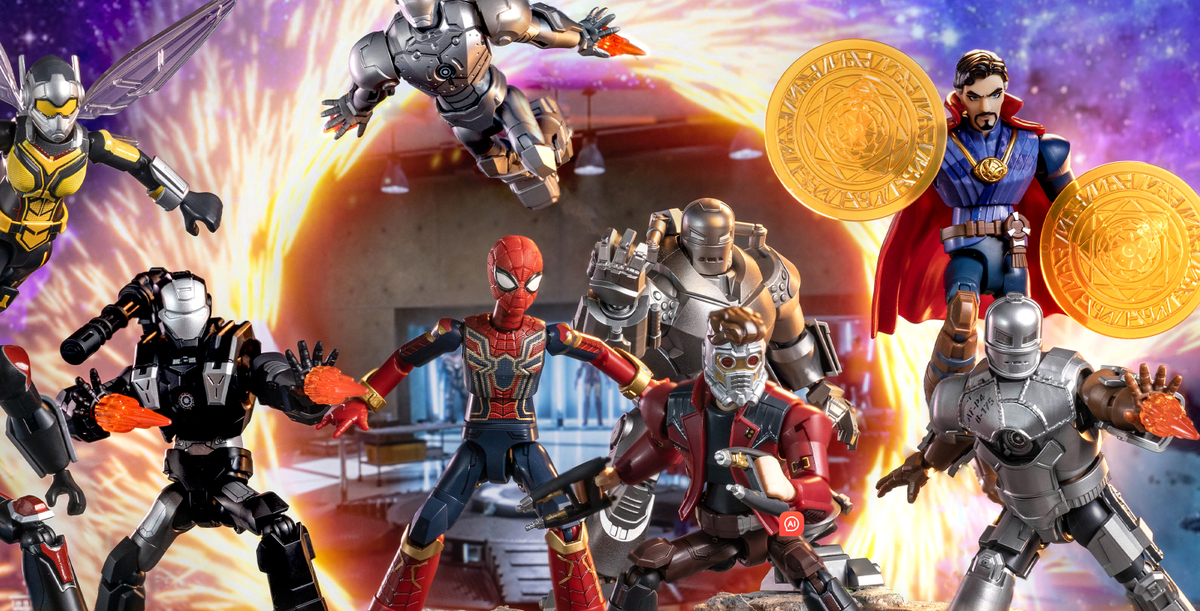
Building on this momentum, Blokees is expanding its portfolio of licensed IPs for the global market. The company introduced 273 new SKUs in the first half of 2025, including products featuring well-known franchises such as Minions, Sesame Street, and "Marvel: The Infinity Saga."
Enduring Challenges of IP Dependency
Despite its recent triumphs, investors are questioning whether Blokees can become the next Lego or Pop Mart. Analysts suggest the company faces fundamental challenges in brand identity and creative independence.
Unlike The Lego Group, whose interlocking brick is a globally recognized system, Blokees' proprietary building structure is internal and not visually distinct from other action figures, making it difficult to establish a unique brand identity.
Furthermore, its growth model contrasts sharply with that of Pop Mart, which cultivated an original IP, Labubu, and exported a homegrown art toy culture. Blokees' success, particularly in the U.S., has relied on localizing a quintessentially American IP. This is a departure from the company's stated goal of creating products that are recognizably Chinese.
This reliance on licensed properties—its top IPs include Japan’s Ultraman and Kamen Rider alongside Transformers—exposes Blokees to the creative cycles of its licensors. Its product pipeline depends heavily on new films from Paramount or new characters from Japanese creators, posing a risk in a market where giants like Hasbro and Bandai have deep roots. This reflects a long-standing challenge for China's toy industry, which has proven adept at manufacturing and marketing but continues to struggle with creating globally resonant original IP.