
Meet China’s Top 10 Robot Giants Taking Over the Future
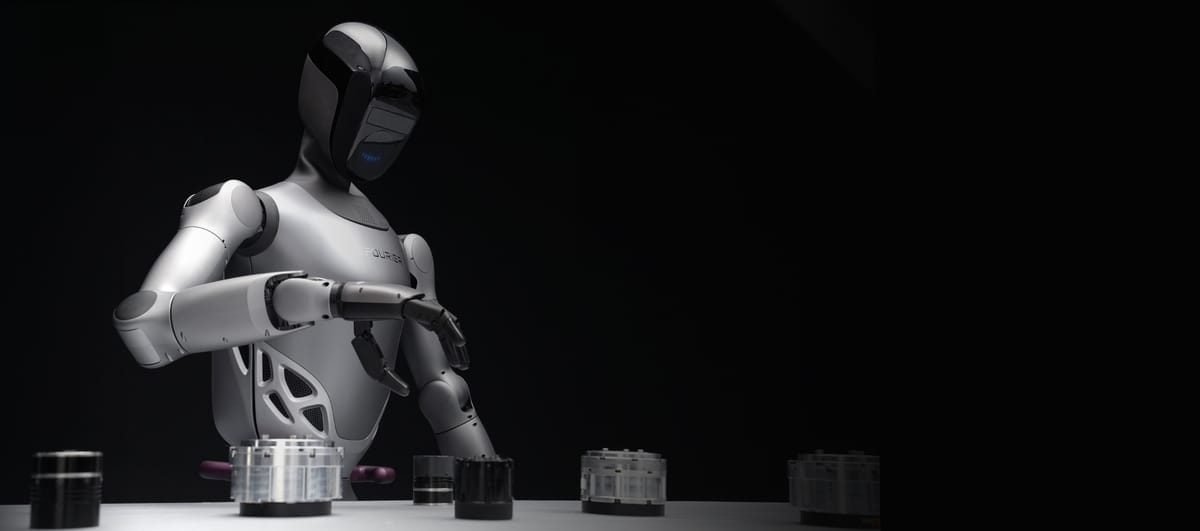
The era of embodied intelligence is no longer science fiction. As robots begin hauling parts in factories, caring for the elderly in homes, and assisting in surgeries, the fusion of artificial intelligence and physical hardware is rapidly becoming a reality.
This shift was cemented when China’s 2025 Government Work Report officially designated embodied AI as a "future industry," signaling a pivotal move from technological exploration to large-scale deployment.
From industrial workhorses to compassionate companions, a new wave of Chinese companies is at the forefront of this revolution.
Here’s a look at the 10 most influential players redefining the boundaries of human-robot collaboration.
Top 1 Unitree Technology: The Quadruped King Goes Humanoid
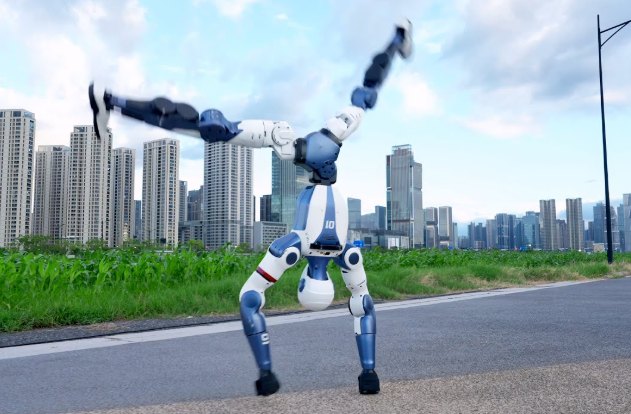
Dominating nearly 70% of the global quadruped robot market, Unitree is making a dramatic leap into humanoid robotics.
A performance blending folk dance and high-tech, titled "YanggeBOT," even landed the H1 a starring role on the 2025 CCTV Spring Festival Gala, rocketing the company into the public consciousness. Its H1 robot dazzled audiences at the 2025 World AI Conference (WAIC) with jaw-dropping acrobatics like backflips into handstands and "Thomas flares."
Priced at just 60% of Tesla's Optimus, its G1 humanoid is already being deployed for parts-handling in car factories and power grid inspections. After a nearly RMB 700 million yuan (US$96 million) Series C+ funding round in 2024, Unitree is reportedly preparing an IPO filing by year's end, aiming to become the world's first publicly-listed humanoid robot company.
Top 2 AgiBot: The "Huawei Prodigy's" Industrial Vanguard
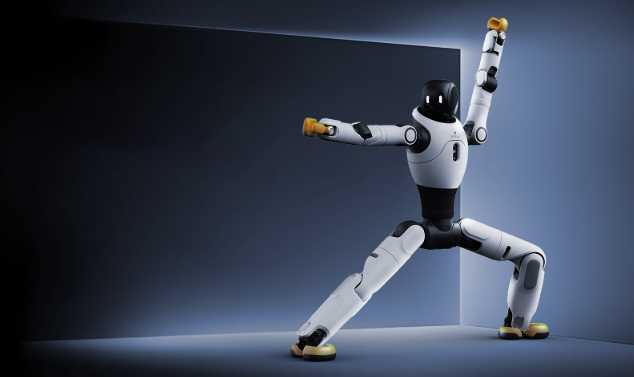
Founded by Peng Zhihui, a former "Huawei prodigy," AgiBot is making waves in heavy industry. Its Far-sighted A1 robot is now performing 24/7 welding tasks at a BYD battery factory.
Running on a self-developed HarmonyOS for robots, the A1 utilizes force-controlled joints to achieve 0.1mm-level precision, slashing the defect rate by 82% compared to traditional production lines.
In a bold financial move, AgiBot pioneered a reverse-takeover listing in July 2025 by acquiring STAR Market-listed company Swancor Advanced Materials for RMB 2.1 billion yuan (US$288 million).
Top 3 Beijing Galbot: The "Super Brain" of Industrial Sorting
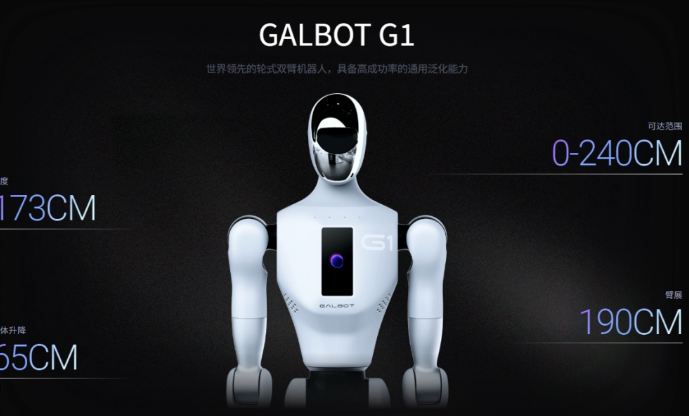
At WAIC 2025, Beijing Galbot’s wheeled humanoid flawlessly sorted automotive parts with 95% accuracy, even when humans intentionally misplaced component bins. The magic lies in its core GroceryVLA large model, which enables end-to-end closed-loop control, allowing the robot to adapt to cluttered shelves and a vast number of SKUs without pre-programmed paths. Following a massive RMB 1.1 billion yuan (US$150 million) financing round in June 2025, Galbot is already rolling onto the production lines of international automakers, where a single unit can match the sorting efficiency of three human workers
Top 4 UBTECH Robotics: A Trailblazer in the Market

UBTECH became the world’s first publicly traded humanoid robot company with its Hong Kong IPO in late 2023. Founded in 2012, its journey reflects the arc of China's robotics industry. The company is now pushing the envelope on industrial applications.
This July, UBTECH announced that its next-generation industrial humanoid, Walker S2, will feature a hot-swappable battery system, allowing it to autonomously change its own power source in just three minutes. This innovation enables true 24/7 uninterrupted operation on factory floors.
Top 5 DeepRobotics: The "Iron Sentinels" of Power Grids
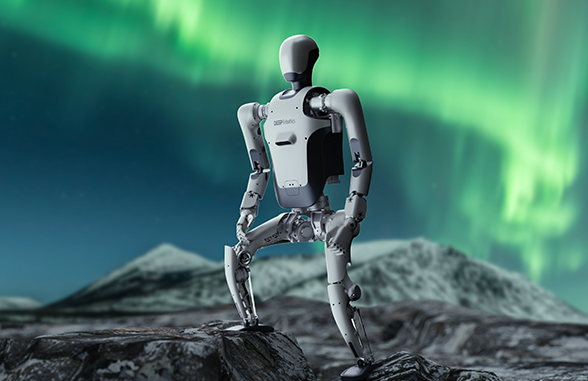
DeepRobotics' Jueying X30 quadruped has achieved over 1,000 hours of mean time between failures while patrolling a converter station in Zhejiang province. The robot can autonomously inspect over 20 types of targets, from analog gauges to infrared temperature readings, and automatically returns to its charging pile when low on power.
Its "Intelligent Patrol System" has boosted inspection efficiency by 300% and is deployed across more than 600 industrial sites in all 34 of China's provincial-level administrative regions.
After securing nearly RMB 500 million yuan in a July 2025 funding round, the company plans to slash the cost of its quadrupeds by 40%, accelerating their adoption in high-risk environments.
Top 6 Fourier Intelligence: The Gentle Giant of Healthcare
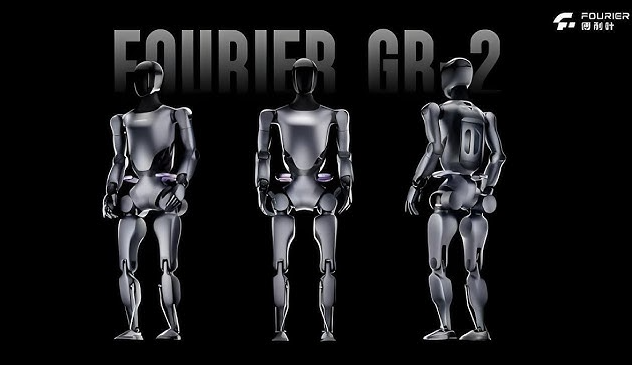
Designed with a "soft-skin covering," Fourier's GR-3 humanoid robot is built for human interaction. At WAIC 2025, it demonstrated a full suite of healthcare services, from guiding patients to assisting with upper-limb rehabilitation.
Its proprietary "Embodied Intelligence Rehabilitation Port" solution is already in use at over 2,000 medical institutions across 40 countries, using multi-modal sensing to provide real-time feedback and personalized adjustments during therapy.
Bolstered by an additional investment from SoftBank Vision Fund in June 2025, Fourier plans to scale GR-3's mass production to tens of thousands of units.
Top 7 Al2 Robotics: The All-Purpose "Shop Clerk"
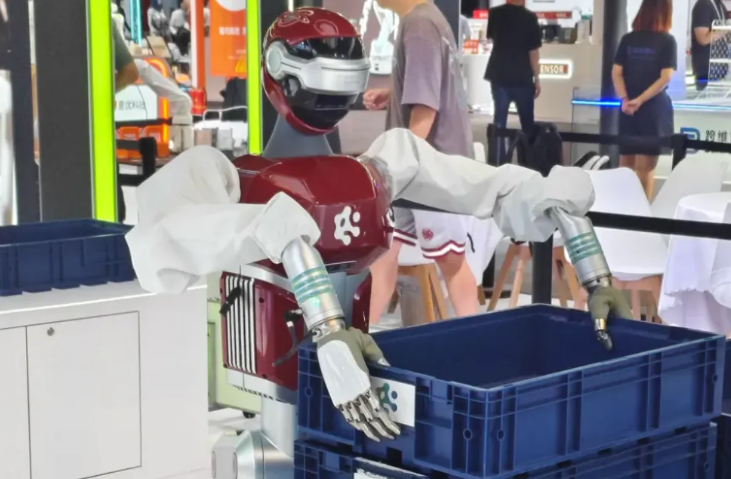
Proving its versatility at WAIC, Al2 Robotics 's AlphaBot robot expertly brewed coffee, served ice cream, and performed 2x2 palletizing tasks. Its core GOVLA large model is engineered for "zero-latency" response from perception to action. Beyond demonstrations, the robot is already at work in a Geely semiconductor factory, handling material loading and transport, with a single unit replacing five workers.
In July 2025, Al2 Robotics forged a strategic partnership with JD.com to deploy clusters of AlphaBots across 50 of the e-commerce giant's logistics centers.
The Consumer Frontier: Reinventing the Smart Home
Top 8 Leju Robotics: The "Family Steward" of the HarmonyOS Ecosystem
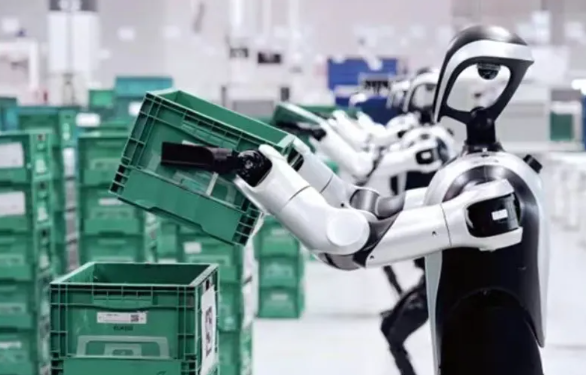
Powered by Huawei’s Pangu large model, Leju's KUAVO Kuafu humanoid robot can perform over 200 household tasks via voice command, from sweeping the floor to managing video calls.
Its unique "Emotional Interaction Engine" can even recognize the emotional state of family members, proactively initiating conversations to comfort elderly individuals living alone.
In January 2025, Leju delivered its 100th full-sized humanoid robot and has integrated its product into the Midea smart home ecosystem. A consumer-grade version priced under RMB 10,000 is planned for release by the end of the year.
Top 9 LimX Dynamics: The Master of Tricky Terrains
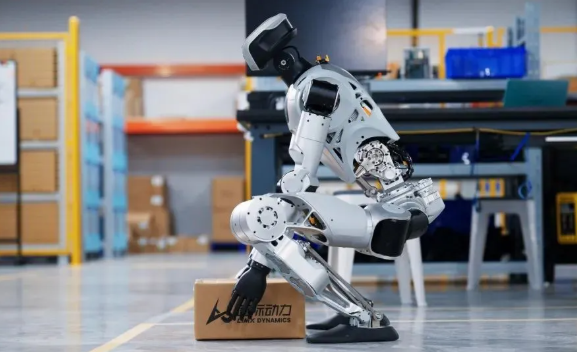
Equipped with three foot modes—pointed, bipedal, and wheeled—LimX Dynamics' TRON 1 bipedal robot is built for the real world. During outdoor tests on Shenzhen's Tanglang Mountain, it maintained dynamic balance despite being kicked and pushed with sticks by engineers. Its full-sized humanoid robot is ready for mass production and will be available to research institutions and high-end manufacturers like CATL and State Grid in the second half of 2025. Following a strategic investment from JD.com in July 2025, the company is also exploring using its robots as shopping guides in retail settings.
Top 10 Keenon Robotics: The Service Star of the Restaurant Industry
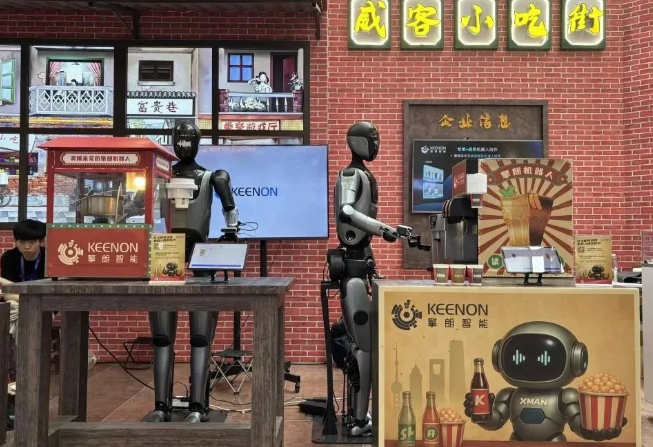
Keenon's XMAN-F1 bipedal robot showcased its culinary skills at WAIC, making popcorn and mixing drinks with flair. Its biomimetic motion control can precisely replicate the "ceremonial" movements of a master bartender. The robot is already deployed in 50 global flagship stores for Johnnie Walker, where multi-robot collaboration handles the entire process from order taking to replenishment. In a June 2025 deal with Meituan, Keenon plans to deploy the XMAN-F1 in 1,000 restaurants across China, aiming to replace 30% of food runner positions.
The Road Ahead: A Trillion-Yuan Market in the Making
This Cambrian explosion in robotics is fueled by breakthroughs in core technology—from "electronic skin" that can sense 0.01N of pressure to end-to-end AI models that are three times faster than traditional methods. Capital is flooding the sector, with H1 2025 funding for embodied AI hitting a ten-year high of RMB 17.3 billion yuan.
According to Zhiyan Consulting, China's embodied AI market is projected to reach RMB 52.95 billion (US$7.25 billion) in 2025 and soar past RMB 500 billion by 2030. With costs expected to drop by 15% annually due to the localization of key components, these intelligent machines are poised to enter new sectors like agriculture, education, and emergency rescue. As these companies shift China from a technology follower to an ecosystem leader, the biggest challenge—and opportunity—will not just be building better robots, but also crafting the ethical, legal, and social frameworks for a world where humans and machines coexist.