
Rokid’s Smart Glasses Find Global Success, Signaling Shift to Practical AR
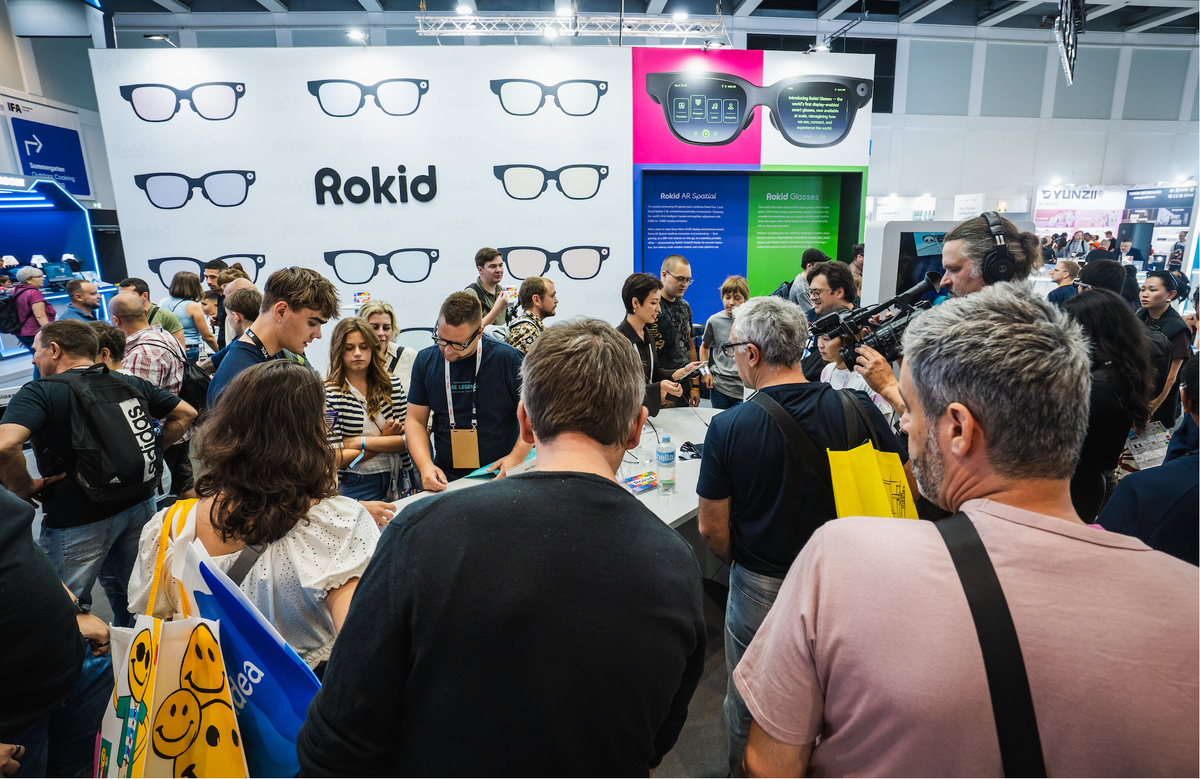
Chinese technology firm Hangzhou Lingban Technology, known as Rokid, is gaining significant international traction with its new lightweight smart glasses, underscoring a broader industry pivot from technical specifications to practical, everyday applications for augmented reality.
The device, named Rokid Glasses, made its European debut at the IFA consumer electronics show in Berlin in September 2025, where it secured the event’s “Best in Emerging Tech” innovation award. The launch generated considerable media coverage and long queues at the company's booth, positioning the product as a notable development in the global tech sector.
Following the industry recognition, the glasses achieved record-breaking success on the North American crowdfunding platform Kickstarter. The campaign surpassed US$2 million in 14 days, ranking first in the consumer digital products category and second among all products, indicating strong consumer appetite for the device.
This dual validation from industry experts and the market suggests a strategic shift in the AR landscape. Rokid’s success highlights a move away from feature-heavy gadgets toward user-focused devices integrated into daily routines, positioning the company as a key player shaping this new competitive environment.
A Focus on Lightweight, Practical Design
At the core of the Rokid Glasses' appeal is its emphasis on lightweight design and usability. Weighing only 49 grams, comparable to a standard pair of sunglasses, the device integrates advanced technologies without compromising on comfort.
It utilizes a diffractive optical waveguide display to project a high-definition image into the user's field of view while keeping the lenses thin and transparent. The glasses also feature a multi-modal AI interaction system that supports natural inputs like voice and touch, reducing a user’s reliance on their smartphone for control. This approach prioritizes a seamless user experience over a pure contest of technical specifications.
Integrating AR into Everyday Scenarios
Diverging from competitors focused on technical benchmarks, Rokid has prioritized integrating its technology into specific, real-world use cases through ecosystem partnerships. This strategy aims to establish the glasses as a functional daily tool rather than a conceptual gadget.
A key example is its collaboration with AutoNavi on a "NaviAgent" for cyclists. The feature uses AR display to provide real-time route guidance and athletic data, addressing the safety risks associated with looking down at a smartphone while in motion. Rokid plans to further enhance this function with a mini-map in a future over-the-air (OTA) update. Other planned applications include hands-free payments, designed to improve convenience and efficiency.
Validation From Media and Consumers
The international reception for the Rokid Glasses has been overwhelmingly positive. Tech publications including tom's guide and Android Headlines praised the device for "redefining the possibilities of AR glasses" by striking a balance between its lightweight form factor and robust functionality. The IFA 2025 innovation award further cemented its standing as a forward-looking product with significant market potential.
The Kickstarter campaign’s performance provides quantitative evidence of this potential. The rapid US$2 million funding milestone reflects a growing consumer demand for wearable technology that transitions from being a novelty to a practical utility. To cater to its global audience, the international version of the glasses supports major AI models like ChatGPT and Gemini, allowing users to choose their preferred assistant and signaling an open approach to future ecosystem expansion.
Leading a ‘Practicality Revolution’ in AR
The market response to the Rokid Glasses marks a potential turning point for the smart glasses industry, signaling its evolution from experimental concepts to practical consumer electronics. The French market research firm Yole Group recently identified Rokid as one of the core players in the global AR market, citing not only its technical capabilities but also its accurate assessment of industry trends.
Looking ahead, Rokid intends to focus on expanding its application ecosystem and continuously refining the user experience. The company plans to release an open SDK to attract more third-party developers and is exploring specialized applications in sectors such as healthcare and industry. The collective rise of Chinese technology companies in the global AR space, led by a focus on practical scenarios, is set to accelerate the industry’s shift from a technology race to a deeper integration of AR into daily life.