
SenseTime Pivots Smart Home to Break Auto AI Bottleneck
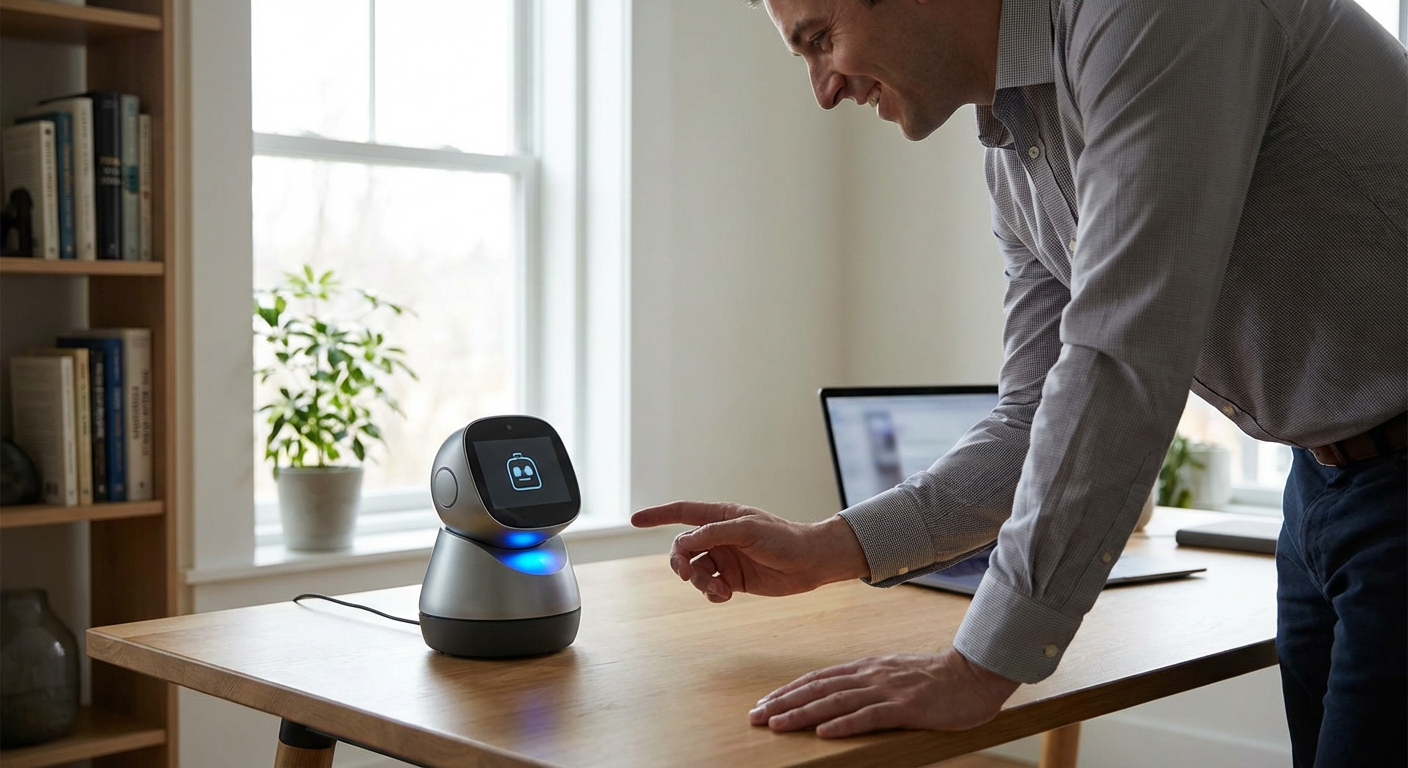
SenseTime Group is aggressively stepping outside the vehicle cockpit, launching a physical desktop robot designed to capture the remaining 22 hours of a consumer's daily data loop and solve the automotive industry's engagement ceiling.
The strategic pivot materializes through "Care U", a desktop hardware product unveiled by SenseTime’s automotive arm, SenseAuto. While appearing as a consumer electronics device featuring a 1.75-inch OLED screen and physical mobility, the product acts as a Trojan horse to extend automotive AI systems into residential and office environments. This move signals a critical shift in the smart vehicle sector, where manufacturers are increasingly desperate to maintain user engagement after the engine turns off.
Market response highlights a growing realization: the competition in electric vehicles has moved beyond battery ranges and autonomous driving capabilities to seamless ecosystem retention. By connecting the car and the home, SenseTime aims to transition from a localized automotive software vendor to a ubiquitous AI agent ecosystem builder.
Smashing the Two-Hour Commute Ceiling
The core bottleneck driving SenseTime's hardware expansion is time. The average driver spends merely one to two hours per day inside a vehicle, effectively placing a hard ceiling on the utility and monetization potential of in-car artificial intelligence.
SenseAuto first deployed its generative AI assistant in mass-produced vehicles in early 2025. However, the limitation became immediately apparent: user interactions, such as restaurant searches or itinerary planning, abruptly terminated the moment the car door closed. Care U functions as the physical continuation of this software. By transferring the AI capabilities tested in millions of smart cabins onto a desktop interface, SenseTime ensures the user's digital continuity remains unbroken.
Reversing the Industry Integration Route
SenseTime is executing a contrarian expansion strategy compared to domestic tech giants. As of 2026, the dominant "car-home integration" narrative—championed by Huawei Technologies with its HarmonyOS ecosystem and Baidu with its Xiaodu integrations—has typically involved extending existing smart home dominance into the vehicle.
SenseAuto is moving in the exact opposite direction. The company is leveraging the high-value, high-frequency, and enclosed nature of the vehicle cabin to train its AI models on proactive services, and subsequently exporting that validated intelligence into the home. This approach utilizes a unified system architecture dubbed "LinkCore," which synchronizes a user's cross-device data. If a user initiates a task via Care U at home, the exact context is preserved and accessible via the vehicle's native OS during the morning commute.
Upgrading Family-Centric Cognitive Models
To differentiate from standard smart speakers, SenseTime has restructured its AI memory framework. Rather than optimizing for single-user dialogue retention, Care U operates on a three-tier family memory system: perceptual memory from daily fragments, factual event extraction, and cognitive profiling of family dynamics.
Coupled with reinforcement learning for self-evolution, the system dynamically expands its service parameters without waiting for rigid Over-The-Air (OTA) updates. This technical architecture allows the AI to function less like a localized voice assistant and more like a continuous, multi-terminal operating system.
Expanding the Automaker Service Radius
For SenseTime's automotive clients, Care U represents a critical service extension tool. Automakers can now stretch their service radius beyond the physical vehicle, tapping into the full lifecycle value of the consumer.
SenseAuto has already confirmed ecosystem partnerships across retail, local life services, and enterprise communications, allowing the desktop robot to execute complex tasks ranging from meeting transcriptions to automated logistics ordering. Whether this inverted car-to-home strategy can capture significant market share against established IoT giants depends heavily on cross-brand hardware interoperability, but it definitively marks the end of AI being trapped inside the vehicle chassis.
Related Coverage:
AWE 2026 Signals China Appliances’ AI Pivot as Sales Slide and Brands Chase Replacement Demand
China's Home Appliance Giants Accelerate Push Into Auto Sector as Smart Cabin Race Intensifies