
Shenyang’s 2-Ton Cargo Drone Marks Step Toward Full-Stack Aerial Freight Network
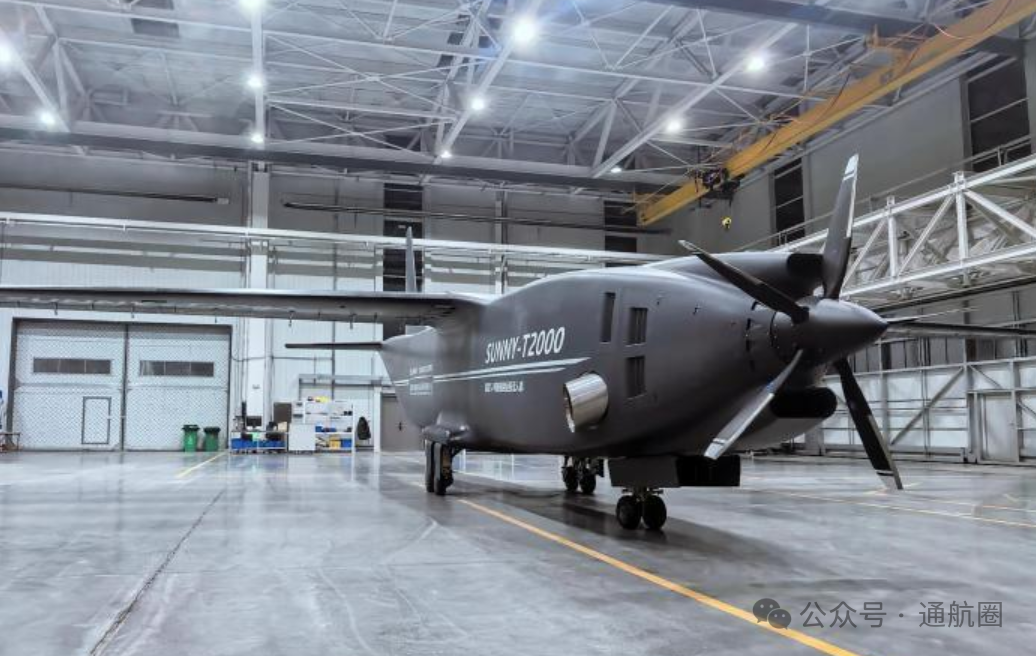
A new 2-ton class cargo drone developed in Shenyang has rolled off the production line, underscoring China’s push to build a tiered, unmanned air-freight network spanning trunk, regional and last‑mile logistics.
SUNNY-T2000, built by Tianqing Space Technology in Shenyang’s Shenbei New Area, is designed to carry up to 2 tons of cargo over distances of more than 1,000 km, targeting both mainline logistics and hard‑to‑reach regions.
The launch comes as the district accelerates low-altitude aviation infrastructure, including newly approved airspace, test routes and temporary airfields, positioning Shenyang as an early hub for low-altitude economic activity.
Regulatory testing and airworthiness certification will determine how quickly these aircraft can move from prototype to commercial deployment, with potential implications for logistics operators, e‑commerce platforms and emergency services.
A 2-Ton Platform for Long-Range Unmanned Freight
Unveiled on 6 December in Shenbei, the SUNNY-T2000 cargo UAV features a maximum payload of 2 tons and a 15-cubic-metre rectangular cargo bay. The design aims to flexibly accommodate emergency supplies, industrial components and agricultural products.
The drone can fly more than 1,000 km at full load and operate from 800‑metre runways, allowing it to connect with existing trunk logistics networks while serving mountainous and remote areas. An aerial cargo drop capability is intended for emergency relief and rapid resupply scenarios.
Tianqing Space Technology is also developing larger platforms, including the 6‑ton payload SUNNY-T6000, sized to carry a standard shipping container for short- and medium-haul heavy freight. A 10‑ton payload model is being designed for inter-regional, high-volume cargo transfers.
Taken together, the product roadmap is intended to support a layered system in which drones serve everything from end‑point delivery to long-distance heavy haul.
Growing Cluster of Heavy Cargo UAV Developers
Shenbei New Area has attracted more than 30 low-altitude economy enterprises, forming a local supply chain around unmanned aviation, according to industry information cited in the material.
Among them is Shenyang Chongming Aviation Technology, established in June 2025 with registered capital of RMB 851 million (US$117 million). The company is backed by Aviation Industry Corporation of China entities Shenyang Aircraft Corporation, the 601 Institute, the 626 Institute, and state-owned capital from Liaoning Province and Shenyang municipality.
Chongming Aviation is developing the CM100, a large unmanned cargo aircraft with a commercial payload of 10 tons and a maximum take-off weight of 24 tons. The project has attracted cooperation from logistics players including China Post and JD for cargo operations, according to the source document.
The presence of multiple heavy‑lift UAV programs in the same district suggests a regional strategy to anchor manufacturing, systems integration, and operations of cargo drones in Shenyang.
Infrastructure Build-Out for Low-Altitude Operations
To support testing and eventual commercial operations, Shenbei New Area has applied for 14 designated low-altitude airspace zones, laid out two test flight corridors and built 21 temporary take-off and landing sites, according to Shenyang Daily.
The district is also upgrading 5G communications networks to monitor air traffic and data links in real time, a key requirement for beyond-visual-line-of-sight cargo flights.
SUNNY-T2000 will now enter extensive flight testing. Once it receives airworthiness certification, the aircraft is expected to operate alongside other platforms in what local planners describe as a three‑layer network: high-altitude heavy‑cargo trunk routes, mid-altitude regional transfer flights and low-altitude last‑mile distribution.
For investors and logistics operators, the pace of certification, infrastructure readiness and integration with existing freight networks will determine how quickly these unmanned systems begin to shift cargo volumes – and cost structures – in China’s domestic logistics market.