
State-Backed Funds Fuel China's Robotics Investment Frenzy
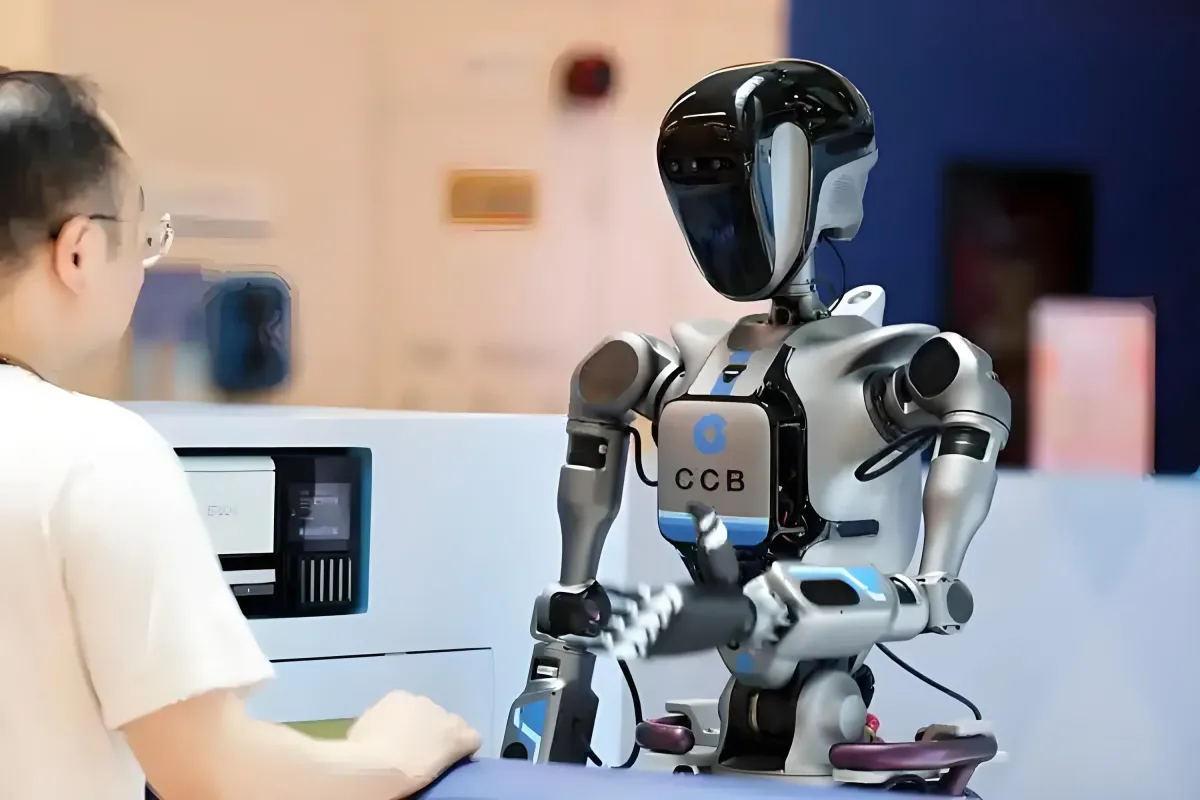
A wave of state-backed capital is surging into China’s robotics sector, with government-led funds launching multibillion-yuan investment vehicles in 2025 to accelerate the industry's development. This coordinated national push is reshaping the funding landscape, driving both innovation and intense competition for promising startups.
Since the beginning of 2025, major economic hubs including Beijing, Shanghai, and Shenzhen have established large-scale, specialized robotics funds, often with initial capital reaching into the billions or even tens of billions of yuan. Led by core state-owned asset platforms, these funds signal a strategic shift from scattered investments to dominant, ecosystem-building roles in the high-tech arena.
The influx of capital is being deployed at a remarkable pace. Data from the third quarter of 2025 shows that state-affiliated institutions backed 75% of the 20 largest robotics financing deals. These government funds are moving quickly from formation to active investment, backing high-profile startups and fueling a rapid rise in company valuations across the sector.
For investors, this state-driven campaign presents both opportunity and risk. While providing crucial "ammunition" for a capital-intensive industry, the flood of money is also creating an overheated market for top-tier assets. The long-term success of this strategy will hinge on whether these heavily funded companies can navigate the long road to commercial viability and self-sustainability.
A Nationwide Funding Rush
The trend of state-led robotics investment has become a nationwide phenomenon in 2025. Beijing was an early mover, co-launching a 10-billion-yuan Beijing Robotics Industry Development Fund in 2024. This year, its efforts have become more targeted, with the Yizhuang Economic-Technological Development Area creating a dedicated fund for robotics and smart manufacturing, which has already vetted 17 potential targets.
In April, Shanghai established its own city-district linked fund, the Shanghai Embodied Intelligence Innovation Venture Capital Partnership, with a target size of 1 billion yuan (US$138 million). The fund is backed by state-owned giants including Shanghai State-owned Assets Operation, Pudong Venture Capital, and Zhangjiang Group.
Shenzhen joined the fray in October with a 3-billion-yuan robotics fund cluster. This initiative includes a notable cross-regional collaboration, with one of its funds being managed by Shoucheng Holdings (0697.HK), the same entity that oversees Beijing’s 10-billion-yuan fund, aiming to integrate the strengths of both cities. Smaller cities are also entering the race, with Hubei province launching a 10-billion-yuan humanoid robot-focused mother fund in July, the largest of its kind in central China.
Rapid Capital Deployment
A defining feature of these new state funds is their speed. Fund managers report that initial fund tranches are expected to be fully invested within one to two years, with subsequent funding rounds already in early planning stages.
The Shanghai Embodied Intelligence fund announced its first direct investment in leading embodied intelligence firm Agibot just one month after its official registration in May. Meanwhile, the Beijing Robotics Industry Development Fund has completed over ten investments in 2025, backing star companies such as Unitree Robotics and Galbot Robotics. Its manager, Shoucheng Holdings, reported in April that the fund's book value had more than tripled, with some investments yielding tenfold returns. The firm projects that three of its robotics portfolio companies will go public by 2026.
This velocity is mirrored in other regions. Hubei’s new mother fund quickly made its first investment in dexterous hand developer Wuhan Hand-eye Innovation shortly after its establishment, leveraging deep due diligence conducted during the fund's preparatory phase.
From Funding to Ecosystems
Beyond capital injection, local governments are focused on building comprehensive industrial ecosystems. A "fund + industrial park + industry player" model has become standard practice, where the fund selects promising companies, the fund manager nurtures them, and an affiliated industrial park provides the physical infrastructure and testing grounds.
This synergy is evident in Shanghai, where the new fund is closely tied to the Zhangjiang Robot Valley, and in Beijing, where it collaborates with the Yizhuang Robot Industrial Park. Hubei has taken a similar approach, with the fund’s key backer, Hubei Science & Technology Investment Group, simultaneously building a 7,000-square-meter Hubei Humanoid Robot Innovation Center for portfolio companies to use for training and testing. This holistic support system is proving attractive to startups seeking more than just capital.
Intensifying Competition and Shifting Strategies
The surge in state funding has intensified competition for high-quality assets, inevitably driving up valuations. "A project looking to raise 200 million yuan might see four or five hundred million in interested capital come knocking," said one fund manager in eastern China. Hotly contested deals have become extremely difficult to secure.
This dynamic has also exposed disparities between regions, with top-tier cities holding a significant advantage in attracting premier projects due to their deeper capital pools, established industry foundations, and larger talent reserves. In response, some local funds in less-developed regions are adjusting their strategies. Acknowledging their disadvantage in competing for entire robot manufacturers, they are now focusing on niche, upstream opportunities in core components, materials, and key software, seeking to build a competitive edge through differentiation.
While the systematic entry of large-scale state capital provides vital fuel for the burgeoning industry, it also adds another layer of heat to an already "hot" market. With large-scale commercialization and profitability for humanoid robots still distant goals, this government-backed capital race is only just beginning.