
Tencent Unveils Full Agent Suite at Shenzhen Summit, Betting on Ecosystem Over Model Wars
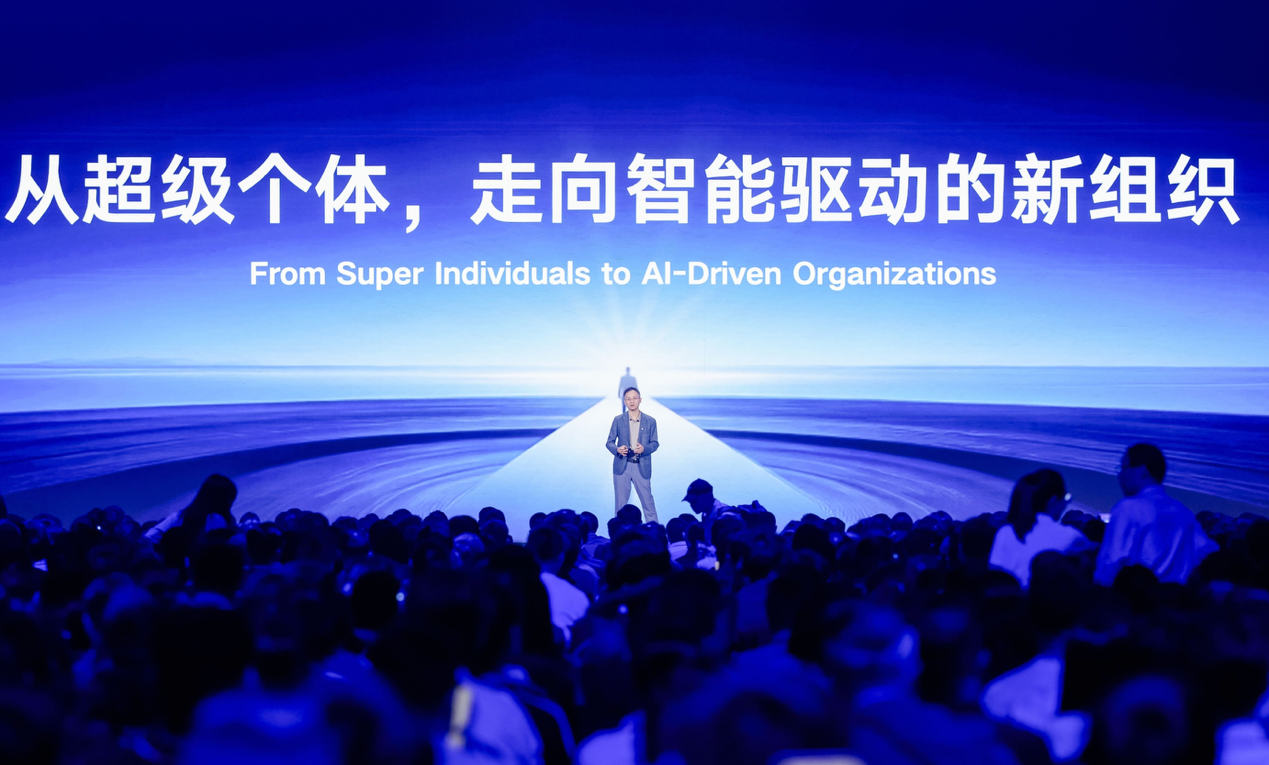
WorkBuddy's pivot from productivity tool to enterprise AI hub signals a strategic repositioning that could reshape China's B2B cloud battleground in 2026.
Tencent Holdings used its Global Digital Ecosystem Conference in Shenzhen on October 29 to launch a comprehensive enterprise Agent suite anchored by WorkBuddy, effectively shifting its AI narrative from one of catch-up to one of infrastructure dominance. The announcement marks the most ambitious public articulation yet of the company's B2B AI strategy—and a direct challenge to Alibaba Cloud and Huawei Cloud for enterprise wallet share.
The market reset is notable. As recently as late 2025, "falling behind" was the dominant narrative surrounding Tencent's AI ambitions, with the company's Hunyuan large language model attracting little attention on public benchmarks. WorkBuddy's commercial traction has since rewritten that story, and Wednesday's conference was, in the words of Tang Daosheng, Senior Executive Vice President of Tencent and CEO of its Cloud and Smart Industries Group, a formal "performance report" on the company's AI investment cycle.
WorkBuddy Grows Into an Enterprise Command Center
Since launching in March 2026, WorkBuddy has penetrated more than 50 industries. Half of China's Fortune 500 companies and 60% of the top 100 now count themselves as clients. The platform's open ecosystem has attracted over 50,000 partner organizations and developers, with more than 200,000 Skills listed on its marketplace—metrics that compare favorably with early enterprise app-store benchmarks set by Salesforce's AppExchange a decade ago.
Tang's central thesis at the conference was blunt: the limiting factor for enterprise AI deployment is not model capability but connectivity gaps. "Large models excel at reasoning and generation, but they cannot read a company's internal processes, data, and historical context," he said. "The key is not how many parameters a model has, but connecting people, tools, business systems, and data."
That diagnosis has driven a product evolution. WorkBuddy is no longer positioned as a standalone AI workbench. Tencent is now explicitly engineering it as a connective layer—integrating WeCom, Tencent Docs, and knowledge management tool ima into a unified identity and data pool, so that years of accumulated enterprise digitization assets become immediately actionable AI training material without requiring system migrations.
Buddy One Suite Consolidates Tencent's Productivity Stack
The centerpiece product launched Wednesday is Buddy One, an integrated suite that pulls Tencent Docs, ima, Tencent Design, and other tools under a single account architecture with unified credit and data pools. The large model dynamically orchestrates the appropriate tool based on task type, producing multimodal outputs—documents, images, structured data—that teams can collaboratively review within the same interface.
A simultaneously announced Tencent Cloud Drive is positioned as "organizational memory for the Agent era," designed to retain context and outputs generated by Agents as reusable corporate assets rather than ephemeral session data. The framing is deliberate: as Agents execute more autonomous workflows, the audit trail and institutional knowledge they generate become a competitive moat.
The WeCom integration, released earlier this month as a joint update with WorkBuddy, closes a critical loop. Employees can delegate tasks via standard WeCom chat interfaces; Agents execute continuously and return results through the same channel. The organizational inertia cost—the primary friction point in most enterprise AI rollouts—drops to near zero.
Open Architecture Challenges Closed-Garden AI Rivals
Perhaps the most strategically consequential announcement was architectural, not product-specific. Tang confirmed that WorkBuddy's full product stack is now open: enterprises can deploy self-developed Agents, integrate third-party Agents, and even connect third-party instant messaging systems—bypassing Tencent's own products entirely if they choose.
"Which model, which Agent, which IM to use—the choice belongs to the enterprise," Tang said.
The openness extends to the model layer. Through the Tokenhub platform, enterprises can call Hunyuan alongside DeepSeek, GLM, MiniMax, and Kimi under a unified Token Plan billing framework. The commercial logic is clear: Tencent is betting that positioning itself as neutral infrastructure—rather than a proprietary model vendor—maximizes addressable market and reduces switching costs, even if it cannibalizes some Hunyuan usage in the near term.
This mirrors a strategic template proven in cloud infrastructure: Amazon Web Services (AWS) scaled fastest when it stopped competing with its customers' technology choices. For Tencent Cloud, the analogy is instructive but not guaranteed—enterprise trust in platform neutrality is hard-won and easily lost.
Infrastructure Spend Backs the Ambition
The product roadmap is underwritten by substantial capital commitment. Tencent Cloud currently operates more than 2 million servers across 25 geographic regions and 70 availability zones globally. International expansion accelerated over the past 12 months, with new deployments in Frankfurt, Malaysia, Mexico, and Japan; overseas active client numbers doubled, with coverage now spanning more than 150 countries and territories.
On the compute side, the company described a heterogeneous cluster strategy developed in collaboration with multiple domestic chip manufacturers—an architecture calibrated specifically for the high-frequency, low-latency demands of Agent inference workloads, rather than traditional batch model training. The Hunyuan model family is on a parallel track: a new generation Hy4 and a distilled Hy4 Flash variant are slated for imminent release, both optimized on real business-task benchmarks rather than academic leaderboards.
Tang framed the cumulative investment in terms of competitive advantage: "Not low cost—more the efficiency that AI brings." The distinction matters. China's cloud sector has long competed on price. Tencent's pitch here is that AI-driven operational efficiency unlocks a margin profile that pure infrastructure pricing cannot replicate.
Competitive Stakes Intensify as Expectations Rise
The V-shaped sentiment reversal around Tencent AI is real, but it creates its own pressure. WorkBuddy's success has repositioned the company at the front of China's enterprise AI race—a position that requires continuous defense. Alibaba Cloud's Qwen model family and Baidu's Ernie ecosystem are not standing still; both have announced significant enterprise Agent initiatives in 2026. Huawei's Pangu model, backed by vertically integrated Ascend compute, remains a formidable alternative for state-owned enterprises with domestic supply chain requirements.
Tang's conference remarks—"using AI to improve efficiency is now a mandatory question, not optional; enterprises that don't advance will fall behind"—were directed at the enterprise clients in the audience. They apply equally to Tencent itself.
The 200,000 Skills, 50,000 partners, and Fortune 500 penetration rates are defensible metrics today. Whether the Buddy One suite and open ecosystem architecture convert that installed base into durable enterprise lock-in—measured not by logins but by mission-critical workflow dependency—is the question that will define Tencent Cloud's trajectory through 2027.
Related Coverage:
Tencent's WorkBuddy: Can an AI Productivity Tool Become the Operating System for the Agent Era?