
The Chinese Refrigerator That Conquered the World
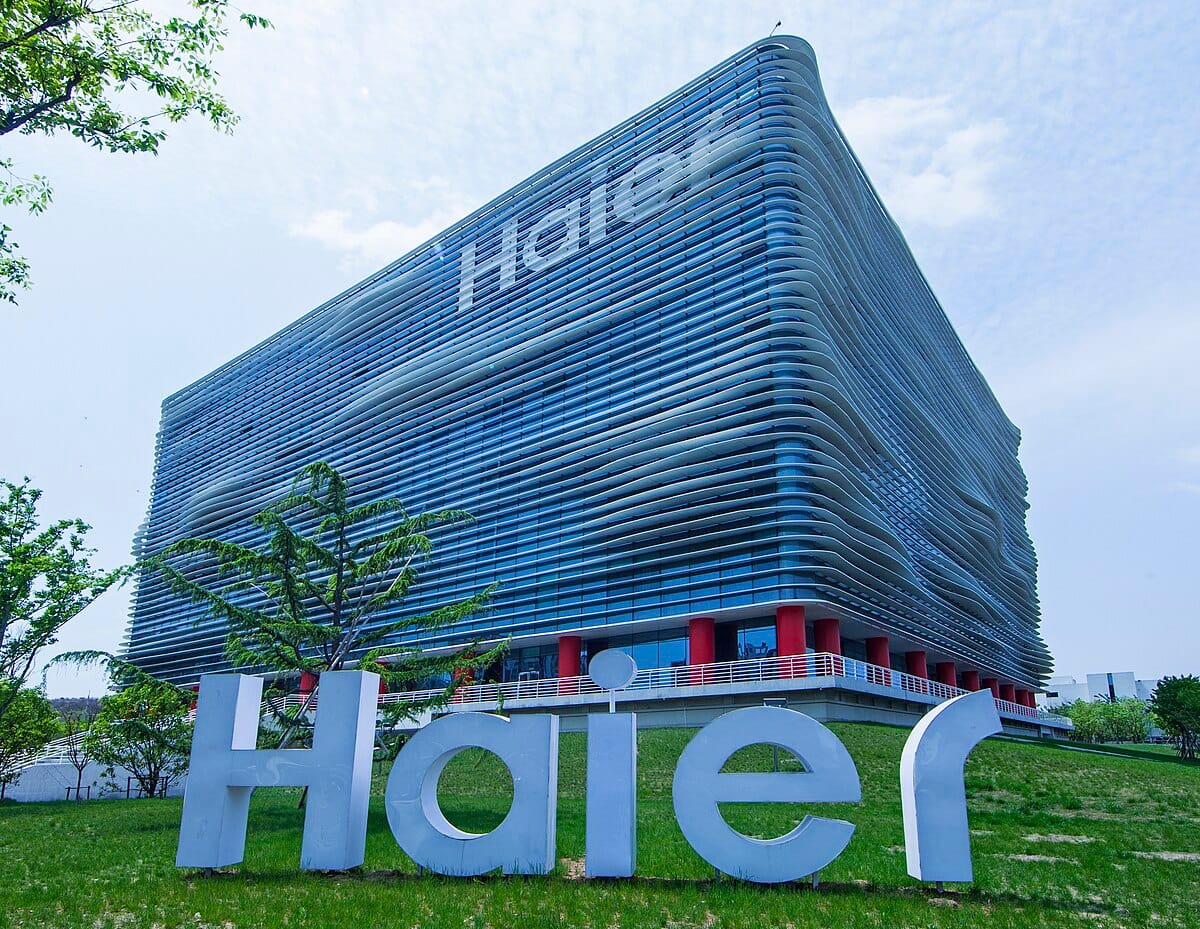
From a near-bankrupt Chinese factory to a global appliance behemoth, Haier’s quiet, forty-year campaign to build a brand, not just a product, rewrote the playbook for China Inc.
On a stretch of road just off Interstate 20, a green sign marks the turn for “Haier Boulevard.” It’s an unassuming marker for an extraordinary piece of industrial history: the first American street named after a Chinese company. For the workers clocking in at the sprawling refrigerator factory here, it’s just part of the landscape. But for Haier Group, it is a symbol of a promise made and a continent quietly conquered.
The story begins not in the American South, but in a German department store in 1984. A young factory director from Qingdao named Zhang Ruimin was on his first trip abroad, scouting technology from the German appliance maker Liebherr. A German acquaintance, intending a compliment, told him that China's most popular exports to Germany were fireworks and firecrackers.
The comment stung. “It was a deep pain,” Zhang recalled decades later. In that moment of quiet humiliation, an ambition was forged: one day, a product he built would not just be sold in Germany, but coveted. This wasn’t just about exports; it was about earning respect.
That ambition has since propelled Haier from a failing, state-owned refrigerator collective into the world's largest home appliance company by sales for 15 consecutive years, according to Euromonitor International. Its journey is a masterclass in defying the conventional wisdom that Chinese companies could only compete on price. Through a meticulous, decades-long strategy of going local, acquiring rivals, and obsessing over brand, Haier didn't just sell to the world—it embedded itself within it.
Now, as globalization frays and U.S.-China tensions reshape global supply chains, Haier's deeply integrated empire, with its American factories and iconic Western brands, faces a new, uncertain era. Its success was built on open borders; its future may depend on navigating a world of closing doors.
A Three-Step March
In the 1990s, the clarion call from Beijing was for Chinese companies to “go out” (走出去). For most, this meant chasing lucrative OEM (Original Equipment Manufacturer) contracts, churning out unbranded goods for Western labels to earn foreign currency.
Haier chose a different, far riskier path. Zhang outlined a "three-step" strategy: "Go out, go in, go up."
"Going out is just to get your face known," he explained. "Going in means selling mainstream products in mainstream channels. Going up is the goal: to become a local, mainstream brand."
The first test of this philosophy came, fittingly, in Germany. In 1991, when Haier shipped its first 8,000 refrigerators to its former mentor's home turf, they were met with deep skepticism. German customs officials and inspectors, unconvinced of Chinese quality, held the shipment at the port.
In a move of audacious confidence, Haier’s team proposed a blind test. They asked inspectors to gather refrigerators from every major brand sold in Germany, strip off all the logos, and test them side-by-side with Haier’s. When the results came in, the Chinese refrigerators had earned the most “plus” marks for quality—even outscoring their one-time teacher, Liebherr. The German orders began to flow.
“This was Haier’s original sin, in a good way,” says Dr. Michael A. Witt, a senior affiliate professor of strategy at INSEAD who studies Chinese multinationals. “While everyone else was taking the easy money making things for Philips or Whirlpool, Haier was spending a fortune trying to build a brand from scratch. In the 1990s, that was considered commercial suicide.”
The famous strategy was to “start with the difficult markets first.” If Haier could succeed in the fiercely competitive, brand-conscious markets of Europe and North America, Zhang reasoned, the rest of the world would be easier.
The American Beachhead
Nowhere was this challenge greater than in the United States, the birthplace of the modern home appliance. Haier’s entry wasn’t with a full-frontal assault on Whirlpool or Maytag. It was with a clever piece of niche product design: the compact college dorm refrigerator.
They observed that American students often used the tops of their mini-fridges as makeshift desks. So Haier designed one with a small, integrated fold-out table. It was a simple innovation, but it showed they were listening. The product was a hit, categorized by parents not as an entertainment expense, but as an educational one. It was a Trojan horse, creating brand awareness without a massive marketing budget.
This was step one. Step two—“going in”—was far more ambitious. In 1999, Haier announced it would invest over $30 million to build its own refrigerator factory in Camden, South Carolina. It was the first major greenfield manufacturing investment by a Chinese company in the U.S.
“At the time, the logic was backwards,” comments a New York-based M&A advisor who has followed the industry for two decades. “You build a market first, then you build a factory. Haier built the factory to build the market. It was a statement of intent. They were telling retailers and consumers, ‘We are not just exporters. We are here to stay.’”
This became their "Trinity" model: local design, local manufacturing, and local marketing. They opened an R&D center in Los Angeles to study American consumer habits and a design center in New York. The South Carolina plant became the manufacturing hub, producing high-end, large-capacity refrigerators tailored for American kitchens. By producing in the U.S., Haier not only shortened its supply chain but also gained a seat at the table, becoming the only Chinese-owned member of the American Home Appliance Manufacturers Association, influencing industry standards on energy and safety.
The bet paid off. The state of South Carolina awarded Haier for its job creation, and the city of Camden named Haier Boulevard in its honor. The company was no longer an outsider.
Buying an American Icon
For 15 years, Haier grew its American presence brick by brick. But the final step—“going up”—required a quantum leap. That leap came in 2016 with a move that stunned the industry: Haier acquired General Electric’s century-old appliance division for $5.6 billion.
It was a monumental transaction. Haier wasn’t just buying factories and distribution channels; it was buying a piece of Americana, a brand synonymous with post-war prosperity, found in millions of U.S. homes. The risks were immense. Cross-border acquisitions are notoriously difficult, especially when a young Chinese company buys an established American icon. Many expected a culture clash, followed by cost-cutting and layoffs.
Instead, Haier did something revolutionary. It left GE Appliances’ management largely in place in Louisville, Kentucky, and empowered them with its unique corporate philosophy, Rendanheyi. The model breaks the company down into hundreds of self-managing micro-enterprises, each directly accountable for its own profits and losses and hyper-focused on customer needs.
“They didn’t come in and say, ‘This is how we do it in China,’” said a former GEA executive who was part of the transition. “They came in and asked, ‘How can you get closer to your user? What do you need to operate like a startup?’ It was liberating. We went from being a small, sometimes neglected division of a giant conglomerate to being the crown jewel of a focused global leader.”
The results were dramatic. Under Haier's ownership, GE Appliances has flourished, launching new product lines, investing heavily in its U.S. factories, and growing its market share. The acquisition was not an act of conquest, but of integration—a model that Haier has replicated globally, acquiring Japan’s Sanyo, New Zealand’s Fisher & Paykel, and Italy’s Candy Group, in each case preserving the local brand and empowering local management.
A Global Blueprint for a Fractured World
Haier’s empire is a testament to this flexible, decentralized approach. In Pakistan, it partnered with a local conglomerate to create the Haier-Ruba Economic Zone, a model for Belt and Road projects. When Cuba launched a national "energy revolution," Haier supplied millions of energy-efficient appliances and later its digital TV standard. In Argentina, it won a massive contract for educational laptops by integrating Intel’s technology.
This global footprint, with R&D centers from Nuremberg to Bangalore and factories on five continents, was once the ultimate strategic asset. Today, it’s a source of profound complexity.
The era of unfettered globalization that enabled Haier's rise is over. The U.S.-China trade war, rising protectionism, and the push for supply chain resilience are forcing multinationals to rethink their entire strategy. A company with a Chinese parent, a major U.S. manufacturing presence, and a portfolio of iconic American brands sits directly on the geopolitical fault line.
“Haier is the ultimate case study for the new world order,” says Professor Witt. “Their deep localization is a powerful defense. The refrigerators rolling out of South Carolina are made by American workers. The profits from GE Appliances are reinvested in Kentucky. That makes them a much harder political target than a simple importer.”
Yet, the risk remains. As Washington scrutinizes Chinese corporate influence, Haier’s ownership could become a liability, no matter how localized its operations are. The company must navigate a delicate balancing act, proving its value to local economies while managing its identity as a Chinese national champion.
Back in the 1980s, Zhang Ruimin asked a German manager if he would ever buy a Haier refrigerator. The man said no. "I would buy a Miele," he replied, explaining that the German brand was more than a machine; it was "a work of art."
Haier may not yet be perceived as a work of art. But in boardrooms from Boston to Berlin, its forty-year journey is studied as something equally compelling: a masterpiece of global strategy. The question now is whether the canvas on which it was painted—a world of open markets and shared interests—is being irrevocably erased.
For Haier, the journey from a German marketplace to millions of American kitchens was never just about selling a product; it was about selling an idea: that "Made in China" could one day mean made for the world.