
DJI, Insta360 Set for ‘Shenzhen Derby’ in New Panoramic Drone Race
The global drone market is bracing for a new era of competition as panoramic camera giant Insta360 directly challenges industry leader DJI, sparking a high-stakes rivalry that pits two distinct technological philosophies against each other.
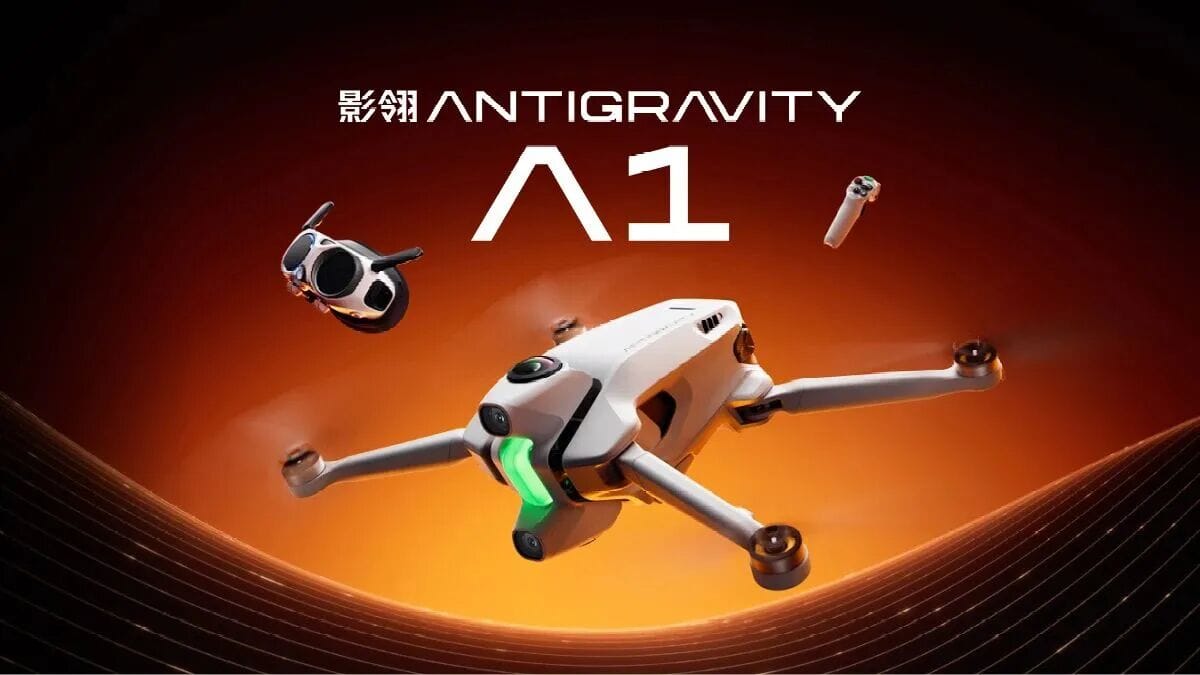
Shenzhen Arashi Vision, which operates as Insta360, made an aggressive entry into the drone sector in early September with its Antigravity A1, billing it as the world’s first panoramic drone built to “redefine the way you fly.” The launch aims to disrupt the market by prioritizing a fully immersive flight experience for content creators and consumers.
The move was met almost immediately by a counter from DJI Technology. Leaked photos from industry blog SBDJI suggest that DJI’s own panoramic drone is in the final stages before launch, reportedly equipped with imaging technology from its recently released Osmo 360 professional panoramic camera.
This “Shenzhen Derby,” as industry insiders call it, is escalating from market anticipation to a head-on confrontation. The clash signals a pivotal shift in the drone industry’s focus from pure flight mechanics to integrated imaging capabilities, setting the stage for a battle over the future of aerial content creation.
Divergent Philosophies
At the core of the competition are two fundamentally different ideas of what a panoramic drone should be. Insta360’s answer is a “panoramic camera that can fly.” Its Antigravity A1 weighs under 249 grams, emphasizing portability and an immersive user experience through a combination of haptic controls and VR flight goggles. This approach aims to lower the barrier to entry and attract a broader user base.
DJI, in contrast, appears to be sticking to its proven formula of a “high-performance drone that integrates panoramic imaging.” Leaked information suggests its new model will feature a robust suite of its core technologies, including advanced flight control, obstacle avoidance, a rotating gimbal, and its mature O4 video transmission system, underscoring a commitment to system-level reliability for professional use cases.
A Clash of Technical Fortresses
The two companies bring different sets of core competencies to the fight. Insta360’s advantages are in its established expertise in imaging and user experience, including its dual-lens panoramic design, proprietary 360-degree image-stitching technology, and an innovative “fly first, frame later” post-production workflow.
DJI’s strengths are rooted in its deep, long-term investment in the foundational technologies that define modern drones. Its technological moat is built on highly reliable flight control systems, sophisticated obstacle avoidance algorithms, and stable video transmission—all critical for operational safety and performance. As one industry analyst noted, “A drone is not an app, and a crash is not a bug. A device weighing several pounds falling from hundreds of feet is a safety incident, and ensuring reliability requires long-term technological accumulation and massive real-world validation.”
The Shenzhen Ecosystem Advantage
Both global giants are products of Shenzhen’s world-class hardware ecosystem. A majority of their suppliers for key components—including camera modules, batteries, chip solutions, and contract manufacturing—are concentrated in and around the southern Chinese tech hub. This geographic advantage allows both firms to move from concept to mass production with remarkable speed.
This shared industrial base ensures that regardless of which company wins market share, China’s drone supply chain is poised to benefit. In 2024, DJI’s revenue surpassed 80 billion yuan, while Insta360 recorded a revenue of 5.574 billion yuan (US$766 million). Despite the significant size disparity, Insta360’s focused strategy is powered by a research and development budget that accounts for 13.9% of its revenue.
With both products expected to launch within the next six months, the market will soon deliver its verdict. Whatever the outcome, this rivalry is already propelling the drone industry into a new competitive phase, where the primary battleground is shifting from flight performance to the power of the imaging experience.