
UBTECH Founder Zhou Jian: “To Build a Real Humanoid Robot, I’m Willing to Bet Everything”
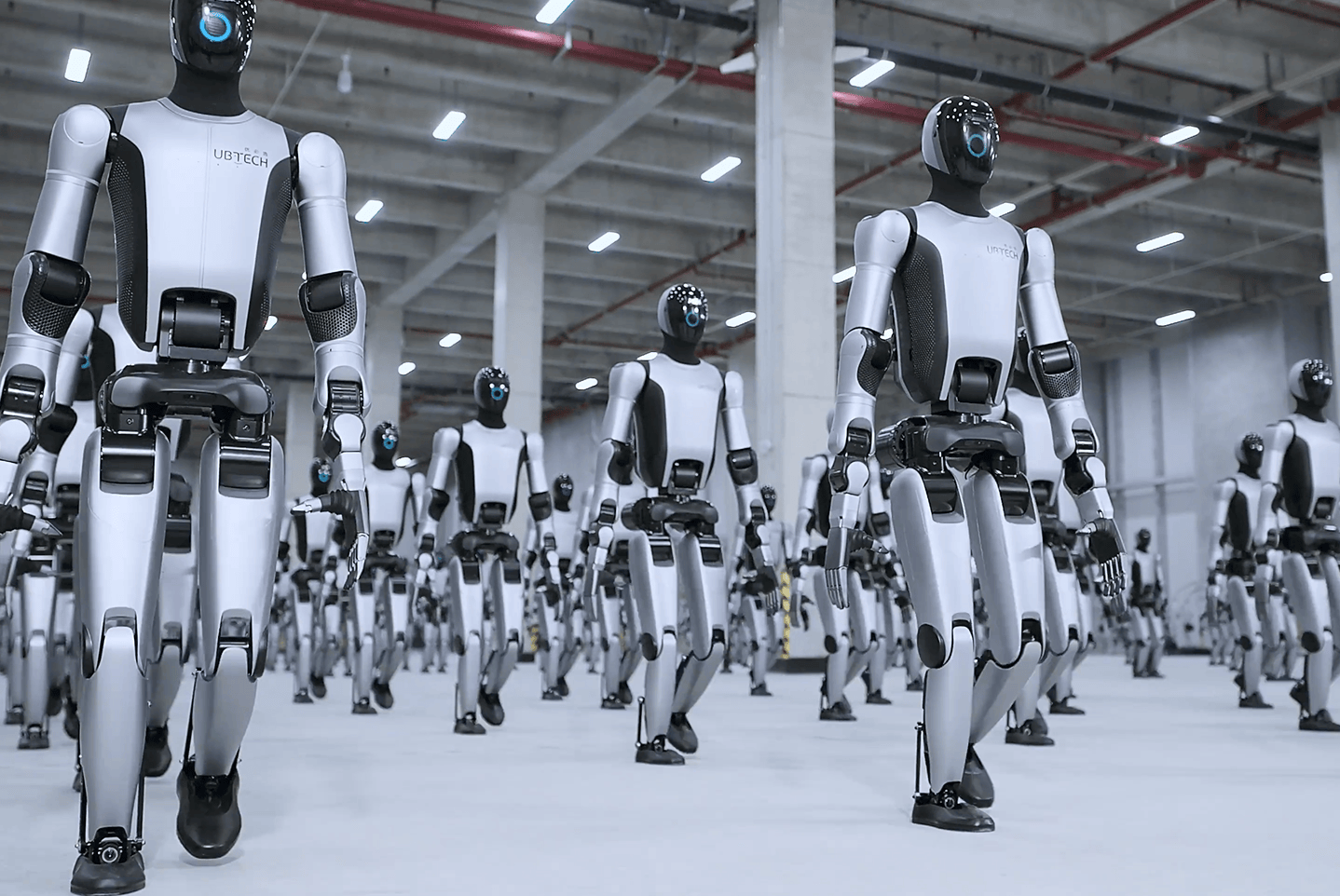
Shenzhen-based UBTECH Robotics founder and chief executive Zhou Jian has offered a rare, wide-ranging assessment of China’s fast-heating humanoid robot sector, in a long-form interview published by Chinese technology outlet LatePost in 2025. The interview, conducted across two sessions in April and December 2025 and totaling seven hours, spans the commercial reality behind the current “humanoid” boom, the technical bottlenecks of embodied intelligence, and UBTECH’s industrial deployments and roadmap through 2028.
The remarks are noteworthy as China’s capital markets and local governments have intensified their focus on humanoid robotics, while a wave of startups and manufacturers pursue fundraising and listings. Zhou—whose company listed in Hong Kong in December 2023 as what Chinese investors dubbed the “first humanoid-robot stock”—argues that much of what the public sees today are “humanoid machines” built for demonstrations rather than autonomous “humanoid robots,” and warns that China is not “far ahead” in several foundational core technologies.
“If robots only dance, one day we may not even see the taillights of our rivals across the ocean.”
As China’s humanoid-robot industry becomes the hottest topic of the moment, Zhou Jian has decided to step forward and tell some hard truths.
Zhou Jian, founder of UBTECH, is a controversial figure. He is one of China’s earliest entrepreneurs in humanoid robots and calls himself the “robot dad.” Since the company was founded, it has never turned a profit, yet he has dared to invest more than one-third—and sometimes even half—of revenue into research and development to build humanoid robots. At the company’s lowest point, some people called him a “fraud.”
No matter how he is defined or judged, the reality is that 2026 marks UBTECH’s 14th year working on humanoid robots. Apart from Boston Dynamics, there are almost no companies in the industry that have survived longer than UBTECH.
Zhou says the most absurd thing he has witnessed is the so-called “track fever”:
“Humanoid robots are extremely complex. Many investors don’t necessarily fully understand the industry. It’s easy for them to be fooled, and in the end it’s just a mess.”
“Some things are like the emperor’s new clothes. Everyone clearly knows what’s going on, but no one exposes it.”
Like the broader trajectory of China’s robotics industry, Zhou’s life has been a series of dramatic ups and downs.
In 2018, UBTECH raised US 820 million in financing led by Tencent. At the height of the frenzy, someone once blocked Zhou in agarage with a bank card said to hold RMB 200million (US27.9 million), seeking to invest. In the downturn, Zhou sold three homes and three cars. In December 2023, in the 11th year of his entrepreneurship, UBTECH listed on the Hong Kong Stock Exchange, becoming what the market called the “first listed humanoid-robot company.”
UBTECH’s market capitalization has also been volatile. At the time of listing, it was valued at HK38 billion. In March 2024, it surged to HK 130 billion. In January 2025, affected by the lifting of share lock-ups, it bottomed out at just over HK 20 billion ; later, buoyed by the humanoid−robot theme, the share price rebounded. It scurrent market capitalization is about HK72.5 billion.
A robotics entrepreneur described Zhou as “a ruthless one.” A robotics analyst called him the “ultimate pressure-resistance king”: “He’s been doing robots for 13 years, countless times it was about to collapse, but he kept going until now. He’s a figure.”
Zhou was born in 1976, with ancestral roots in Ningbo, Zhejiang. He lived in Chengdu and grew up in Shanghai. He received his bachelor’s degree from Nanjing Forestry University. In his senior year, he received a scholarship from Germany’s Mikewily, presented by then International Olympic Committee President Thomas Bach, and went to Germany to study and work. He likes Elon Musk and believes he, like Musk, dares to think and act. He says he wanted to build humanoid robots from the very beginning, driven by sci-fi series such as Westworld.
Some investors, angered by Zhou’s early optimism about valuations and listing timelines, called him a fraud. The reality is that most robotics companies that were not labeled “frauds” have died; many survivors turned into robot vacuum or logistics vehicle companies.
Zhou says entrepreneurs who lack an all-in mentality often fail. “As long as you can still take one more bite of food, you should put everything you have into it.” UBTECH has been developing its large humanoid robot Walker for nearly 10 years, and Zhou has insisted on a full-stack technology strategy, spending tens of billions of renminbi in the process.
He told us that if, during entrepreneurship, he had kept a private motive—saving a home or a car for himself—there would be no UBTECH today. He sees this as the fate of UBTECH and his own destiny: “If fate hasn’t ended, then keep doing something.”
In April and December 2025, Zhou held two conversations with us totaling seven hours. The first half of this article is his reflection and observations on the entire robotics industry; the second half is about the man himself—a dreamer with an extremely high risk appetite who dares to bet everything.
Many people are building humanoid machines, not humanoid robots
LatePost: The industry changed significantly in 2025. What is the biggest change you feel? What do you most want to complain about?
Zhou Jian: Last time, the National Development and Reform Commission also said the robotics industry has a problem of duplicated construction. Overnight, two to three hundred companies emerged. Those founded in 2023 are considered “old companies” now.
Many companies attract attention by showing off skills—perhaps just to appeal “to VC.” They need visibility to attract investment. I can understand that. But my definition of those robots is “humanoid machines,” not “humanoid robots.” They are remote-controlled or pre-programmed; they just look humanoid but have no brain.
LatePost: From investors to the public, confidence in China’s humanoid robot industry has risen sharply. What is the real situation? Are people too optimistic?
Zhou Jian: If someone truly believes we are far ahead, the first thing to do is to wake everyone up. We are not far ahead at all; on the contrary, in some foundational core technologies, we are behind.
Most humanoid robots the public sees today focus on boxing, dancing and other athletic performances—showing partial motion-control capability, not “embodied intelligence” in the true sense.
A complete humanoid robot should not rely on remote control, hardware downgrades, reduced degrees of freedom, or fewer sensors to perform certain actions. Robots like that cannot autonomously perceive, move intelligently, or manipulate dexterously in the physical world. They can’t even do a simple task like “pick up a cup of water and bring it to me.”
I believe real breakthroughs should be reflected in a robot’s high degree of autonomy in physical environments, including perception, decision-making, reasoning and execution.
LatePost: So you think the market bubble is larger?
Zhou Jian: I believe this irrationality won’t last long. By 2026–2027, when humanoid robots truly enter the market, it will gradually become clear which directions work.
Robots that can autonomously do work and free humans from repetitive, simple and boring labor will become the mainstream. At that time, the market and media’s interest in “dancing” will naturally decline—unless you can do something earth-shattering, like jumping five meters high.
LatePost: You have strong opinions about robots dancing.
Zhou Jian: Our robots danced early on too. Our small humanoid robot Alpha even appeared on the Spring Festival Gala. But back in 2016, nobody understood humanoid robots, and the traffic it brought was only temporary.
LatePost: But dance commercial performances are profitable. Unitree’s robots in some places have daily rental fees close to RMB 10,000 (US$1,395), paying back in a week.
Zhou Jian: I didn’t expect dance performance robots to become popular.
But since there is a market, I will do it too. We plan to launch performance robots in 2026, but we cannot indulge in it for too long—everyone in the industry actually understands that.
LatePost: How long did it take you to go from looking down on dancing to joining in?
Zhou Jian: It’s not that I looked down on it; at first I didn’t think it could form a stable, large market. Later we found that in vast lower-tier markets, dancing still has huge appeal. But I always believe it is not a direction that can sustainably develop.
LatePost: Isn’t motion control important? Making dance moves so smooth—doesn’t that count as leading?
Zhou Jian: Motion control is of course important, but humanoid robots are not just motion control. They are an integrated whole composed of a brain, a “cerebellum,” and the body—none can be missing.
A remote-controlled or pre-programmed robot can be smooth because a human is “watching the road” for it. True intelligence is autonomous perception, decision-making and execution. For example, to “pick up a cup of water,” the robot must first identify the object and weight, judge the position, then decide the grasp method and force. That cannot be solved by motion control alone.
Therefore, robots that truly execute functional tasks may look slow because they are “thinking.” The flashy effects achieved by simplifying joints and control logic often sacrifice operational precision and make it hard to enter real work scenarios.
The key for humanoid robots is embodied intelligence—autonomously completing repetitive, dangerous and boring tasks in real environments. Boston Dynamics invested for many years in high-dynamic motion but still did not achieve commercialization, which already shows that road doesn’t work.
We cannot stay at the level of athletic ability forever. If we develop like this, one day we may not even see the taillights of competitors across the ocean.
LatePost: Costs dropping sharply is also progress. When you released the first-generation humanoid robot Walker in 2018, it sold for several million per unit; in 2026 many companies can get prices under RMB 100,000 (US$13,949).
Zhou Jian: Eight years ago, when we released the first-generation Walker, there was no supply chain; BOM costs were very high. Now the humanoid robot supply chain is initially formed. Hardware costs are relatively transparent—motors, planetary reducers, sensors—you can list them and know.
Cutting corners on hardware can indeed make it cheap, with application scenarios in commercial performances, universities and research institutions. But that’s not what UBTECH wants to do. We want humanoid robots that are both cheap and can work—not a humanoid machine.
LatePost: He Xiaopeng previously told us that development from the “cerebellum” (motion, balance, instincts) to the “brain” (cognition, reasoning, decision-making) is gradual.
Zhou Jian: You can’t simply think that doing the cerebellum well directly leads to the brain. Humanoid robots are a complete whole, including the brain, cerebellum and body’s embodied intelligence—none can be missing.
Just like robot vacuums: people used to call them robots, but now they are just home appliances with navigation running around.
LatePost: How much have you invested in the robot brain?
Zhou Jian: A considerable part of UBTECH’s annual R&D spending goes into the robot brain—hundreds of millions of renminbi a year. Domestically, we may already be the robot company investing the most. The Beijing Humanoid Robot Innovation Center is also investing in brain R&D. We are its major shareholder, and our CTO serves as its general manager.
LatePost: Why is the robot industry so hot, yet so little money goes into R&D?
Zhou Jian: Fundamentally because it’s too fragmented; a single company doesn’t raise that much. In the US, there are only a few humanoid robot startups, and they have concentrated cross-investment from the “Silicon Valley seven sisters” such as Microsoft, Google and Tesla. The R&D pressure is much higher, and they are long-termist and not afraid of losses.
LatePost: In 2026 Unitree will list, and many robot companies plan to list in Hong Kong or do backdoor listings. They will have more ammunition.
Zhou Jian: That’s a good thing. The market is big enough.
LatePost: Automakers like XPeng and Seres have also started making robots. Are you worried?
Zhou Jian: Profit margins in the auto industry are very limited. Don’t look at them having hundreds of billions or trillions in revenue; it’s very hard to pull out tens of billions of net profit to invest in humanoid robots. From this perspective, they don’t have much advantage over us.
LatePost: Among China’s robotics industry, are there any rivals you respect?
Zhou Jian: (Five seconds of silence) I respect everyone striving for China’s humanoid robot industry. But honestly, in China, I haven’t seen a humanoid robotics company like ours—relatively comprehensive, with accumulated full-stack technology, deep thinking and understanding of the industry, and focused on embodied intelligence.
A reporter once asked me what UBTECH’s future will be. I said I feel I’m destined to win (laughs). We’ve gone through the mass-production pitfalls, no one in China invests more than us in the embodied brain, and I also have the most orders in hand. And we manufacture ourselves, not outsourcing.
In November 2025, UBTECH’s industrial humanoid robot Walker S2 began mass-production deliveries. Source: UBTECH.
Humanoid robots still have to go into factories to tighten screws
LatePost: Your humanoid robots have entered factories of Foxconn, BYD and Zeekr, doing tasks including transport, loading/unloading, sorting, etc. How are the current training results?
Zhou Jian: Looking at a single humanoid robot, in tasks like intelligent transport and loading/unloading, our success rate has reached 99%. Compared with the efficiency of a single worker, we improved from about 30% at the beginning of the year to around 45%. In 2026, we expect to improve to above 60%, enabling a robot working 12 hours to replace a human’s 8 hours.
UBTECH industrial humanoid robot Walker S2 training at Zeekr’s factory. Source: UBTECH.
LatePost: You said flashy demonstrations are a bubble. We worry that humanoid robots entering factories might also be a bubble.
Zhou Jian: Of course not. China’s manufacturing sector had a worker shortage of over 10 million in 2025, and an aging society is accelerating—let alone labor costs in Europe and the US. Humanoid robots are a key link to alleviate the contradiction between labor supply and demand in manufacturing.
From our training results—for example, quality inspection—humanoid robots are faster than humans. Humans check, record, then upload; humanoid robots connect directly to the system. For transport, humanoid robots are currently 30%–40% as efficient as workers; our 2026 goal is 60%–70%. At that level, customers are willing to pay.
LatePost: You say you’ve been doing humanoid robots for ten years. Why only now enter factories?
Zhou Jian: We did start a bit early. My greatest luck is that we weren’t slapped dead on the beach.
But over these years, we accumulated full-stack humanoid robot technology. We have the world’s largest number of effective patents related to humanoid robots and our own “technology fish pond”—many capabilities can be quickly “fished out” and used. In my view, in industrial scenarios right now, temporarily no one can compete with us.
LatePost: If an industry has no competition, there are two reasons: one, you are doing what others cannot; two, it isn’t a good industry.
Zhou Jian: No one says this isn’t a good industry. From 2025, whether in China or in Europe, the US, Japan and South Korea, the giants didn’t only approach UBTECH at first. They tested or understood the humanoid robot products on the market and then chose to cooperate with UBTECH.
LatePost: Some well-known international companies, such as Texas Instruments and Airbus, also cooperated with you. Why not Tesla or Figure AI, but UBTECH?
Zhou Jian: They’re pragmatic: whoever can work, they choose. Tesla hasn’t started shipping; Figure can’t mass-produce easily in the US. Only UBTECH can supply—we’re almost too busy.
LatePost: Nearly half of UBTECH’s current orders are data-collection centers in China’s second- and third-tier cities. What drives that demand?
Zhou Jian: Some are led by local governments. We build embodied-intelligence data centers there based on the needs of local enterprises, collect data to train humanoid robots, and then robots can take up jobs.
Many places are building data-collection centers now, because today everyone knows robots cannot be trained well in fully simulated environments; you must collect data in real scenarios.
LatePost: So at this stage, are local governments the customers with the strongest purchasing power?
Zhou Jian: That used to be the case. In 2026, more manufacturing giants will buy in batches, so I believe 2026 is the first year of marketization for the humanoid robot industry.
LatePost: I previously saw a video of UBTECH robots transporting in a factory; moving a box took 13 seconds. Can it really improve factory efficiency?
Zhou Jian: That was an early demonstration. Let me emphasize again: we do this through the humanoid robot’s embodied intelligence technology autonomously, not by remote control. Now we’ve shortened the time to 4 seconds.
UBTECH Walker S2 moving boxes in an automotive factory. Source: UBTECH.
LatePost: Why does this need a humanoid robot—can’t wheeled robots do it?
Zhou Jian: We also have wheeled humanoid robots. Depending on the scenario, we use wheels if wheels work; whether bipedal or wheeled depends on the customer’s scenario. Some factories tried wheeled robots, but in some car plants the spacing between bin racks is very narrow; even wheeled chassis cannot enter. Factories have many areas requiring high flexibility and humanoid robots that adapt to human work environments.
This task is not something a delivery robot can do just with route navigation planning. A humanoid robot must recognize box heights; each box’s weight and dimensions may differ. What is simple for humans requires object recognition, perception, reasoning, decision-making and execution for humanoid robots. In the global humanoid robot industry, whoever dares say they can do this job well will get at least 300,000 robot orders next year.
LatePost: If something falls off a shelf onto the floor, humanoid robots can’t even bend down to pick it up.
Zhou Jian: That’s a very good point! We didn’t consider it at first; the waist degrees of freedom were insufficient. We previously thought moving boxes meant moving a box from a table, but then found you need to move from a stack down to the bottom, which requires bending deeply. Our latest humanoid robot Walker S2 can squat to the limit and perform long-reach grasping, carrying 15 kilograms within a 0–1.8 meter space range.
LatePost: I feel you haven’t fully answered my doubt. And two-legged robots may be more than ten times more expensive than wheeled chassis robots.
Zhou Jian: In a few years, when humanoid robots scale to hundreds of thousands or millions, the BOM cost difference between bipedal and wheeled will not exceed 10%.
For example, automotive final assembly is hard to automate because it requires generalization across scenarios and complex capabilities: apply a badge, tighten a screw, distribute materials. AGVs can bring materials to you, but humans must unload from the cart. He Xiaopeng previously went into a factory to install car seats; he had to bend into the car and tighten screws. For that job, besides humans and humanoid robots, no wheeled robot can do it.
LatePost: Then why not use humans? Many people say China doesn’t lack people.
Zhou Jian: Of course we lack people. Global manufacturing—Europe, the US, Japan, South Korea, China—manufacturers all lack workers. I’ve been to apparel and footwear factories in Wenzhou; many workers are over 50. It’s hard to find young people willing to do such simple, boring work.
In the future, repetitive, simple and boring labor will all be done by humanoid robots; there’s no need for humans. For example, a production-line worker for ten years does nothing but drive a forklift from Workshop A to Workshop B. He might prefer delivering food, at least he can see scenery.
China’s manufacturing already faces labor shortages, and as we enter an aging society, the challenge of labor supply-demand gaps in manufacturing is growing. Companies that emphasize industrial automation, such as Tesla, BYD and Foxconn, still need to hire hundreds of thousands or millions of skilled workers.
Global labor costs are rising. In the future, as humanoid robot costs keep falling, if using a humanoid robot costs less than hiring a worker—if Company A uses it and Company B does not, Company B’s costs will be higher. If China does not use them while Europe and the US do, China’s demographic-dividend cost advantage will vanish.
One reason for deindustrialization in Europe and the US is the lack of mature industrial workers. If humanoid robots develop, they will fill the gap.
So we must develop humanoid robots. Labor and high-quality industrial population are major constraints; their advantages are the most fundamental factor for manufacturing development. I believe humanoid robots will fill this gap.
LatePost: How far are you from the general-purpose industrial humanoid robot you really want for factory scenarios?
Zhou Jian: We spent two years entering from new energy vehicle manufacturing scenarios, doing POC training for transport, loading/unloading, material sorting, quality inspection and other tasks. In 2025, we achieved small-scale mass production and delivery.
From 2026 to 2027, we will expand horizontally into consumer electronics manufacturing and other industries, aiming to achieve mass production and delivery of more than 10,000 units in industrial scenarios. Starting in 2028, we hope to give humanoid robots general skills, preparing for mass production and delivery at a scale of more than one million units for industrial scenarios.
LatePost: How are industrial humanoid robots priced?
Zhou Jian: Pricing depends on the customer’s scenario needs. Generally, we calculate based on three years of labor input costs. But at present, it seems only we can meet the requirements in the domestic industry; there aren’t many rivals yet.
LatePost: Have customers paid you?
Zhou Jian: In the concept verification stage, they pay part of the fees, and some customers have already bought my robots. In 2025, our cumulative total order amount for humanoid robots exceeded RMB 1.4 billion (US$195.3 million).
LatePost: Where does UBTECH rank globally in humanoid robot orders?
Zhou Jian: As a listed company, our data is very rigorous; we can’t exaggerate. From publicly disclosed orders and bid award information, whether in single-order total amount or cumulative total amount, we may be number one globally.
LatePost: When can costs come down?
Zhou Jian: They are already coming down significantly. In China, the last thing you worry about is price.
According to our estimates, for transport humanoid robots, costs will drop significantly in two to three years, possibly to tens of thousands of renminbi—even lower than a worker’s annual cost. And a robot can work 15 hours a day; customers can break even in six months.
LatePost: Your robots have been working in factories for a year. What complaint do you hear most?
Zhou Jian: Dumb, clumsy and slow—mainly low efficiency. However, we are slow compared to humans, but compared to peers, we are smart and fast.
LatePost: What’s the most interesting feedback?
Zhou Jian: Once I chatted with people from Dongfeng Motor. Someone asked me: if a humanoid robot works in a factory during the day, can I take it home at night to do some work for me and chat with me? That surprised me because they already saw the robot as a person—earning money outside during the day and serving me at home at night.
AI is not plug-and-play; the industry most lacks the ability to couple hardware and software
LatePost: After interviewing many robotics companies, we found there is no consensus in the industry. Everyone has a self-consistent logic and accuses others of being wrong.
Zhou Jian: That’s because many technologies have not converged, including mass-production processes, perception, reasoning and decision-making, data standards, etc. The consensus is that hardware will eventually look similar; the core is how to build embodied intelligence and the ecosystem.
LatePost: We previously spoke with Wang Xingxing. He said what everyone is doing is simple: taking AI technology and applying it to robots. But he thinks the technical critical point for combining AI and robots hasn’t arrived, and the overall solution hasn’t run through.
Zhou Jian: I think the core is whether generalization of VLA (Vision-Language-Action) models can be realized, or perhaps there will be a completely different embodied intelligence technical route in the future.
Robots are hard today because they require software-hardware integration. They not only have AI algorithms but also motion-control algorithms. Their brain, cerebellum and body are an integrated software-hardware whole. It’s not as simple as taking someone else’s AI and using it; you must do coupling adaptation between hardware and software.
LatePost: A robot startup CEO commented that UBTECH is a first-generation robot company—forget AI, not even the previous generation.
Zhou Jian: Calling us first-generation is correct. When we built humanoid bodies early on, large models did not exist. But choosing humanoids back then was a strategic judgment. Ten years ago, internally and among shareholders, people questioned why we didn’t do quadrupeds, wheeled or tracked robots. I insisted humanoids were the golden track, the best carrier for AI, and would enable proactive interaction in the future.
The outside impression is that UBTECH makes robot bodies, but we started full-stack layout early. The institute now has a humanoid “brain” (vision-language models, multimodal perception and interaction, an AIGC simulation platform, semantic SLAM) and a “cerebellum” (reinforcement learning, imitation learning). In 2019, we bought a large number of V100 GPUs to build clusters; last year we expanded the GPU center again. Multimodal data has exceeded 100 million-level scale. We won seven first places in internationally recognized benchmark dataset competitions.
LatePost: End-to-end VLA is a hot topic in robotics. How do you understand it? What can it solve and what can’t it?
Zhou Jian: VLA is vision plus large-model understanding of instructions, directly outputting actions, saving the “recognition–localization–planning–control” chain, improving generalization and deployment efficiency. The challenges are real-time performance, safety verification and data.
I think VLA can currently enable autonomous operations in a single scenario, but to achieve general-purpose robots in the future, a world model will be necessary.
LatePost: Galaxy General’s Wang He told us he thinks VLA is constrained by data scale and progress is not ideal.
Zhou Jian: VLA is one path toward embodied intelligence, not the only path. Data scale is insufficient now, so it can only do specific tasks in specific scenarios. Progress will accelerate with data scale. Both real-robot data and simulation data are needed.
LatePost: But collecting real-robot data is extremely expensive and hard to justify.
Zhou Jian: Real robots are the foundation; simulation can only assist. Pure simulation lacks physical details like friction; failure rates are high and customers won’t accept it. We currently build embodied intelligence datasets through real robots plus simulation to reduce collection costs.
But whether real or simulated, we have not seen any company solve VLA generalization.
LatePost: How have large models changed the logic and approach of robot R&D? What changes has UBTECH made, and how are they reflected in robot performance and form?
Zhou Jian: In industrial scenarios, the value of large models is improving humanoid robots’ cognition and decision-making. But large language models cannot be used directly for robots; they must be adapted to specific tasks and rely on massive real industrial data for training.
On Walker S2, we developed an industrial humanoid robot collaborative intelligent agent, Co-Agent, combining multimodal reasoning, embodied interaction and skill models to give robots closed-loop capability for task understanding, planning, execution and exception handling. At the same time, multiple robots can coordinate through edge-side nodes, enabling both single-robot operations and multi-robot collaboration.
LatePost: You’ve said UBTECH is neither a hardware camp nor a software camp, but a hardware-software coupling company. What does coupling mean? For example, what is the relationship between Tesla’s hardware configuration (linear joints, tendon-driven hands) and its software approach (end-to-end), and how does hardware influence software choices?
Zhou Jian: Hardware determines the boundary of software capability; software determines whether hardware can truly be used well. The two are highly coupled, and their iteration rhythms differ—hardware is slow, software is fast.
For example, when improving carrying capability, through repeated validation we found that adding forward bending and circumferential rotation degrees of freedom in the waist is the most industrially suitable and cost-effective solution. Walker S2 adopts a high-power, high-torque waist joint design, and we synchronously adjusted algorithms and training methods so the robot can touch the ground, deep squat and do long-reach grasping, significantly expanding real operational space.
This is what we mean by hardware-software coupling: not fixing hardware first then patching software, nor the reverse, but optimizing together around real scenarios. In my view, this is the scarcest capability in the current humanoid robot industry—like humans, the body and mind must match.
Our next generation may fall in love with robots
LatePost: UBTECH began developing humanoid robots early. Was it because the story was easier to tell and the capital market would buy it?
Zhou Jian: Because I always believed humanoid robots are the best carrier of AI and the ultimate form of the future. Many people said to me: look at Zhou Jian, things that wheels can do, he insists on humanoids. I told them they always look at functional attributes and ignore emotional attributes.
Would you fall in love with a person with two wheels? I believe in ten or twenty years, our next generation may fall in love with humanoid robots.
LatePost: So the reason to make humanoids is that in the future people will want to fall in love with a humanoid robot rather than wheels?
Zhou Jian: I believe humanoid robots carry emotional attributes. In all sci-fi films, whether Westworld or Blade Runner, humanoid robots in the future both work and communicate emotionally, providing emotional value.
LatePost: Embodied intelligence is the future, but it doesn’t mean humanoid robots must be the future. Some think embodied intelligence bodies will be diverse—wheeled, legged, armed, hybrid, bionic—and humanoids won’t unify.
Zhou Jian: Yes, embodied intelligence bodies are diverse. But the advantage of humanoid robots lies in meeting human rational and emotional needs.
In the future, AIGC, large models and embodied intelligence technologies will truly empower humanoid robots. Everyone may want three to five humanoid robots: one goes out to work, one does housework at home, one accompanies us to see the world.
LatePost: When can humanoids truly enter homes—walking dogs, making coffee, doing laundry? What breakthroughs are needed? And must it be humanoid? Some say it’s hard to place a humanoid robot in a home.
Zhou Jian: Humanoid robots solve the part that washing machines and coffee machines cannot. It’s not a machine, more like a family member.
Under today’s technology, the first step for humanoid robots entering homes is companionship; the second step is completing personalized services in unstructured household scenarios.
LatePost: In home scenarios, what will be the first truly deployable and commercializable use case?
Zhou Jian: I think it will be emotional companionship robots. We built a few ourselves and I tried them; I think they’re quite good.
LatePost: What functions are required for commercialization? What does it look like?
Zhou Jian: It should have an appearance you like—humans are visual animals. Then its personality and knowledge reserves should be close to yours, with short-term and long-term memory. This lets you communicate happily and gives you emotional value.
LatePost: So it mainly chats with you?
Zhou Jian: It will also play games with you, watch shows, and provide strong emotional value. Maybe in the future people will choose to fall in love with it.
LatePost: Then it’s a toy, a sex robot?
Zhou Jian: What we do is different. Our robot will have more complex movements, interactions and facial expressions. I don’t want to simply make a sex robot.
LatePost: Who would buy it?
Zhou Jian: If it looks like a human and interactions are natural, everyone needs it. Families who have lost loved ones will of course also need it.
LatePost: If that day comes, do you think robots will have self-awareness?
Zhou Jian: At least in current scenarios, robots don’t need general consciousness yet. This is a technical and social ethics issue.
For example, if a piece of paper falls on the floor, I can have a robot pick it up, but I don’t need the robot to know why. Making it aware of the concept of cleanliness is a huge challenge for humans.
LatePost: If in the future people don’t need to fall in love with people, only robots—would that be a better world or worse?
Zhou Jian: Personally, if my next generation—my children—choose to be with robots, I fully understand.
This is an inevitable trend. Just like today: whether we accept food delivery or short dramas, whether you like it or not, resisting trends with fixed values is like a mantis trying to stop a chariot. Technology is developing, and changes in the rhythm of human life drive it.
LatePost: So you don’t judge right or wrong; you just follow it.
Zhou Jian: Not simply following—I think it’s inevitable. Human desire is endless. We 200% hope to have a very handsome or very beautiful robot by our side that doesn’t give me negative energy and doesn’t consume me—what it does is satisfy my emotional value. Being “fed” is also a lifestyle we can’t avoid.
LatePost: How soon is this future?
Zhou Jian: Not long. Perhaps for the price of a car, you can buy a robot. It won’t say you’re annoying. Whatever you play, it will accompany you; when you binge shows, it binge-watches with you. That’s within ten years.
We just did things too early and too far ahead; we are not frauds
LatePost: You founded UBTECH in 2012 and the company listed in 2023, and it has never been profitable. What is it like to run a company that loses money every year?
Zhou Jian: I didn’t feel it at first. I was immersed in my own world. Only after external feedback did I feel I wasn’t doing well enough.
LatePost: Do you never look at financial statements?
Zhou Jian: It’s not that I don’t. I used to be unprofessional, but I felt it didn’t mean much to look at our financials early on. Looking ahead a few years, we will go from quantitative change to qualitative change. Humanoid robots are a Long March. In this process, companies must continuously invest in R&D—especially AI and embodied intelligence R&D—which inevitably leads to losses.
In such an industry, not losing money would mean there is no future.
LatePost: Since inception, how much has UBTECH spent? The number might scare you.
Zhou Jian: It must be at least US10 billion. But ourcompany’s cumulative funding so far is actually about RMB13 billion(US1.81 billion), less than US$2 billion.
LatePost: Why can this industry allow a company to keep operating for so long while continuously losing money?
Zhou Jian: It’s humanity’s dream of the future. People think this track is still correct and promising, and they see us as the only scarce listed humanoid-robot company.
Among listed robotics companies today besides us, most make robot vacuums or industrial robots. This track is close to money; capital comes and goes and keeps pouring in.
LatePost: This track seems suited to you—ambitious, strong-hearted, able to withstand years of losses.
Zhou Jian: My ambition is relatively big—though maybe it’s not ambition. I’m strong-hearted, but also anxious (laughs). No one in this industry dares say they aren’t anxious.
Every industry has some “makeshift” elements. I entered early and saw clearly: first, many people just bury their heads in work without long-term systematic thinking; second, few people truly have light in their eyes—when nearing stop-loss points, many choose to give up, while I chose to persist; third, personality determines destiny—many hesitate, while my personality has a high risk preference and I can go all in at any time.
I am the first in China in the true sense to want to commercialize humanoid robots. There aren’t many in the industry who can compare (laughs). I believe in this direction and am willing to invest long term and keep acting. That alone beats 99% of people.
LatePost: When can UBTECH start making money?
Zhou Jian: If we maintain today’s progress, maybe if we ship another ten thousand-plus units in 2026 and 2027, we may break even.
LatePost: After more than a decade in this field, what’s the most absurd thing you’ve seen?
Zhou Jian: The most absurd thing is competing wildly before even understanding the fundamentals.
LatePost: So you think everyone is deceiving? Are you deceiving us today?
Zhou Jian: No. I never deceive. My parents taught me since childhood not to lie.
If I were lying, I might do it for one, two, three years, but I cannot lie for ten or twenty years. That doesn’t align with my values.
LatePost: People joked that UBTECH was a fraud. Why did that impression form?
Zhou Jian: Weren’t we mocked as one of “Shenzhen’s four major scams”? Because what we did was too early and too far ahead. Many people didn’t understand what we were doing, and in the process, due to some misjudgments, we didn’t quickly deliver impressive results.
I sacrificed family, life, travel, hobbies and even basic rest—sleep became a luxury. What fraud would accept that life? I never intended to deceive. 2026 is also the 14th year UBTECH has persisted in doing robots.
LatePost: Royole has gone bankrupt.
Zhou Jian: Does entrepreneurial failure equal being a fraud? If failure makes you a fraud, who would dare to start a business?
I don’t think Liu Zihong or Royole are frauds; I think they were brave. I don’t understand the flexible display industry deeply, but personally I feel it may have been an industry direction choice problem? That industry requires too much capital. It doesn’t suit a startup valued at tens of billions of dollars. Even if you use a few tens of percent of the funds raised, it’s only enough to buy one production line. One misstep and you lose.
LatePost: Do you think the four of you share something in common?
Zhou Jian: The four are all in Shenzhen and know each other. We all have some innovative spirit. And at least the four of us don’t think the others are frauds (laughs).
LatePost: When will people see that UBTECH isn’t a consumer company, but a truly technology-driven robotics company?
Zhou Jian: Last year we deployed 1,000 humanoid robots, and in 2026 we are scaling up, gradually changing perceptions. After all, if we don’t兑现 our decade-plus effort, then it would truly be “over over over promise.”
LatePost: Sometimes adventurers and frauds are only one step apart.
Zhou Jian: Yes, no difference. Win and you’re an adventurer; lose and you’re a fraud—at least from a conventional perspective.
Zhou Jian: We just did things too early and too far ahead, making it easy to over-promise, so we were easily seen as frauds. But deep down, I never wanted to deceive. Building humanoid robots is only to achieve my goals and dreams of the future. I must persist and survive.
All in means regardless of cost: as long as you can still eat, you should put everything in
LatePost: When was entrepreneurship the hardest? You once said you spent all your money and sold your home. When selling the last one, you even knocked out the bathroom toilet and took it away. Is that true?
Zhou Jian: It was hard all the way until the IPO moment.
I didn’t dismantle the toilet. I was broke but still wanted to keep some dignity. I bought three homes after earning money in my first venture; later I sold them all. When I sold the last one, my parents found out. My father, in anger, dismantled the toilet and brought it to my rental. I told him since the home was sold, leave the toilet for others so they don’t have to install one. He said the handover checklist didn’t include the toilet, so it could be removed. I still remember it was a TOTO. My father said it was worth money. At that time it felt tragic. My father probably also felt angry, thinking I had ruined such a good home.
I used to sleep well, but then I couldn’t sleep, thinking every day about the funding chain breaking and where the company would go. Later, there was a time when my parents needed dental treatment and I couldn’t even come up with a few thousand yuan. I didn’t know what I was doing.
LatePost: How much did you get from selling homes?
Zhou Jian: In total, more than RMB 17 million (US$2.37 million). It was accumulated from my first venture.
LatePost: Did you underestimate how much capital this would take? And you didn’t have a strong technical background—why dare to jump in?
Zhou Jian: I studied industrial automation, but it’s not considered a strong technical background in this industry. I had no resources or connections growing up; my parents were honest people. I relied on foresight and deep thinking, a resilient personality, and a preference for high risk—maybe that’s my talent, a skill pack given by heaven.
I don’t care about money. I liked cars back then; homes were for financial management. Now every day at the company or on business trips I eat boxed meals—swallowing billions of plastic particles.
But I really didn’t have a clear understanding of how much entrepreneurship would cost. It was 2009. At a robot exhibition I saw a fun little robot and asked the price: more than RMB 20,000. I thought it was too expensive, and I thought if I could make it RMB 2,000, many people would buy.
Zhou Jian: Later I began developing servo drives (robot joints) myself. Japanese, Korean and Swiss companies made them very expensive. But I thought—at most one or two million dollars—how could such a small joint be impossible?
I came to Shenzhen thinking the Pearl River Delta supply chain was mature and it would be easy. But it took almost five years; I sold my car and home, spent all the money, and it still wasn’t enough. A natural-born businessman wouldn’t do what I did (laughs).
LatePost: In 2013 you got investment from Xia Zuoqian, an angel investor in BYD. How did you persuade him?
Zhou Jian: Back then, Xiong Youjun and I brought the earliest Alpha robot to show the investment committee a dance. At that time, to pay salaries, my credit cards were maxed out and my bank records were bad. I was trying anything.
Shenzhen summer was hot. I remember wearing shorts. I was broke; my belt holes were torn but I didn’t want to replace it. Investors wore suits. I demonstrated the product; they probably didn’t understand and had no reaction. Mr. Xia stood up and said it was good. Later, investment managers Shen Kang and Chen Bo asked me to wait downstairs, saying Mr. Xia should be interested. Then they told me it passed unanimously. In fact it wasn’t unanimous—Mr. Xia pressed them, saying if you don’t invest, I’ll invest myself. Then it passed.
At that time, I felt he didn’t fully understand what robots were or what UBTECH would do. He probably just felt there was light in my eyes.
LatePost: Xia Zuoqian once said you are like Wang Chuanfu. In what way?
Zhou Jian: I don’t think I’m like Wang Chuanfu. Maybe one point: persistence. Our hobbies are completely different. He probably wouldn’t buy a Ferrari (laughs).
Zhou Jian: I’m the type who would bet my entire net worth on the company. I mentioned selling homes once; later I sold homes twice more. To pay salaries, I even borrowed usurious loans.
LatePost: Then you should stop buying homes…
Zhou Jian: Yes, thinking now, I really shouldn’t have bought.
LatePost: How did you spend the money?
Zhou Jian: Mr. Xia invested several million, but we quickly spent it. In our first robotics venture, we didn’t understand and spent a lot on molds. At our poorest, we couldn’t even afford bottled water. Mr. Xia said don’t panic—I have assets.
It wasn’t until 2015, after Qiming Venture Partners and iFLYTEK invested, that we were a bit better financially and the company got on track.
LatePost: In 2018 you met Tencent’s Pony Ma and got Tencent’s investment. What did you talk about? How did you explain what UBTECH was doing?
Zhou Jian: I said I wanted to make humanoid robots, eventually for education and consumer markets. The underlying logic moved them because they knew I had built the most important robot joint, and not many people were doing that.
Pony also recognized our modular robotics product. Only our product and DJI’s drones could enter Apple Stores globally. He was very interested in Boston Dynamics and showed me videos on his phone. Later, Martin Lau and Mark called me out to discuss investment details. The four of them asked me questions alone. After I explained clearly, they asked how much money I wanted.
LatePost: Why did Tencent reduce its stake in UBTECH when humanoid robots became hot?
Zhou Jian: That was a normal financial exit. Tencent accompanied UBTECH for seven or eight years.
LatePost: You said in an interview that Qiming’s Duane Kuang once said UBTECH’s products were mainly entertainment.
Zhou Jian: Indeed, what we made back then was entertainment-first. He said you could just make a fun toy.
I said no—after AI exists, robots will have interaction functions. He didn’t convince me; I didn’t convince him. I said it doesn’t matter; I don’t lack only their investment. But later, on the way to the airport, he suddenly called and said after thinking all the way, he believed I was right—maybe robots won’t just be toys. Looking back today, it proves my vision again.
LatePost: Do you think they now believe you’re not an entertainment company?
Zhou Jian: Even now, I haven’t fully proved it. In fact, I haven’t proved myself.
Back then, the capital market didn’t understand the industry. Tencent invested, and many people followed. Someone I didn’t even know blocked me in a garage, handed me a card and said it had RMB 200 million. Whether buying old shares or whatever, you decide.
LatePost: When everyone chased you to give money, how did you feel?
Zhou Jian: I was a bit floating. I felt the world was too easy.
LatePost: When you were floating, what did you do?
Zhou Jian: Nothing special. By floating I meant I felt I was amazing and my vision was great. But I still ate boxed meals and drank Oriental Leaf.
LatePost: Looking back, what detours did UBTECH take?
Zhou Jian: Some detours were doing things too early. Another was hiring a bunch of executives from big companies, hiring in the US and building a research institute. We burned a lot more money.
LatePost: When interviewing those executives and scientists, what did you ask?
Zhou Jian: I asked if they had dreams and passion. Everyone said yes. And I believed them then.
LatePost: In hindsight, what shouldn’t you have done?
Zhou Jian: It’s a pity we didn’t do robot vacuums. If we had, revenue would have risen and no one would say I was a fraud. But everything has two sides—maybe our company’s DNA would have become robot vacuums.
LatePost: So why not do robot vacuums? Later you did education robots; how do you judge what to do and not do?
Zhou Jian: I thought for a long time. I was arrogant and felt vacuums were too low-end. We even made prototypes, but I felt it didn’t fit the company’s style, so I stopped it—we should be like Apple.
But after 2019 I realized I can’t live only in dreams. Otherwise revenue never goes up. Whether AI education or smart hardware, at least they can bring some revenue.
Now I think people have fate—no matter how hard you try, there is still a broader trend. Fate can’t change, but luck can.
LatePost: How do you evaluate Musk’s fate?
Zhou Jian: I think he dares to think and act and isn’t constrained. That’s his biggest advantage. I’m like that too; I dare to think and act.
LatePost: If you met Musk, what would you talk about?
Zhou Jian: I never thought I’d meet him. If I did, I’d ask how to go to Mars, and his ideas on Mars and space energy, because what to do on Earth, I roughly know his thinking.
LatePost: You studied industrial automation. Do you think you understand technology, especially AI?
Zhou Jian: I don’t understand specific AI algorithms and models, but I think my understanding of AI application layers and robots is strong. My strongest ability is visualization—I can imagine what the future looks like.
LatePost: But what you describe most is many good-looking robots at home.
Zhou Jian: That’s the biggest rigid demand. It can work and provide emotional value. What else do you want—add wings and make it an angel?
LatePost: Musk said there will be 10 billion humanoid robots globally. What do you think?
Zhou Jian: I think he said too few. There will be 30 to 50 billion humanoid robots.
LatePost: You dare to imagine.
Zhou Jian: Don’t constrain your freedom and soul’s thinking. Think whatever you want.
I grew up like this. My parents didn’t manage me much; no one urged me to do homework. At 14 I returned to Shanghai—sometimes living at my grandmother’s, sometimes at my father’s friend’s. In five years, I changed nearly ten residences. No one managed me. My mind ran free every day. I was also laid-back, disliked monotony and punctuality, and hated constraints.
LatePost: When there are 10 billion humanoid robots globally, will UBTECH still be alive?
Zhou Jian: It must be. If we survive, we win.
LatePost: If UBTECH fails, what might it be due to?
Zhou Jian: The R&D direction is wrong—completely wrong. Or someone else makes something beyond our technical cognition, but it doesn’t seem to have appeared yet.
LatePost: Do you want to be the richest man?
Zhou Jian: Never thought about it. I don’t care about money. I shuttle through four high-speed rail stations a day, drink Oriental Leaf, have KFC freedom—does this life need much money?
LatePost: How do you summarize your nearly 14-year entrepreneurial journey?
Zhou Jian: Entrepreneurship is the process of efficiently integrating resources; the outcome naturally emerges from that process. The gears of fate are like a large model—when its parameters adjust, it depends on what you do. When you give it everything, maybe fate responds too.
So I think entrepreneurs without an all-in mentality often fail. All in means regardless of cost: as long as you can still take one bite of food, you should put everything you have into it.
At my worst, people cursed me every day. I understood: investors wait five or six years without output; they panic too. But at the hardest times, when some investors saw I put my homes, cars, even my last coin into it, they were willing to give me one last chance. If I had any private motive, if I had left myself a home, a car, or even a bathroom, UBTECH wouldn’t be where it is today.
LatePost: You left a toilet.
Zhou Jian: Yes, that was what my father left me during the first crisis.
LatePost: Many tragic moments, you narrate like it’s a game.
Zhou Jian: (Laughs) My heart is big. Entrepreneurship is fun. And we didn’t die—it’s quite magical.
LatePost: Never thought of giving up or retreating?
Zhou Jian: Countless times, but in the end I didn’t retreat. I thought: if I retreat, I’m on the blacklist. People say in Shenzhen’s CBD, if you drop something from any building, it can hit a UBTECH shareholder. I imagined the ending: people blocking my door every day, chasing debts, even beating and scolding me and my family. I thought about all that. I still didn’t give up. Maybe it comes from a sense of responsibility of my generation.
LatePost: If you could tell your 20-something self one sentence, what would it be?
Zhou Jian: Don’t choose robotics entrepreneurship. It’s too tiring, too bitter, too against human nature. I struggled forward in constant self-contradiction. I hope in my next life I can live easier, even just to sleep well.
LatePost: You are an atypical entrepreneur—entering with bare hands, burning a lot of money, repeatedly beaten, yet still passionate. Why?
Zhou Jian: Mainly because I forget easily. I’m good at forgetting bad things.
LatePost: Will you forget promises to shareholders?
Zhou Jian: Not that. That has evolved into a responsibility and stays in my heart.
LatePost: How do you want shareholders to see you?
Zhou Jian: First, I hope they give us time and patience. The future market size of this track may be 10 times or 100 times that of cars and phones. In the short term, we first achieve profitability; in the long term, we pursue capital market pricing. If I must give a number, my “small goal” for UBTECH is a trillion-valued market cap.